Primary elements of cost control
Estimating costs
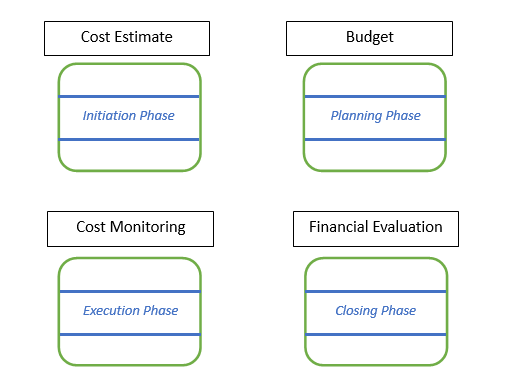
Accurate cost estimation, which can be done by looking at past expenses and future requirements, lays the groundwork for effective control. This is also the first or initiation phase in cost control.
By meticulously forecasting expenses and using tools to build a financial model, businesses can anticipate financial demands and make informed decisions that align with their budgetary constraints and overarching financial objectives.
Creating budgets
Once you have made the cost estimates, then it’s time to start preparing the budgets. This is also known as the planning phase. Budgets serve as dynamic roadmaps, delineating financial allocations across various departments.
A well-constructed budget not only guides spending but also facilitates proactive decision-making, ensuring resources are optimally distributed to meet operational needs.
Monitoring costs
Real-time vigilance over expenditures is imperative for successful cost control. Once budgets have been allotted and distributed, it is time to start monitoring how resources are being spent.
Continuous monitoring enables swift identification of variances, allowing businesses to implement corrective measures promptly and prevent budgetary deviations that could impact the bottom line. This is also known as the execution phase in cost control.
Financial assessment
Finally, the closing phase is where you assess how budgets were utilized and whether cost control methods, strategies, techniques, or systems helped in doing so. Regular and thorough financial assessments are vital components of cost control.
These assessments involve in-depth analysis of financial data, enabling businesses to gauge their financial health, identify areas of improvement, and fine-tune cost control strategies to align with changing market dynamics.