Simplify billing and reduce manual invoice work
Turn approved commercial terms into accurate, traceable invoices. Connect billing schedules, complex charges, approvals, delivery and accounting in one workflow.
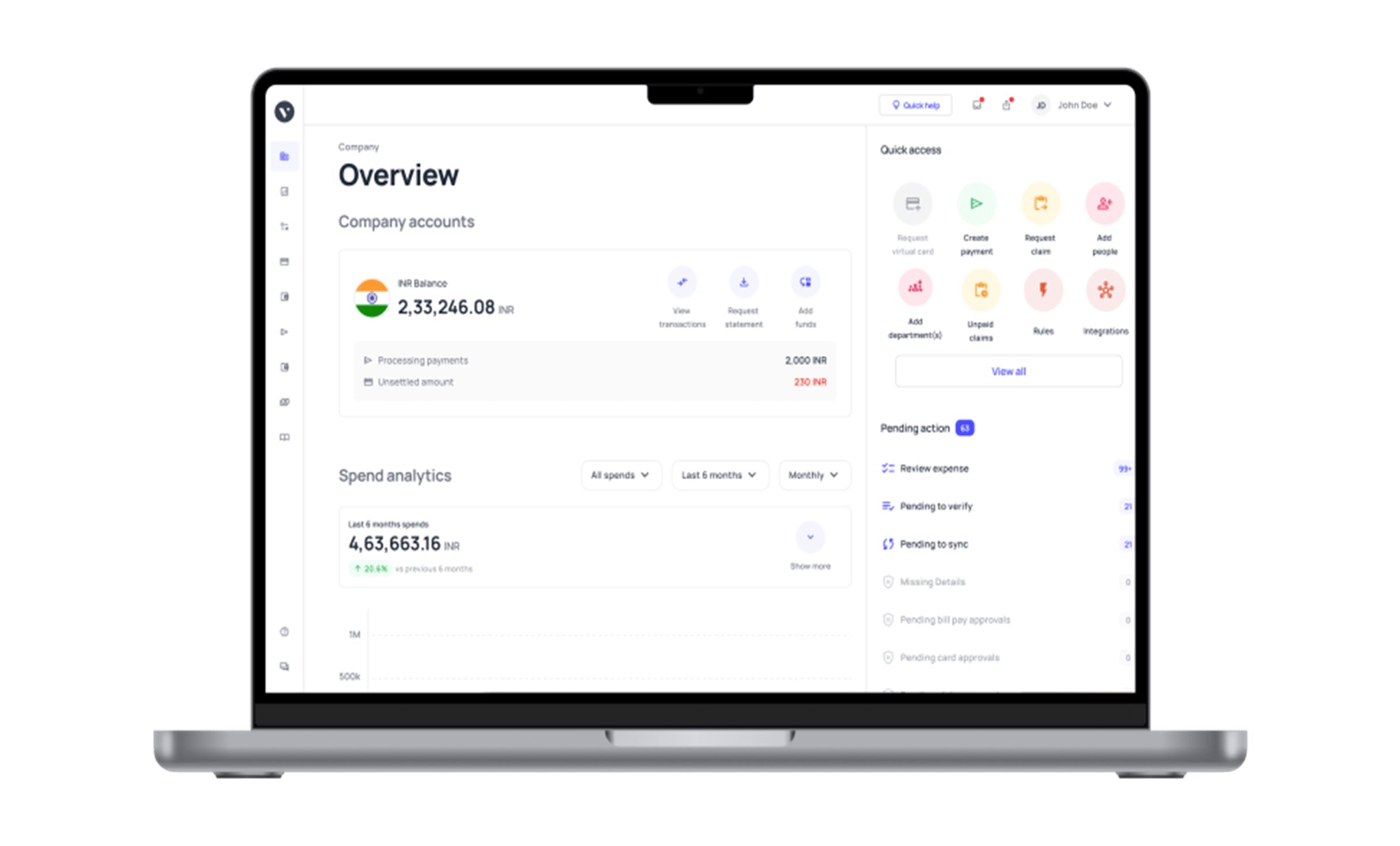














One system for the work behind billing
Contract intelligence
Extract billing terms from contracts, order forms, SOWs, and amendments; link important fields to their sources; and flag missing or conflicting information for review.
Schedule and pricing controls
Build billing schedules for recurring, usage, milestone, one-off and hybrid charges, and represent ramps, tiers, overages and minimum commitments explicitly.
Automated invoice preparation
Generate charges, service periods and due dates, then check configured tax information alongside customer, entity, PO, currency and document requirements before issuance.
Invoice delivery tracking
Deliver invoices through email, customer portals and other supported channels. Keep submission references, delivery events and acceptance or rejection responses distinct, so finance knows what happened after issuance.
Billing readiness checks
Check customer-specific requirements, POs, approvals and supporting information before an invoice moves forward. Identify missing inputs, assign owners, follow up on blockers and recheck readiness when new evidence arrives.
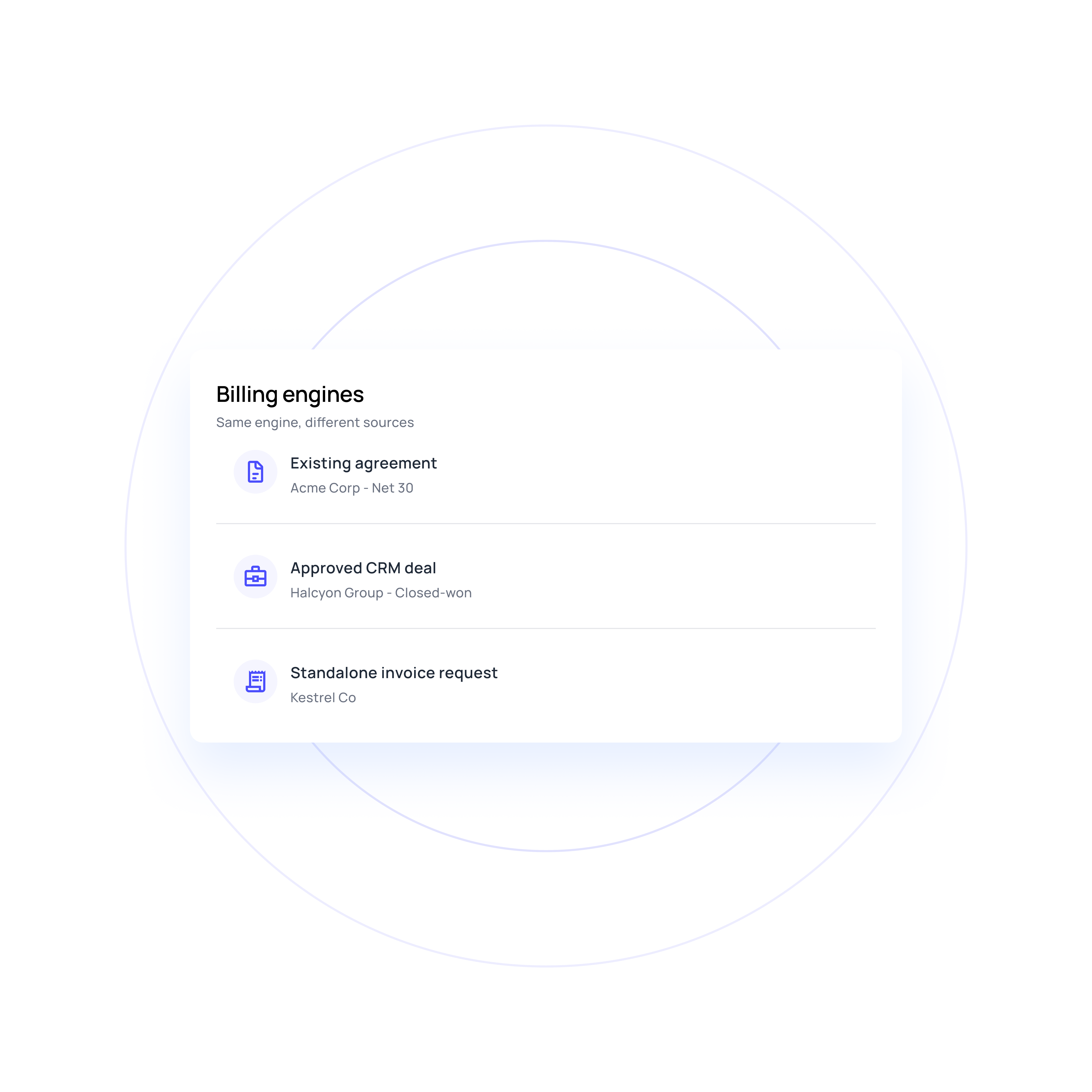
Complex billing models
Support recurring, usage-based, milestone, per-seat and one-time charges across ramps, tiers, minimum commitments, overages and instalments. Apply agreed billing rules and keep each calculation tied to the commercial model.
Accounting system integration
Map customers, entities, products, accounts, dimensions, currencies and configured tax codes before synchronisation. Send approved billing data to supported finance systems, capture the resulting record and surface failed writes for review or retry.
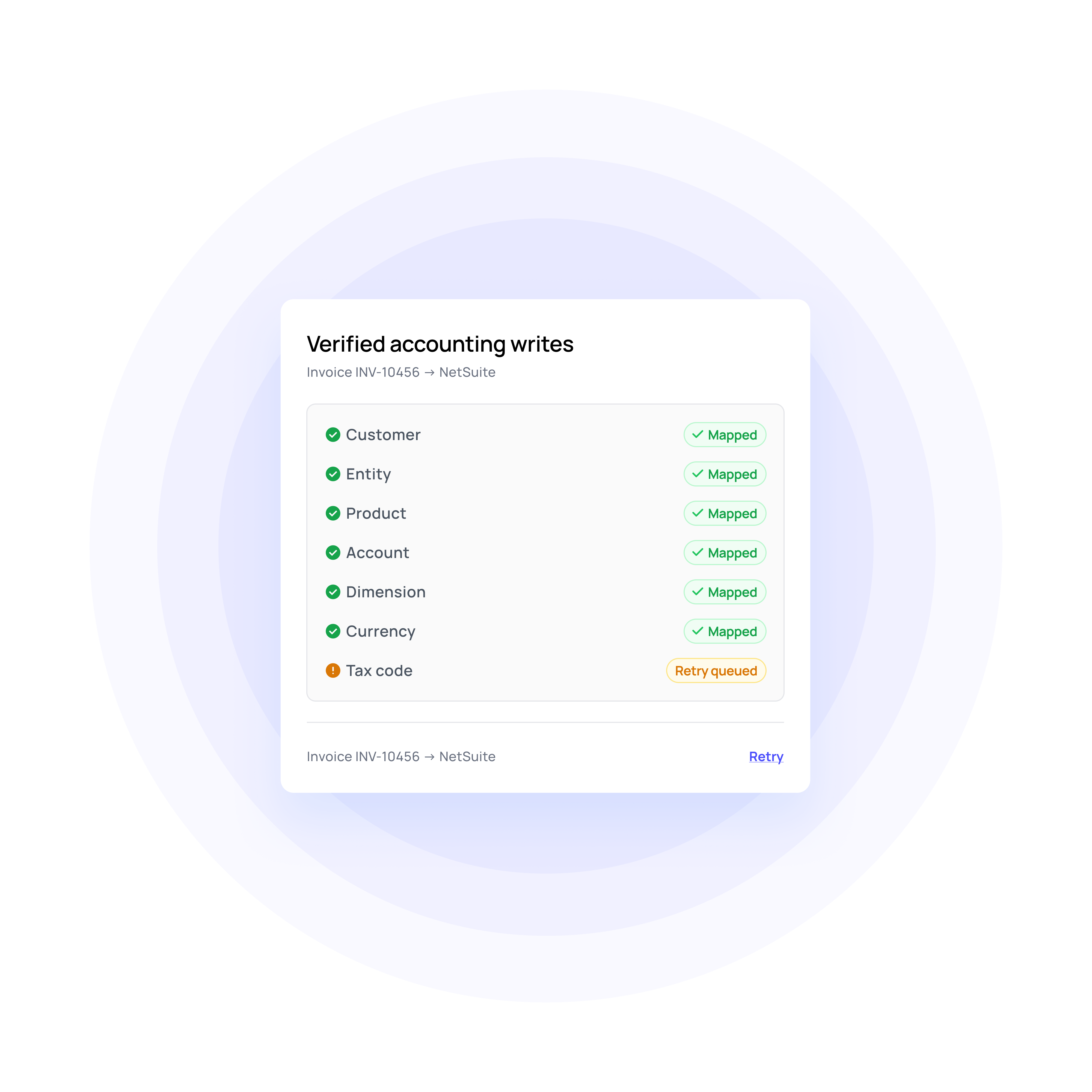
Simplify your billing process with automation
Keep billing ready for every customer requirement
Approval and signature controls
Route contracts through commercial and legal approvals based on entity, value, discount, term or deviation. Track decisions and signatures, then activate billing only after authorised conditions are fully satisfied correctly.
Customer billing requirements
Capture customer-specific POs, references, supporting documents and billing instructions before issuance. Assign missing information to the right owner and recheck the affected invoice when new details arrive.
Billing completeness checks
Compare expected billing obligations with issued invoices, active terms and supporting evidence. Surface skipped charges, duplicate periods, unapproved rates and unexplained differences for finance review before collection activity starts promptly.
Credits and corrections
Apply approved credit, correction and replacement processes while preserving the original invoice record. Keep related documents connected, so finance teams can trace every adjustment throughout the complete billing workflow end-to-end.
Built around the way Indian finance teams bill
Subscription businesses may combine recurring plans, ramps, usage charges and minimum commitments with customer-specific tax and billing information. Keep each billing schedule tied to the approved commercial terms while finance reviews the configured tax treatment where required.
Indian B2B customers may require GST details, purchase orders, supporting documents or internal approvals before they process an invoice. Check the configured billing information and customer requirements early, then route missing inputs to the appropriate owner.
Professional services firms may bill against approved milestones, acceptance evidence or project stages. Keep each charge tied to its commercial basis and hold only the affected billing item when required evidence is missing.
Beyond basic billing: the Volopay difference
Basic billing tools | Volopay |
|---|---|
Depend on finance teams to bridge contracts, customer requirements and invoice data manually | Carry relevant commercial context into billing while keeping ambiguous or incomplete information visible for review |
Primarily automate invoice creation from structured inputs | Support billing across recurring, usage, milestone, per-seat, one-time and hybrid commercial models |
Provide limited visibility after an invoice is sent | Keep delivery, submission, rejection and acceptance outcomes connected to the billing workflow |
Separate corrections and changes from the original billing record | Keep approved amendments, renewals, credits and replacements traceable to the original records |
They loved Volopay, you will too
FAQs
Billing automation checks prerequisites tied to each charge, including approved terms, customer details, POs, usage inputs, milestone evidence and approvals. Missing information creates an owned task, keeps the affected invoice blocked, and triggers another readiness check when new evidence arrives.
Volopay keeps customer-specific templates, references, POs, supporting documents and delivery requirements within the billing workflow. Finance can track invoice delivery, submission, acceptance and rejection as separate states across supported channels.
Yes. Volopay can generate invoice lines, rates, service periods and due dates from approved billing logic, then check customer, entity, PO, currency, document and configured tax information. Eligible invoices can then move through supported delivery channels, with the resulting status retained in the workflow.
Volopay turns missing POs, documents and approvals into owned billing tasks. It records the missing requirement, identifies the responsible owner and rechecks billing readiness when new evidence arrives.
Volopay routes ambiguous contract terms, material billing changes, policy deviations and actions outside configured authority for human review. Conflicting or incomplete commercial information also goes to the relevant owner, with billing resuming only after the decision is approved and recorded.
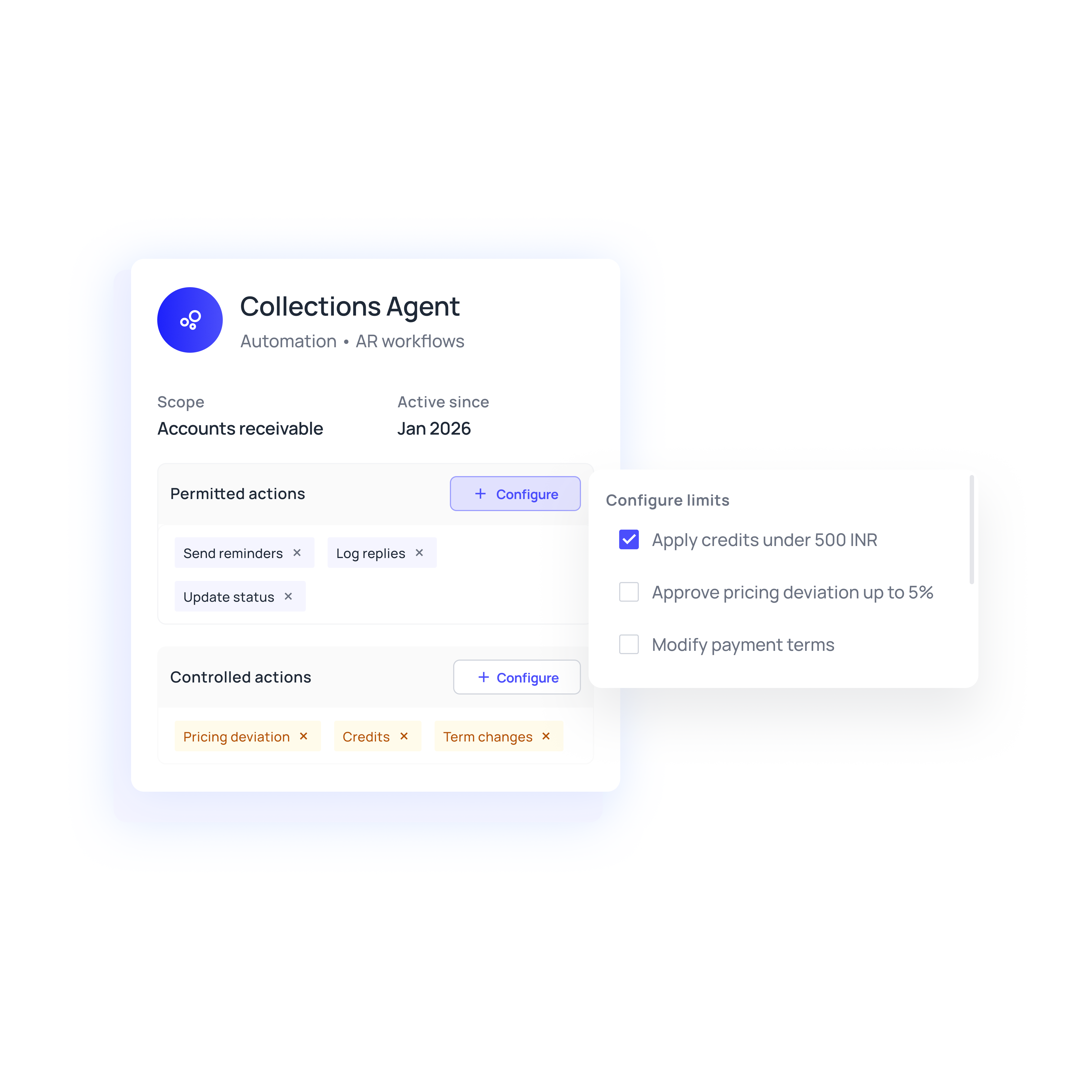
Finance retains authority over pricing deviations, material changes, credits, invoice permissions and accounting mappings according to configured roles. Legal negotiation and nonstandard contract terms also require authorised people, keeping commercial judgement outside automation and within established approval policies and controls.
Volopay supports one-time, recurring, per-seat, usage-based, milestone and hybrid billing, including advance or arrears schedules, instalments, ramps, tiers, minimum commitments and overages. These models suit Indian B2B businesses that bill through subscriptions, projects, usage or milestones while keeping commercial terms, supporting evidence and approval requirements connected.
Bring Volopay to your business
Get started now