One AR software. One continuous workflow.
Keep terms, conversations, disputes and payments connected until finance verifies the outcome.














The receivables work, handled end to end
Billing readiness validation
Check customer, entity, configured GST information, line items and delivery requirements before issuance. Missing POs, references or approvals become owned work until finance has the required input.
Remittance matching
Match receipts across single, split, short and over payments using remittance, payer history and current balances. Apply supported cash while keeping unresolved differences visible.
Prioritised collections worklists
Open receivables are ranked by account context and the rules finance has agreed, so effort lands where it moves cash. Outreach is suppressed when a hold, live conversation or fresh receipt makes a reminder inappropriate.
Dispute and deduction detection
Short-pays and disputes are detected and classified by reason, then routed to the owner to resolve. Undisputed amounts continue through collection uninterrupted.
Three ways to begin, one workflow
Start from an existing contract, an approved CRM deal, or a standalone invoice request. Each path keeps its own commercial basis while feeding the same downstream receivables workflow.
Context that travels with the receivable
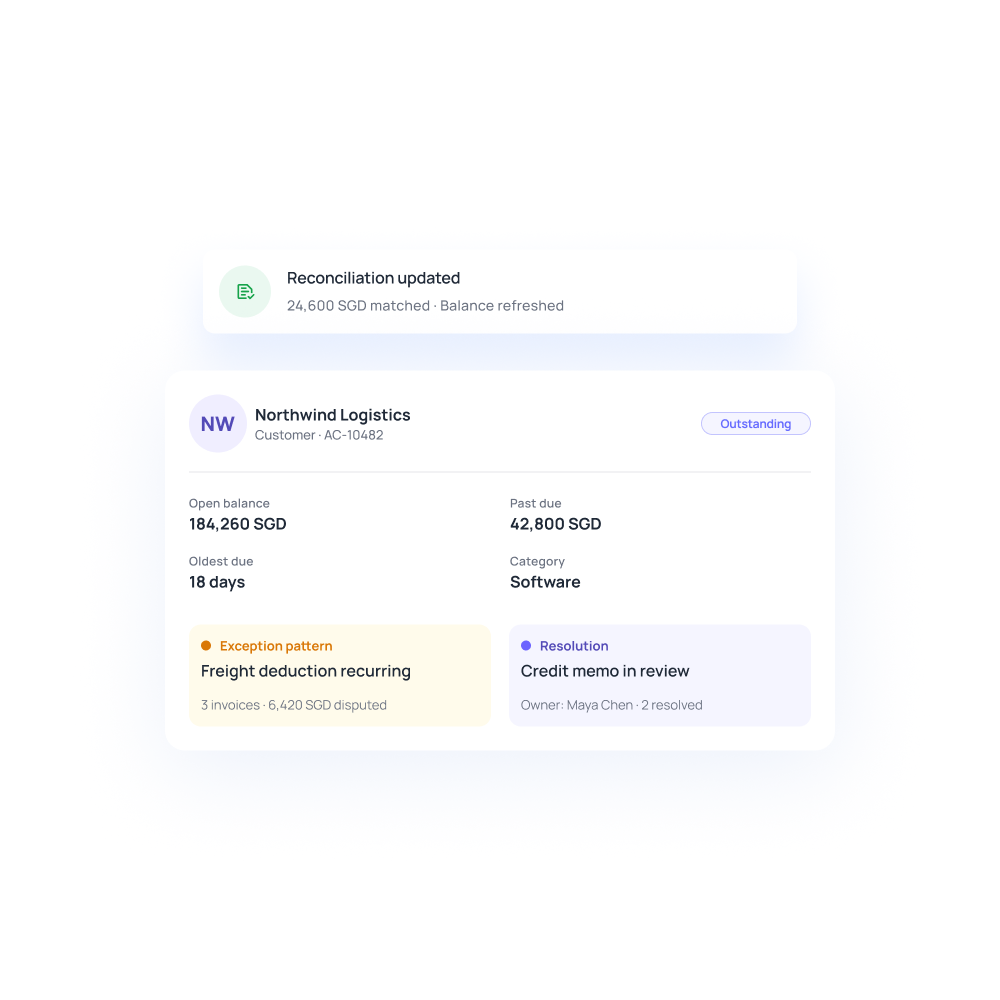
Keep terms, contacts, promises, disputes, receipts and approvals connected as work moves through AR. A customer reply can change the collection path, open a dispute and carry the relevant context into the next workflow.
Action within finance's boundaries
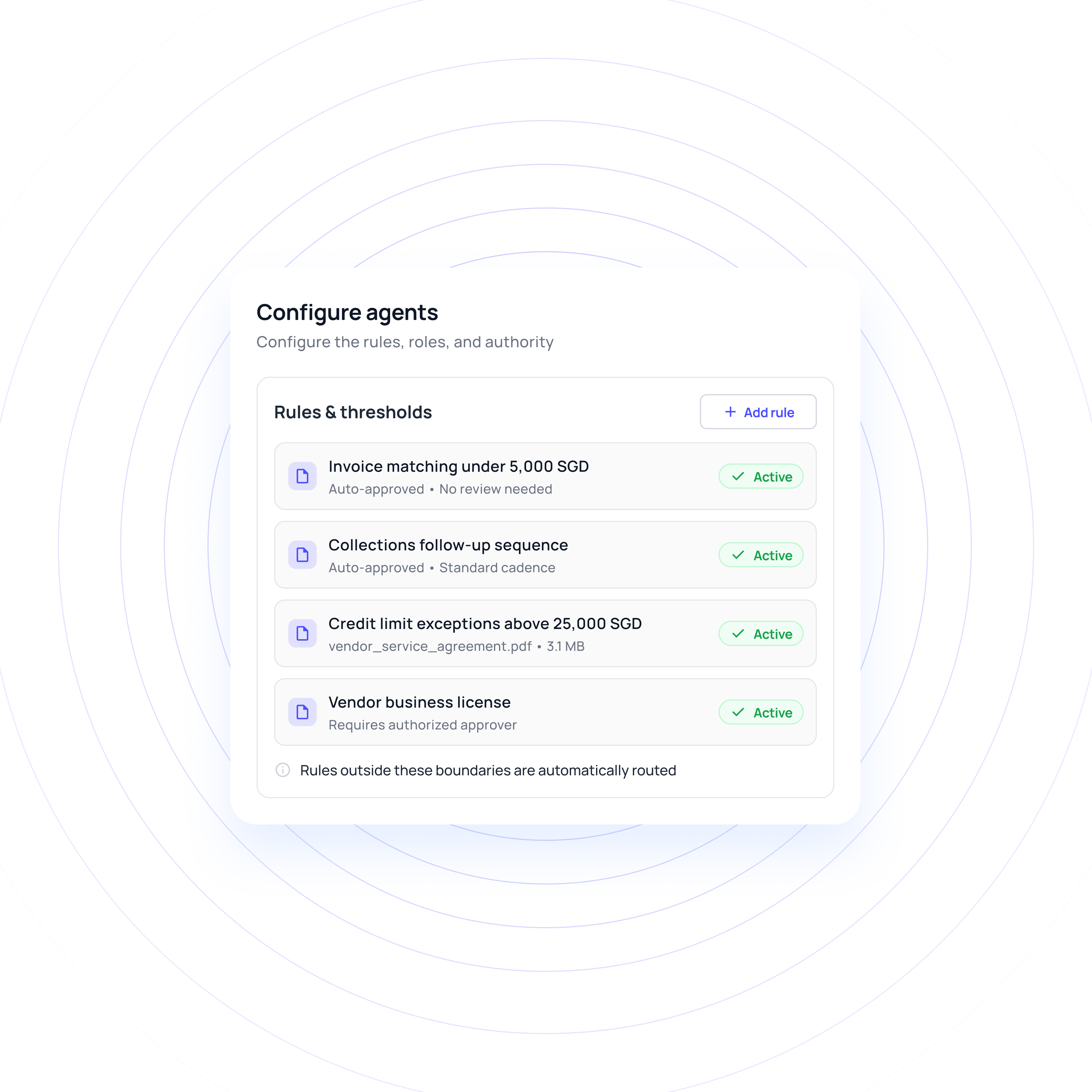
Permitted work runs when evidence, confidence and policy checks pass. Ambiguous terms, pricing deviations and threshold breaches are prepared for a named approver, with commercial judgment left to people.
Turn complex receivables into seamless workflows
Governance the finance team can defend
Visibility from metric to next action
Aging, DSO, average days to pay, unapplied cash and posting exceptions sit in one view. Drill from any figure into the receivable and its next action, with forecasts separating promises from confirmed cash.
Answers and self-service across channels
An AR support agent sends authorised invoice copies and statements and captures POs and remittances. Authorised customers can inspect invoices and raise queries, with permissions governing exactly what may be disclosed.
Rule changes require finance sign-off
Approved analyst corrections inform suggested rule changes. Finance reviews the trigger, evidence and expected behaviour before activation, with versioning and rollback retained. A model update never quietly increases financial authority.
Scoped access and a complete audit trail
Access is role-based and scoped by entity, with separation of duties across sensitive actions. Integration credentials are scoped to purpose, and actions leave audit records tied to their evidence and owner.
Familiar AR problems, handled properly
Finance teams in Singapore may support several regional entities with different currencies, tax codes and accounting periods. Keep those entity-specific rules attached to each receivable while coordinating AR through one operating workflow.
Singapore businesses may invoice in SGD while collecting from customers across Southeast Asia in other currencies. Keep payer, remittance, currency and entity context connected so finance can resolve each receipt against the appropriate receivable.
Subscription, consumption and project charges become billable when the required usage or milestone evidence arrives. Hold only the affected charge when an input is missing, rather than stopping unrelated billing work.
Why go the Volopay way?
Manual or legacy AR | The Volopay approach |
|---|---|
Teams rebuild the same context across email, ERP, CRM and portals | Terms, conversations and financial state stay on one shared record |
Automation raises a task, then stops at the handoff | Work continues until evidence is obtained and the permitted action completes |
New tooling arrives by replacing the system of record | The ERP stays the system of record, with Volopay operating around it |
A payment received or invoice sent is treated as the outcome | Delivery, acceptance and posting are verified against the actual result |
Rules shift quietly, with no review or way back | Finance reviews and versions each change, with a rollback path retained |
They loved Volopay, you will too
FAQs
Volopay coordinates permitted work across billing, collections, disputes and cash application. Agents request missing information, progress routine actions and carry receivable context across workflows, while finance retains authority over exceptions, approvals and commercial judgement.
Yes. Open receivables are prioritised by account context and agreed rules, then the right contact is reached through their preferred channel. Outreach is suppressed when a hold, an active conversation or a new receipt makes a reminder inappropriate.
Volopay uses receipt data, remittance, payer history and current balances to support invoice allocation. It applies supported cash, keeps residual differences under review and verifies the resulting accounting state before completing the workflow.
A short-pay or dispute is detected, classified by reason and routed to the owner who can resolve it. Valid claims are separated from unsupported deductions, and undisputed amounts keep moving through collection while the case is worked.
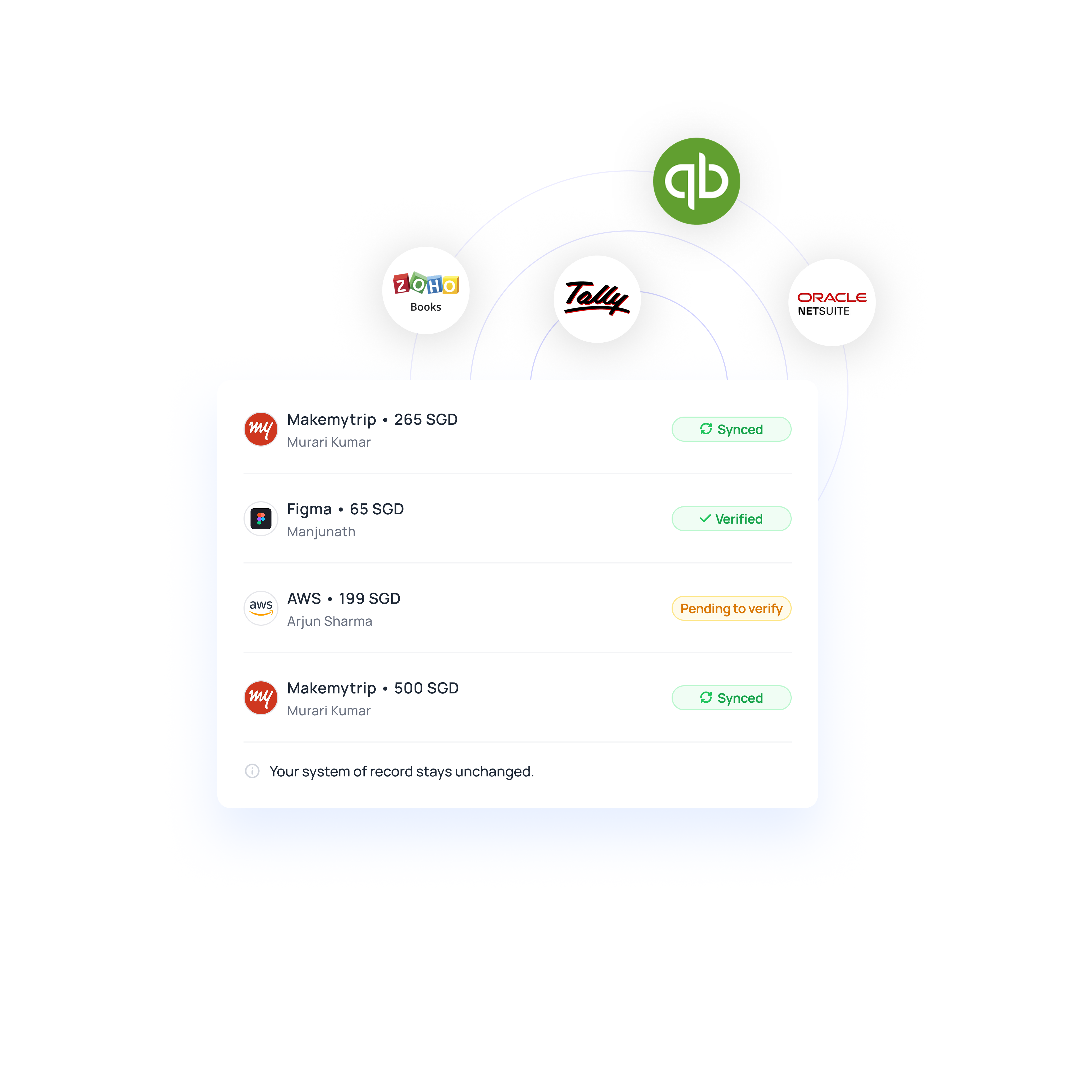
No. Your ERP or accounting system can remain the authoritative financial system. Volopay coordinates permitted work around connected billing, banking, CRM and communication systems, then verifies the resulting financial actions according to the configured workflow.
Agents handle deterministic matches and customer rules first, then reason through ambiguous cases within configured limits. Each action exposes a decision rationale and its source evidence, and material or low-confidence cases go to a named approver.
Bring Volopay to your business
Get started now