Streamline dispute and deduction resolution
A dispute should not disappear into inboxes or stall the wider receivable. Keep evidence, ownership, and financial completion connected from first challenge to resolution.














Short payment differentiation
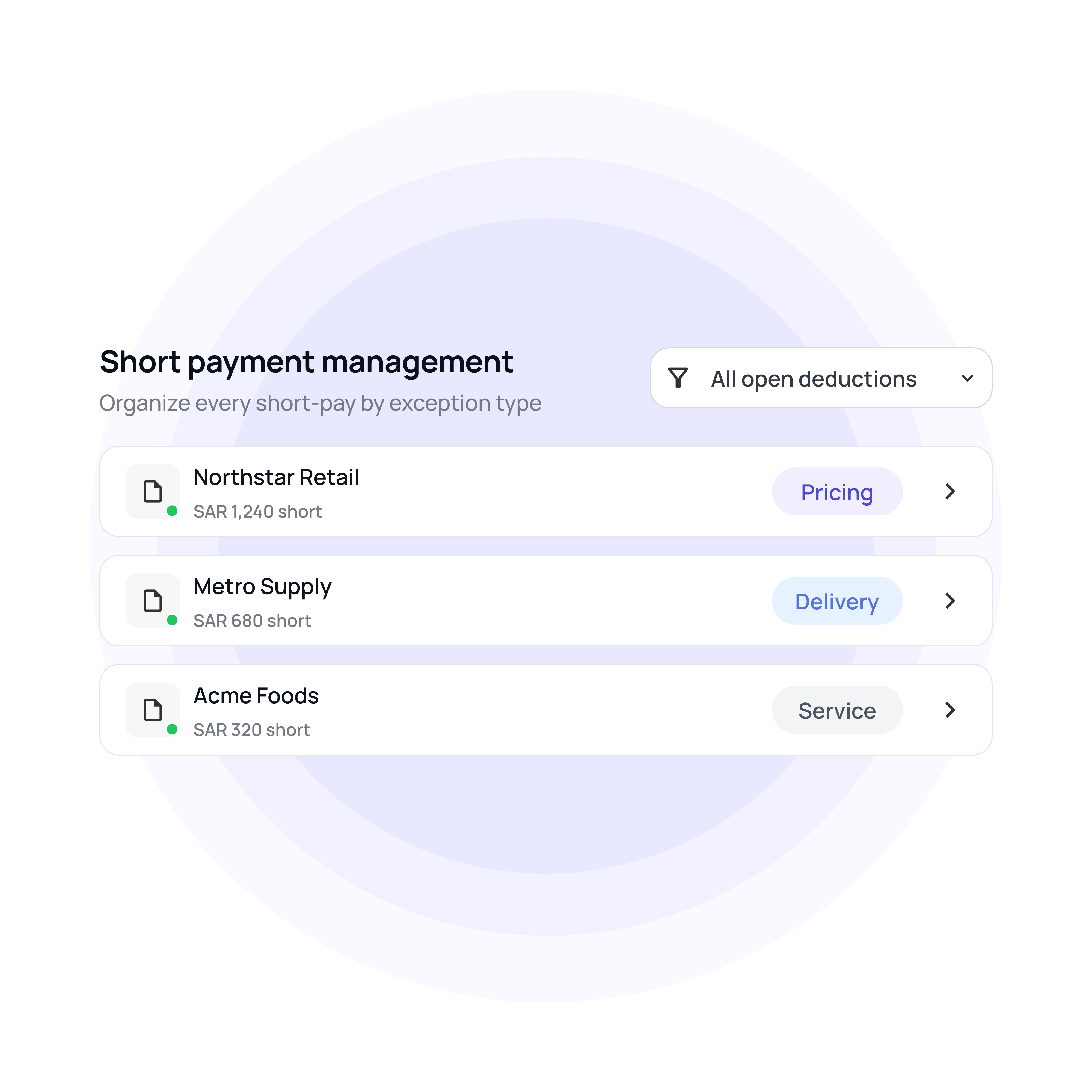
Separate customer deductions from withholding, discounts, fees, allocation errors, and other payment differences before opening a commercial dispute. Keep each residual on the right resolution path.
Reason-based investigation
Pricing, VAT-related billing, discounts, quantity, delivery, service, and duplicate-billing disputes can follow different evidence checks instead of one generic investigation path.
Decision-to-ledger visibility
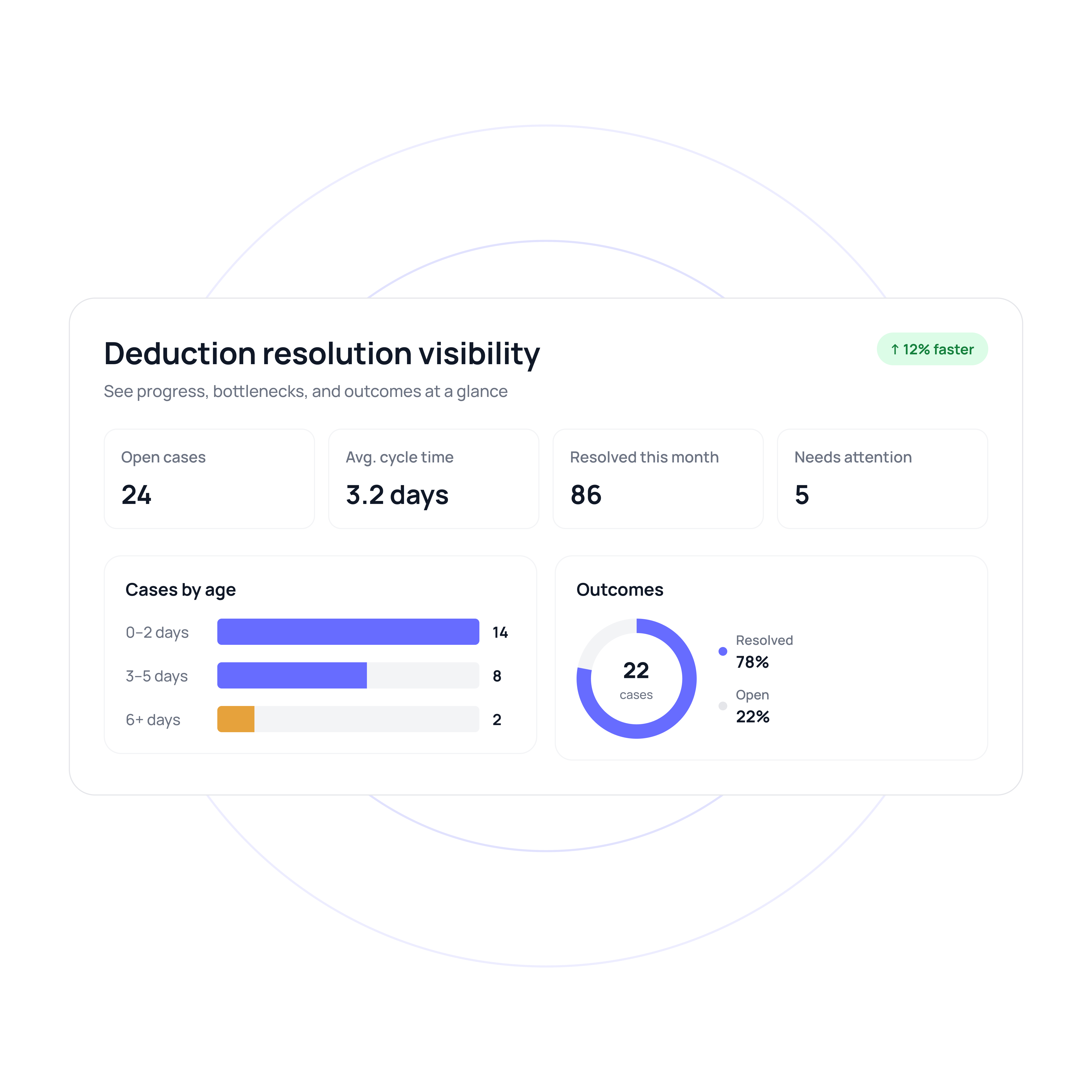
Track the claim through commercial resolution and the financial action that follows. Accepted, rejected, partially accepted, or corrected cases remain visible until the required outcome is completed.
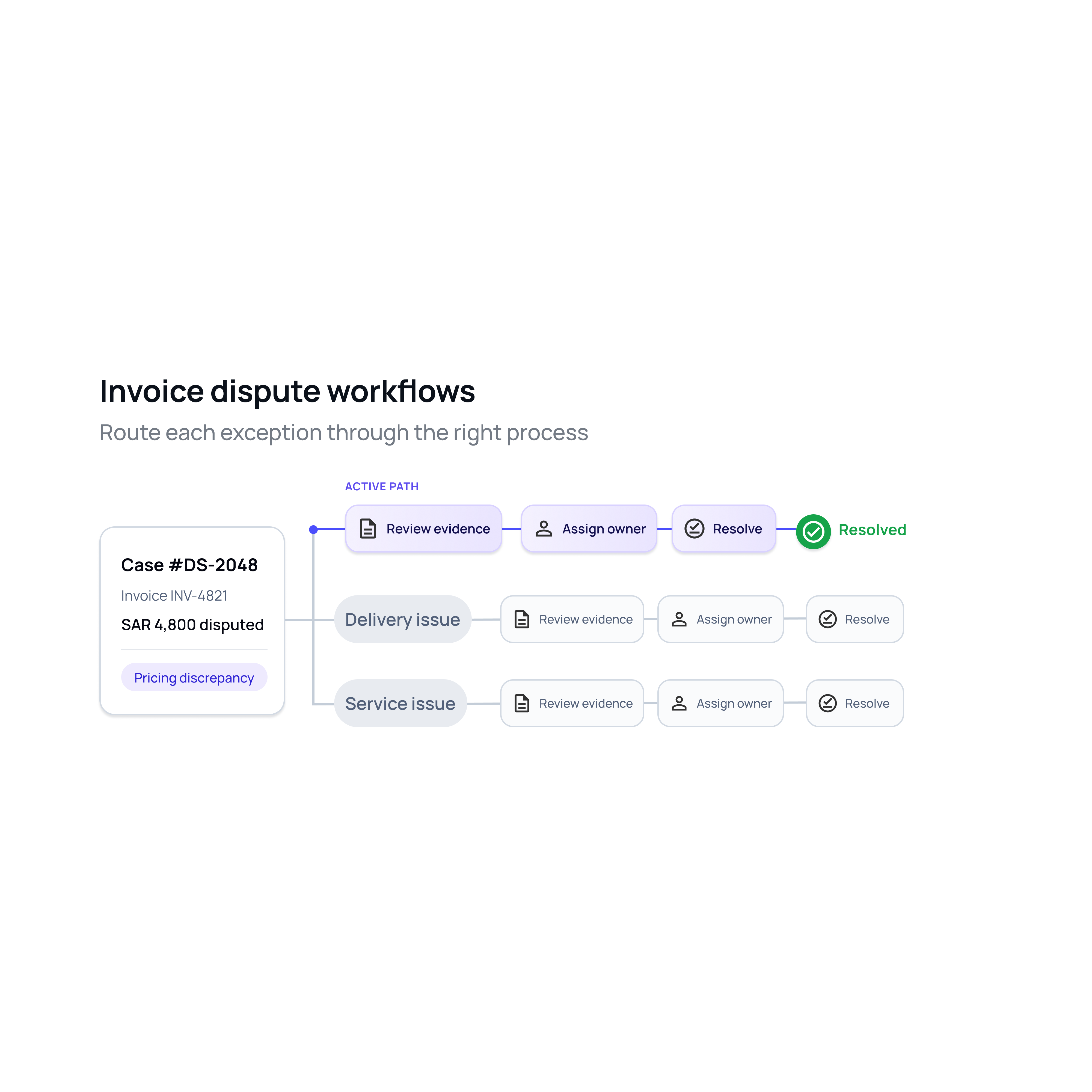
Streamline your disputes and deductions process
Build resolution around evidence, ownership, and action
Automatic case creation and deduplication
Volopay can detect dispute signals across connected emails, support tickets, portal records, and remittance. Related evidence can update an existing case instead of creating a duplicate.
Reason classification and claim validation
Classify the dispute using a business-relevant reason structure, then compare the claim against the supporting commercial or operational evidence. Conflicting facts remain visible for review.
Missing-evidence follow-up
Agents can request the specific document, invoice reference, or explanation needed to progress the case. New evidence updates the case and can trigger reassessment.
Approval routing
Pricing and concession decisions can move to commercial owners, operational facts to the relevant team, and accounting treatment to finance, with thresholds and separation-of-duties rules applied.
Designed for dispute-heavy receivables
Large customer books can produce recurring claims around pricing, delivery, discounts, invoice details, and deductions. Structure each case by reason, value, evidence, and deadline so analysts can focus on the claims needing attention first.
A customer may challenge VAT-related invoice details, pricing, quantities, or supporting documentation. Keep the invoice, commercial terms, customer correspondence, and relevant evidence together before finance or the commercial owner decides the outcome.
Large Saudi customer accounts may involve procurement, operations, commercial teams, and finance before a dispute reaches resolution. Route each decision to the appropriate owner while keeping the evidence and approval history in one case.
Manual deduction work vs the Volopay approach
Manual dispute and deduction workflow | The Volopay approach |
|---|---|
Dispute details may be spread across inboxes, tickets, portals, and supporting documents | Volopay can connect the claim, affected receivable, evidence, conversations, decisions, and financial actions within the same case history |
Similar-looking short payments may require manual investigation before the underlying reason is clear | Volopay can distinguish customer claims from fees, withholding, discounts, allocation errors, and other payment differences before progressing the appropriate workflow |
Cases can wait between commercial, operational, and finance teams when the required decision is unclear | Decisions can route to the relevant owner with the proposed action and supporting evidence attached, using configured thresholds and approval rules |
One contested amount can complicate collection or application of the remaining balance | The disputed portion can remain under its hold policy while clear amounts continue through collections or cash application where policy permits |
A case may appear resolved once the commercial decision is made, even though financial action is still pending | Volopay keeps commercial resolution distinct from financial completion, so credits, corrections, recoveries, or other approved actions remain visible until verified |
They loved Volopay, you will too
FAQs
Volopay can detect dispute signals from connected emails, support tickets, portal records, and remittance. It can capture the customer, invoice, affected amount, and asserted reason, while checking for an existing case before creating another.
Volopay compares the claim with relevant commercial and operational evidence, including approved pricing, contract terms, delivery records, service evidence, and applicable invoice information. Supporting facts, conflicting evidence, and missing inputs remain visible before finance or the relevant owner decides the outcome.
Routing can reflect the type of decision involved. Commercial questions may go to commercial owners, service or delivery facts to operations, and accounting treatment to finance, with thresholds and separation-of-duties rules applied.
A commercial decision alone does not necessarily close the case. Volopay can track the claim until the required communication and financial action are complete, such as a posted credit or confirmed recovery.
Finance and commercial teams retain authority over material credits, concessions, write-offs, sensitive disputes, legal positions, and negotiations outside configured limits. Volopay can handle permitted evidence gathering, classification, and information requests within defined boundaries.
Bring Volopay to your business
Get started now