Smart collections built for faster recovery
Move beyond reminder sequences. Volopay agents interpret replies, track commitments, request missing information, and keep unresolved blockers tied to an owner and next action.














Collections that decide, not just remind
Prioritize
Worklists weigh value, age, history, promises, and blockers, and show the reason behind each ranking.
Converse
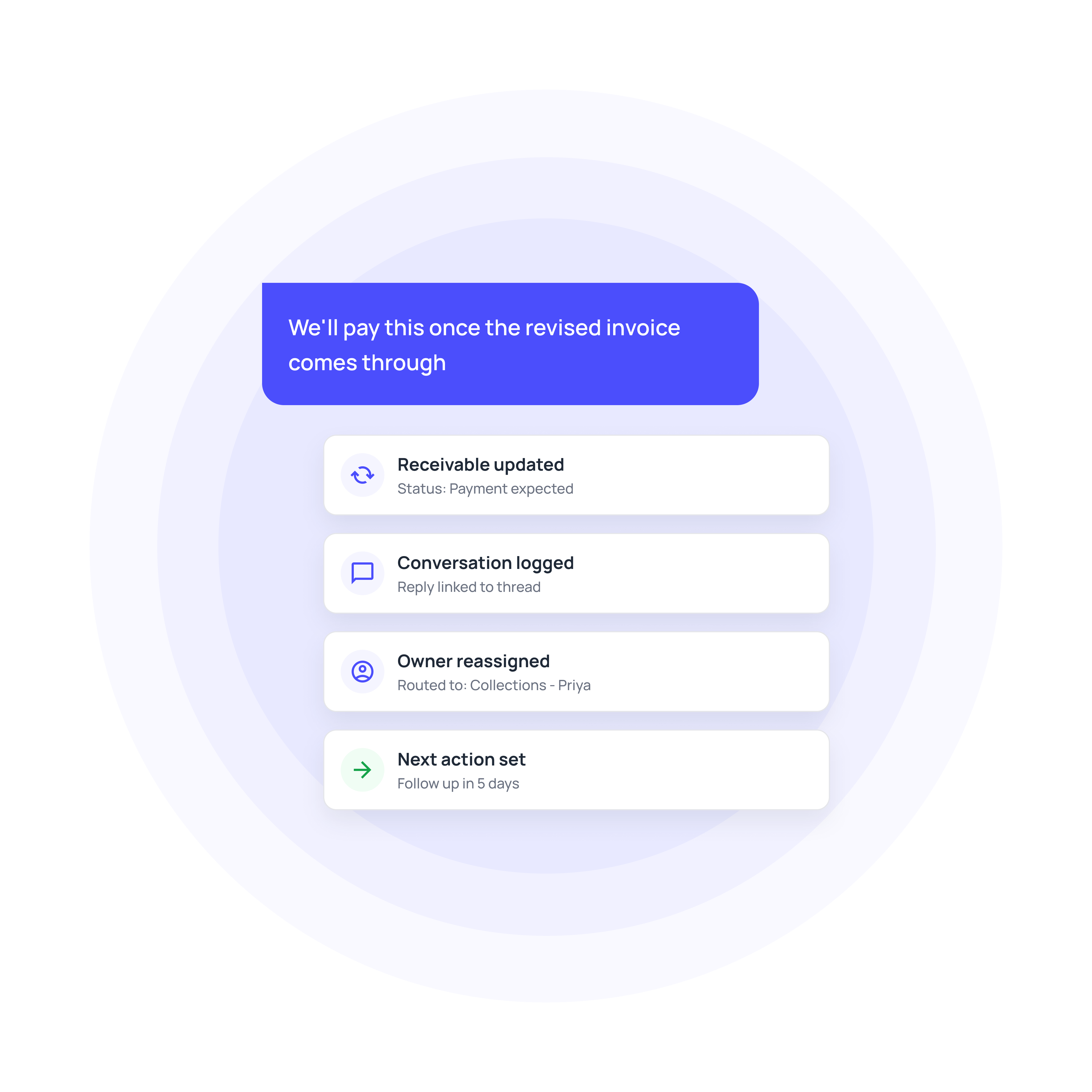
Two-way outreach keeps history and invoice references, and each reply updates the next action.
Personalize
Set playbooks by customer segment, including contact order, timing, Arabic or English language preference, tone, and escalation rules.
Unblock
Turn missing POs, customer onboarding, invoice queries, portal requirements, and disputes into owned tasks with a clear next step.
Response-led progression
Different customer replies trigger different workflows. Volopay can provide documents, capture commitments, open disputes, or verify payment claims based on the latest response.
Configured autonomy
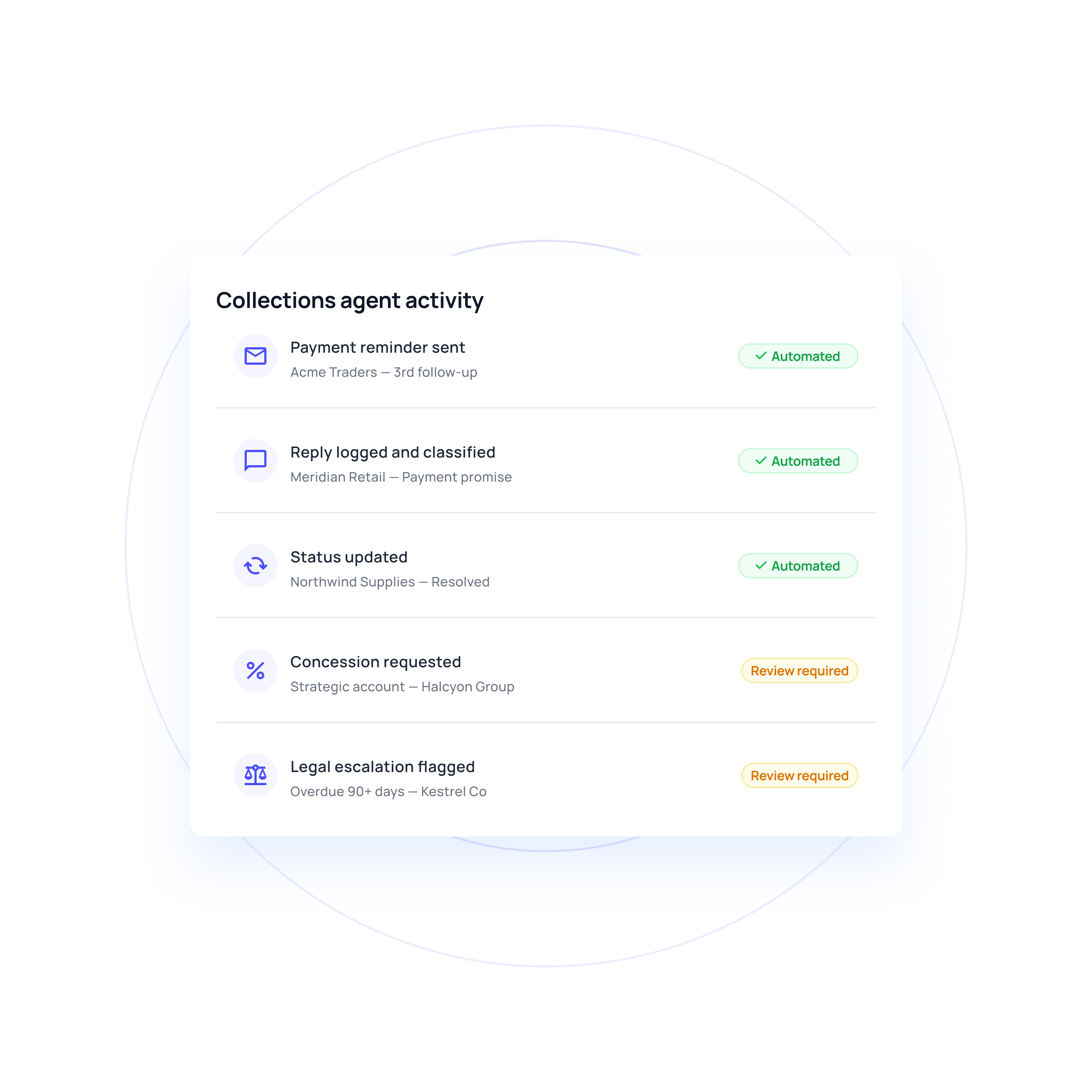
Routine reminders and document responses can run automatically where permitted. Negotiated terms, concessions, legal issues, and sensitive accounts can stay behind review controls.
Current-state checks
Volopay checks receipts, disputes, replies, holds, and invoice balances before sending the next message. That helps reduce outreach based on stale account conditions.
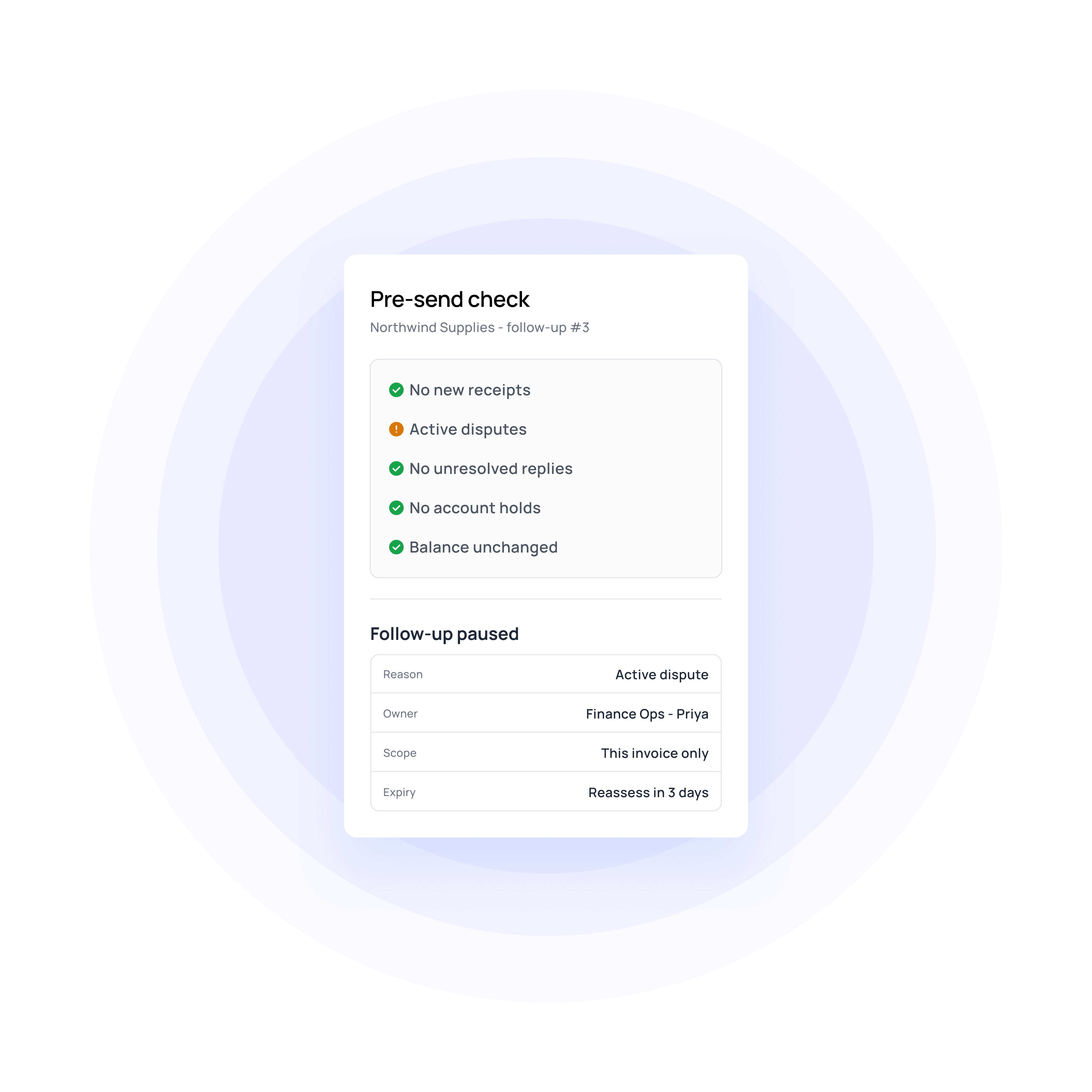
Automate collections without losing human control
More context behind every follow-up
Collection document handling
Volopay can respond to requests for invoices, statements, credit notes, and supporting documents. Verify the recipient, respect document permissions, and keep the response tied to the same receivable.
Collections reporting
Collections reporting separates activity from outcomes. Teams can review aging, promise performance, blocked work, Average Days to Pay, and DSO using defined measures.
AP contact verification and repair
Delivery failures, out-of-office replies, and role changes can trigger contact review. Using permitted CRM and account-owner information, Volopay proposes or confirms the replacement AP contact and does not guess recipient details.
Context-rich internal escalation
Account managers, support teams, and finance approvers receive the amount, invoice, customer message, evidence, and recommended next step together. Missed SLAs, repeated silence, policy disputes, and concessions can trigger escalation.
Collection software for complex collection workloads
Saudi distributors may manage large customer books with different PO, delivery-document, and invoice requirements. Prioritize accounts using value, payment history, broken promises, and active blockers while keeping the reason behind each priority visible.
Service providers may manage several invoices and payment commitments for the same customer. Track promised dates, amounts, covered invoices, and conditions, then compare each commitment with confirmed receipts before changing the collection path.
Saudi technology businesses may manage recurring invoices across customers with different procurement, portal, and communication requirements. Use account-level reminders, customer-specific holds, and Arabic or English playbooks to keep follow-up aligned with the current account state.
Why go the Volopay way?
Manual collections workflow | The Volopay collections software approach |
|---|---|
Aging views can show overdue balances without explaining which accounts need attention first | Prioritized worklists can combine overdue value, aging, payment history, broken promises, risk signals, relationship sensitivity, and active blockers |
Standard reminder sequences may not reflect customer-specific conditions or active issues | Segmented playbooks can account for cadence, contact hierarchy, timing, tone, escalation points, and account-specific holds |
Customer replies can require collectors to interpret the response and decide the next step manually | Replies can update the collection workflow based on the latest request, promise, dispute, or payment claim |
Payment promises may remain in emails or notes without structured follow-through | Volopay can capture the promised date, amount, covered invoices, and conditions, then compare the commitment with confirmed receipts |
PO gaps, customer onboarding, invoice queries, portal requirements, or service issues can stall collection work without a clear owner | Volopay turns each blocker into owned work with a next action, follow-up point, and route back into collections |
They loved Volopay, you will too
FAQs
Volopay can combine overdue value, aging, payment history, broken promises, risk signals, relationship sensitivity, and active blockers. The prioritization rationale remains visible, and finance can override it without losing the original reasoning.
Volopay keeps receivable data, recent conversations, promises, disputes, customer requirements, and account activity in the same collection workflow. Agents use that context before taking the next permitted action instead of rebuilding the account history from separate systems.
Yes. Volopay can progress permitted reminders, document responses, and other routine actions under configured rules. Teams can set customer-specific timing, language, contact hierarchy, and escalation while keeping strategic accounts and sensitive actions behind human review.
Volopay captures the promised date, amount, covered invoices, and conditions, then compares the commitment with confirmed receipts. When a customer disputes part of the balance, the contested amount follows its case policy while collections continues on eligible undisputed receivables.
Escalation can apply to missed internal SLAs, repeated customer silence, disputed policy, high-value concessions, sensitive accounts, negotiated terms, legal threats, write-offs, and other actions outside configured authority.
Finance teams retain control over sensitive customer relationships, negotiations beyond approved limits, strategic-account decisions, concessions, write-offs, legal issues, and other exceptions requiring judgment. Agents handle permitted routine work within defined boundaries.
Bring Volopay to your business
Get started now