Tipalti vs AvidXchange: Which solution is better?
Finance teams are under constant pressure to manage multiple tasks at once. This makes AP automation a need of the hour. Two names consistently surface in this evaluation: Tipalti and AvidXchange.
Both promise to modernize accounts payable, but they take meaningfully different approaches. This guide breaks down everything you need to consider, including features, pricing, integrations, global capabilities, and more.












REVIEWED BY

Akanksh Muniyappa
Head of Product
WRITTEN BY

Yashvi Tiwari
Content Writer
Quick summary: Tipalti vs AvidXchange
Tipalti is built for companies operating internationally and/or paying vendors globally, with coverage across 200+ countries, 120+ currencies, and deep tax compliance.
AvidXchange serves 8,000+ U.S. businesses and performs excellently for businesses focused on domestic operations. It automates invoice capture, approval routing, and vendor payments through its 700,000-supplier AvidPay network.
| Key factors | Tipalti | AvidXchange |
|---|---|---|
Best for | Global enterprise | U.S. mid-market |
Invoice automation | AI OCR, PO matching | AI capture, line matching |
Global payments | 196+ countries | Primarily domestic (U.S.) |
Tax & compliance | Strong (W-9, VAT) | Basic tax tools |
Pricing | From $99/month | Quote-based |
ERP integrations | Good | 240+ integrations |
Vendor/Supplier portal | Self-service onboarding | Supplier network portal |
User ratings (approx. G2/Capterra) | 4.5 - 4.6 | 4.4 - 4.5 |
Tipalti
Tipalti launched in 2010. It has since grown into one of the most well-known tools for global payment automation. It was built to handle one hard problem: paying large groups of vendors across borders. Most older AP tools were not made for this, and Tipalti handles it well.
The platform supports multiple payment methods, currencies, and tax compliance workflows, which makes it especially useful for businesses managing international supplier networks. Over time, Tipalti has also expanded into procurement, expense management, and financial controls, giving finance teams a more centralized workflow.
Tipalti is best suited for mid-size to large companies that regularly pay vendors in multiple countries and need stronger automation around compliance and approvals. It is particularly popular with SaaS companies, digital media platforms, online marketplaces, and other fast-scaling businesses with high transaction volumes.
| Pros | Cons |
|---|---|
Processing mass payments to vendors at scale | Some user-reported issues with customer support |
Built-in tax forms like W-9, W-8, 1099, and 1042-S | Occasional payment delays |
Self-service portal where vendors enter their own data | Limited customization options |
Available in 196+ countries and 120+ currencies | Expensive for small businesses |
AI-powered invoice line-item extraction | Extra fees for advanced modules |
AvidXchange
AvidXchange started in 2000. It has spent more than 20 years building AP tools for mid-size companies. Its main job is simple: take invoices in, route them for approval, and send payments out. It does this well for U.S.-based teams.
It is a strong fit for real estate firms, construction companies, and U.S. businesses with large domestic vendor lists. Teams that rely on the AvidPay Network to reach U.S. suppliers will find the payment experience smooth and reliable.
AvidXchange also works well for property management companies and HOA teams that deal with high invoice volumes across multiple properties. If your vendors are based in the U.S. and your approval process follows a clear structure, AvidXchange covers that workflow well.
| Pros | Cons |
|---|---|
Automates the full invoice-to-pay process with AI | Limited global/international payment support |
Built for specific industries with custom workflows | Delay in customer support |
Large U.S. supplier network with ACH, checks, and virtual cards | Tax compliance is basic compared to Tipalti |
Connects to 200+ accounting and ERP tools | Sync errors with certain ERP systems |
Cuts manual work and gives teams better payment visibility | Occasional payment processing delays |
In-depth comparison: Tipalti vs AvidXchange
Picking the right AP tool is not just about features on a list. This Tipalti vs Avidxchange comparison looks at what each platform actually does well, so your finance team can make a clear call.
Which tool is right for you?
Tipalti
Tipalti works best for midsize to large global businesses with high vendor payment volumes that need automated compliance, approvals, and international payouts.
AvidXchange
AvidXchange is ideal for U.S. businesses with high invoice volumes that need automated accounts payable workflows, structured approvals, and reliable domestic vendor payments.
Get your team working with Volopay
Key factors to consider in choosing the right product for you
The best AP tool for your team depends on how you work, who you pay, and where your business is headed. Here is what to look at before you decide.
Invoice automation & processing
If your team gets a lot of invoices each day, you need a tool that reads and routes them fast. It should cut manual steps and reduce errors. Some tools work well for domestic invoice-heavy teams with set approval steps, while others automate and simplify international invoice management.
Vendor management
Poor vendor onboarding leads to payment delays, wrong bank details, and missed tax forms. These problems grow fast when your vendor list is large or changes often.
Check how each platform handles supplier onboarding, banking data, and tax form collection. If you manage freelancers, global contractors, or have a high vendor turnover, look for a self-service portal that lets vendors manage their own records without involving your AP team.
Global payments & international support
If you pay vendors in other countries, this may be your most important factor. You need a tool that handles different currencies, local payment rules, and foreign tax needs without extra manual work from your team.
However, if your business has a more domestic focus, then paying for a tool with expensive international features could be a high cost. Decide based on your payment needs.
Workflow automation & approval routing
Manual approval chains slow down payments and create bottlenecks when team members are unavailable. A good AP tool lets you set rules that automatically route invoices to the right approver based on amount, vendor, or department.
Think about how complex your current process is. If approvals involve multiple people or change often, prioritise a tool with flexible, customisable routing built in.
Fraud detection & tax compliance
A single duplicate payment or missing tax form can trigger audits or serious financial loss. Your AP tool should automatically verify vendor details, flag suspicious entries, and generate 1099 and W-9 forms without manual input. Assess your vendor mix first. If you work with freelancers, contractors, or international suppliers, make compliance automation a non-negotiable filter when comparing tools.
Company budget & size
An overpowered tool built for enterprise teams brings unnecessary complexity and cost to a small AP operation. The right fit depends on your transaction volume, team size, and expected growth.
List the features you will realistically use in the next 12 months and compare them against each tool's pricing tier. Do not pay for a scale you do not need yet.
Pricing & plans
The advertised price rarely reflects what you will actually pay. Once setup fees, per-payment charges, and add-ons are included, you may be required to pay for more than you sought.
Underestimating the true cost can strain your budget and make switching later expensive. Request a full cost breakdown from each vendor before you decide. Compare the total annual spend for both tools side by side, including any fees tied to your expected payment volume.
Accounting & ERP integrations
A disconnect between your AP tool and your existing accounting software creates duplicate data entry, sync errors, and wasted time. The tighter the integration, the less your team has to intervene manually.
Before evaluating any tool, list the platforms your team already relies on. Then confirm whether the integration is native or third-party, since native connections are faster to set up and less likely to break.
Customer support & onboarding
Even the best AP platform becomes a liability if onboarding is slow or support is hard to reach. Finance teams need reliable help during setup, integrations, and payment issues, especially in the first few months.
Before deciding, ask about onboarding timelines, training resources, and average response times for technical issues. A dedicated account manager and fast support can make the difference between a smooth rollout and a costly delay.
Alternatives to Tipalti and AvidXchange
Tipalti and AvidXchange are strong tools, but they are not the right fit for every team. If you need corporate cards, expense management, and AP automation in one place, neither platform fully delivers. Here are the top alternatives worth considering.
Volopay
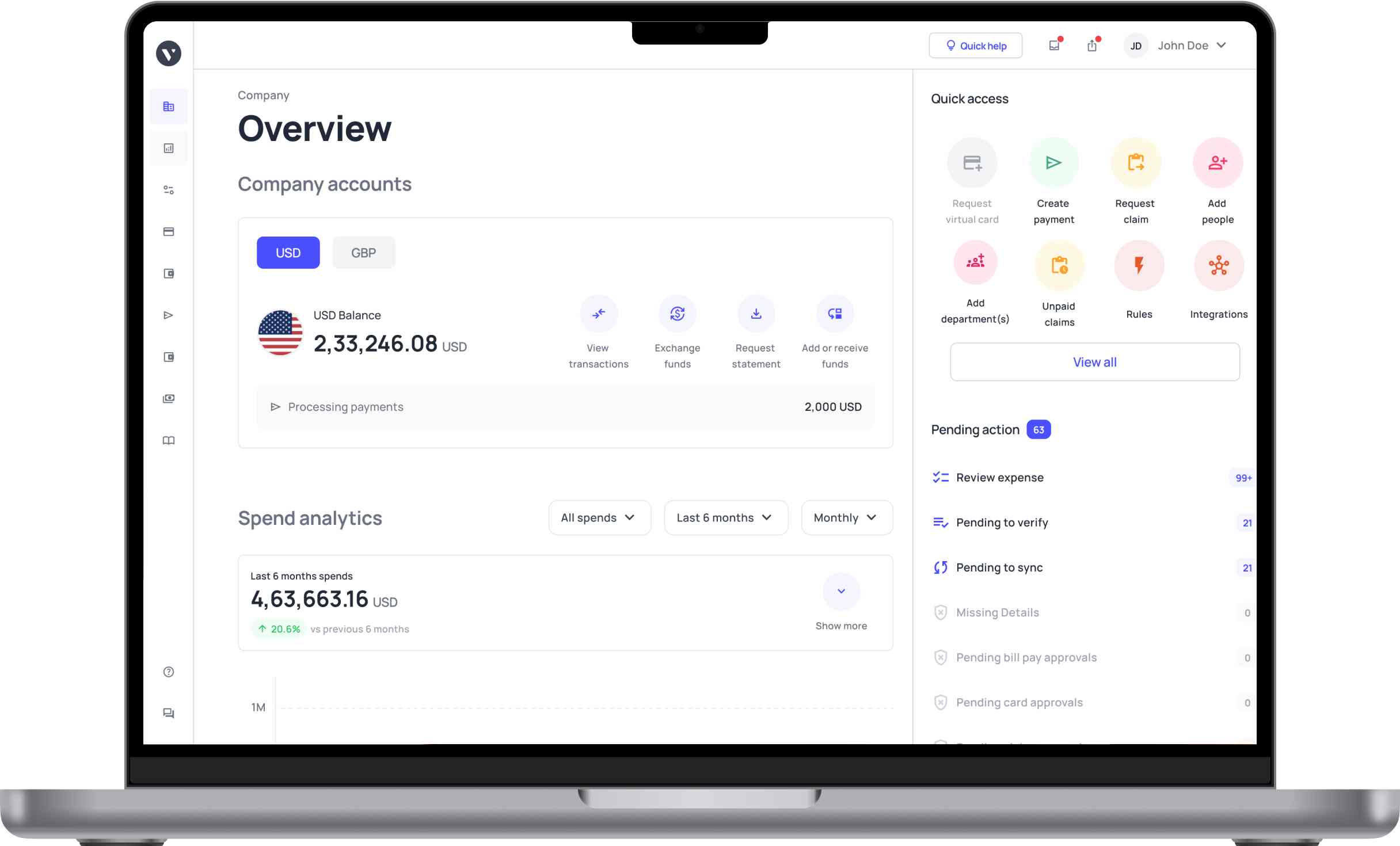
Volopay is the strongest all-in-one option for teams that want AP automation, global payments, corporate cards, and expense management without juggling multiple tools. Tipalti and AvidXchange focus on invoices and payments. Volopay goes further by bringing vendor payments and employee spending into a single dashboard, giving finance teams real-time visibility across all outflows.
It supports multi-currency payments, vendor invoice management, automated approval workflows, and both physical and virtual corporate cards. Teams can pay international vendors across different countries and currencies without needing a separate payments tool, which is where many mid-market companies run into gaps with other platforms.
Finance teams can set spending limits, restrict merchant categories, and monitor transactions in real time, all from one place. Volopay also handles receipt capture, reimbursements, and budget tracking, which means fewer tools and less manual reconciliation work for your team.
It is built for fast-growing mid-market companies that need to scale financial operations quickly without a long, complex setup process. If your business needs a platform that handles vendor AP, employee spend, and global payments together, Volopay removes the need to stitch multiple tools together.
Best for: Fast-growing teams that need AP, cards, and global payments.
Bill.com
Bill.com is one of the most widely used AP tools for small to mid-size businesses. It handles invoice processing, approval workflows, ACH and check payments, and basic international wire transfers. It connects deeply with QuickBooks, Xero, and Sage, making it a natural fit for teams already on those platforms.
Where Bill.com stands out is in its simplicity. Finance teams with limited technical resources can get up and running without a long implementation process. It works well for businesses that receive a manageable number of invoices each month and need a reliable way to route approvals and pay vendors on time.
The platform also supports two-way sync with accounting software, which reduces duplicate data entry and keeps books clean. It is a practical choice for startups, nonprofits, and growing businesses that need AP automation without the complexity or cost of enterprise tools.
For companies that primarily operate in the U.S. and want a straightforward, low-overhead AP solution, Bill.com delivers good value. Pricing starts around $45 to $55 per user per month, though transaction fees apply.
Best for: U.S.-focused small to mid-size teams with straightforward AP needs.
Stampli
Stampli takes a different approach to AP automation. Its standout feature is an AI assistant called Billy the Bot, which sits on each invoice and helps AP staff, approvers, and vendors communicate in one place. This makes it very effective for teams where invoices often need clarification or extra back and forth.
What makes Stampli a realistic alternative is how little it disrupts your current setup. It connects with 70+ ERP systems and is designed to work with your existing processes rather than replace them. For finance teams that have already invested in an ERP and do not want to rebuild their processes, this is a significant advantage.
It works well for companies in healthcare, manufacturing, or professional services where invoice exceptions are common and approvals involve multiple departments. Every conversation, edit, and decision is logged directly on the invoice, creating a clean audit trail without extra effort.
Most teams go live faster with Stampli than with more complex platforms. Pricing is quote-based and varies by company size and invoice volume.
Best for: Mid-size companies with frequent invoice exceptions.
Airbase
Airbase is a full spend management platform that covers AP automation, expense management, and corporate cards in one place. Unlike standalone AP tools, it gives finance teams a single system to manage vendor payments, employee expenses, and company card spending without switching between platforms.
What makes Airbase a compelling alternative is its guided procurement module. It helps teams enforce purchasing policies before invoices are created, which reduces maverick spending and keeps budgets on track from the start. This approach is valuable for companies that struggle with unauthorized purchases or inconsistent approval behavior.
It works well for mid-size companies in technology, professional services, or any sector where employee spending and vendor payments need to be managed together. Finance leaders who want real-time visibility across all outflows, not just AP, will find Airbase more comprehensive than traditional invoice-only tools.
Since its acquisition by Paylocity, its HR and payroll integrations have strengthened, making it a natural fit for teams already in that ecosystem. Pricing is custom and based on company size and modules selected.
Best for: Mid-size teams that want AP and spend management together.
They loved Volopay, you will too
Financial stack for business
No more switching between multiple bank accounts and tools to run your smart business. We have combined great software with every service you are using a bank for, to produce a state-of-the-art financial platform, Volopay.
Less time spent on manual reconciliations
Faster month-end book closing turnaround
Accurate receipt matching with automation
FAQs
Tipalti handles global payments across borders. AvidXchange focuses on U.S. invoice processing and domestic AP workflows. Your vendor location and payment complexity should decide which one fits your team.
AvidXchange is better for invoice automation, especially for businesses handling large volumes of domestic invoices. It offers strong AP workflows, approvals, and industry-focused automation. Tipalti also automates invoicing but focuses more on global supplier payments, tax compliance, and international finance operations.
Tipalti is better for mid-market companies scaling globally or managing contractors and affiliate payouts. AvidXchange suits US-focused businesses with stable vendor networks, offering strong invoice automation, approval workflows, and accounts payable tools for industries handling high domestic payment volumes.
Tipalti supports 196 countries and 120+ currencies. AvidXchange is strong in the U.S. but limited abroad. For cross-border payments, Tipalti is the clear choice.
Tipalti leads integrates better overall, especially with NetSuite and global finance stacks. However, the better choice still depends on your ERP requirements. AvidXchange works better with real estate ERPs like Yardi and MRI, while Tipalti supports broader international finance operations.
Tipalti is better for vendor management because it offers a self-service portal, automated onboarding, and tax form collection. AvidXchange is comparatively basic. For large or frequently changing vendor lists, Tipalti saves your AP team significant administrative time.
Tipalti offers better compliance and fraud protection with global sanctions screening, tax automation, and vendor verification tools. AvidXchange mainly provides basic duplicate invoice detection. For international vendors and large freelancer networks, Tipalti is the stronger compliance platform.
Volopay combines AP, global payments, and corporate cards in one place. Bill.com suits smaller teams. Stampli works well for complex invoice exceptions. Airbase fits teams wanting to spend management with AP.