AR automation for smarter collections
Go beyond aging-based queues. Let customer behavior, payment commitments, and unresolved blockers determine the next collection action.














Standardize collections while preserving relationships
Context-driven collection prioritization
Volopay evaluates payment history, customer commitments, disputes, and outstanding balances to identify the next appropriate action. Your collectors can prioritize accounts that need attention instead of working through aging-based lists alone.
AI-led, two-way customer communication
Volopay's AI Finance Agents interpret customer replies, share requested documents, and capture payment commitments. They also manage permitted follow-ups, leaving negotiations, sensitive account decisions, and commercial judgment to your team.
Payment commitments tracked through to receipt
A promise to pay doesn't close a collection case. Volopay tracks committed amounts and dates against incoming payments. Missed commitments trigger appropriate follow-ups, while confirmed receipts update the collection status.
Customer AP portal issue resolution
An invoice sent doesn't always mean it's accepted for payment. Volopay tracks portal submissions, identifies rejections, and coordinates missing documentation. Your team can address specific payment blockers instead of repeatedly chasing overdue invoices.
Configure collection strategies by segment
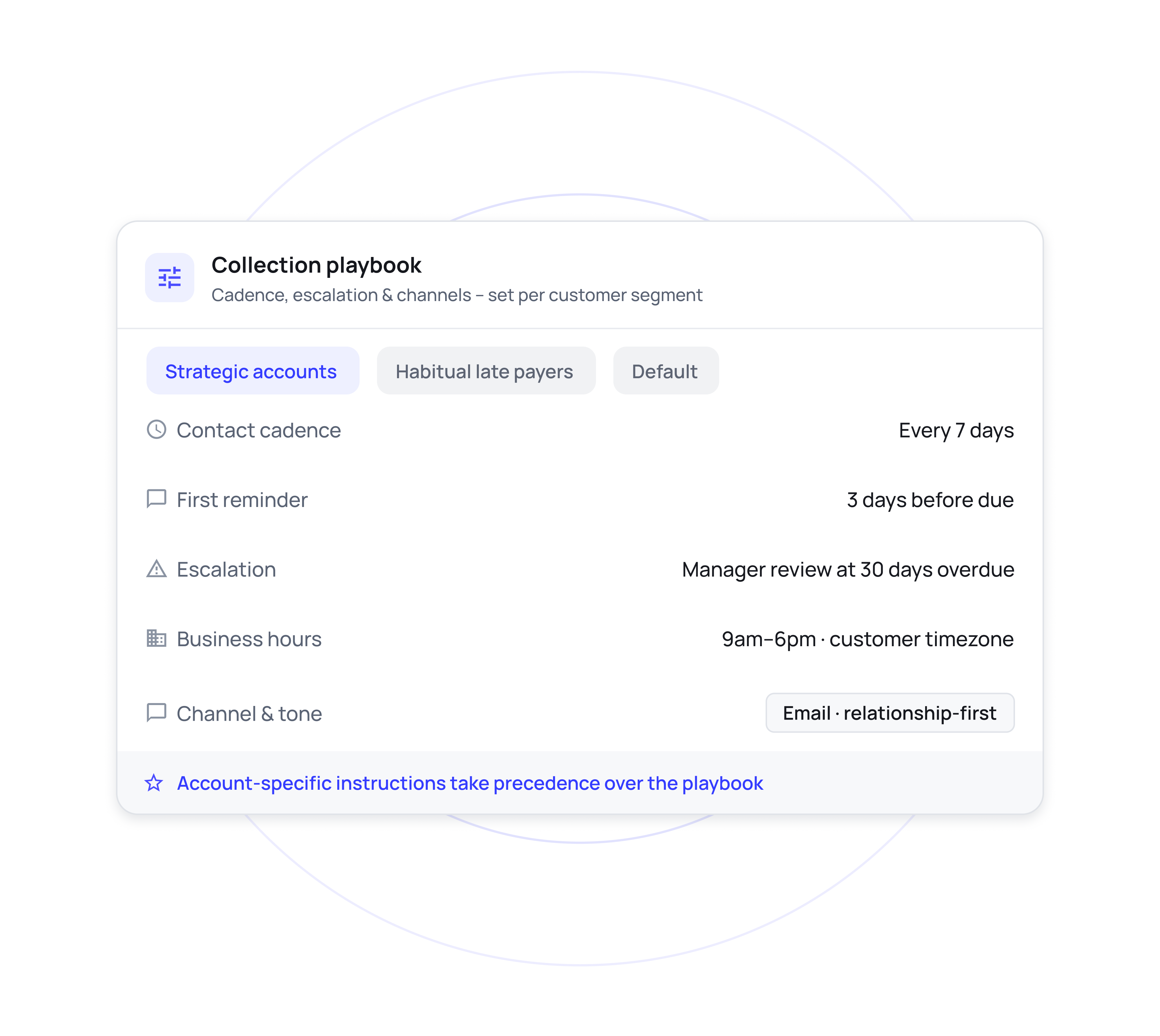
Volopay supports collection playbooks with configurable contact frequency, escalation points, business hours, and communication preferences. For example, you can apply different rules to strategic customers and habitual late payers.
Account-specific instructions take precedence over standard sequences, helping you maintain appropriate customer treatment.
Control sensitive collection actions
Configure which collection actions agents can execute independently and which require approval. Routine document requests may proceed automatically, while negotiated terms and sensitive account communications need human review.
You can inspect the proposed recipient, supporting documents, and intended follow-up before authorizing the action.
Prevent conflicting customer outreach
A customer may be negotiating with sales while your collections team prepares another reminder. Volopay checks active conversations, account holds, and relationship instructions before sending.
When a collector takes ownership of a sensitive thread, automated replies pause until the team authorizes their return.
Streamline collections and improve payment outcomes with Volopay
Make collection performance easier to measure and improve
Granular promise-to-pay reporting
Assess payment commitments by amount, count, and fulfillment status. Volopay distinguishes fully honored, partially fulfilled, revised, and broken promises within a defined reporting period.
You can examine commitment reliability across your receivables portfolio without treating every recorded promise as an expected cash receipt.
Customer payment behavior analysis
Track average days to pay and DSO using consistent reporting definitions. Volopay keeps these measures distinct, helping you assess payment speed alongside overall receivables performance.
Changes in customer behavior become easier to evaluate without drawing conclusions from overdue balances alone.
Evidence-based playbook improvements
Use customer responses, approved collector edits, and resolved payment blockers to refine collection strategies. Volopay proposes changes and tests them against historical conversations before activation.
You can review sensitive cases and approve updated rules while maintaining existing contact limits and customer treatment policies.
Collection reporting by operational segment
Review aging balances by customer, billing entity, and assigned collector, with disputed amounts reported separately.
Volopay provides consistent reporting dimensions across the portfolio, helping you examine where overdue balances are concentrated and compare collection workloads without manually rebuilding reports for each team.
AR automation for complex collections challenges
Large customer portfolios make it difficult to maintain consistent follow-ups. With accounts receivable automation, you can coordinate routine collection activity across accounts while directing your collectors toward overdue balances, unresolved blockers, and cases requiring personal intervention.
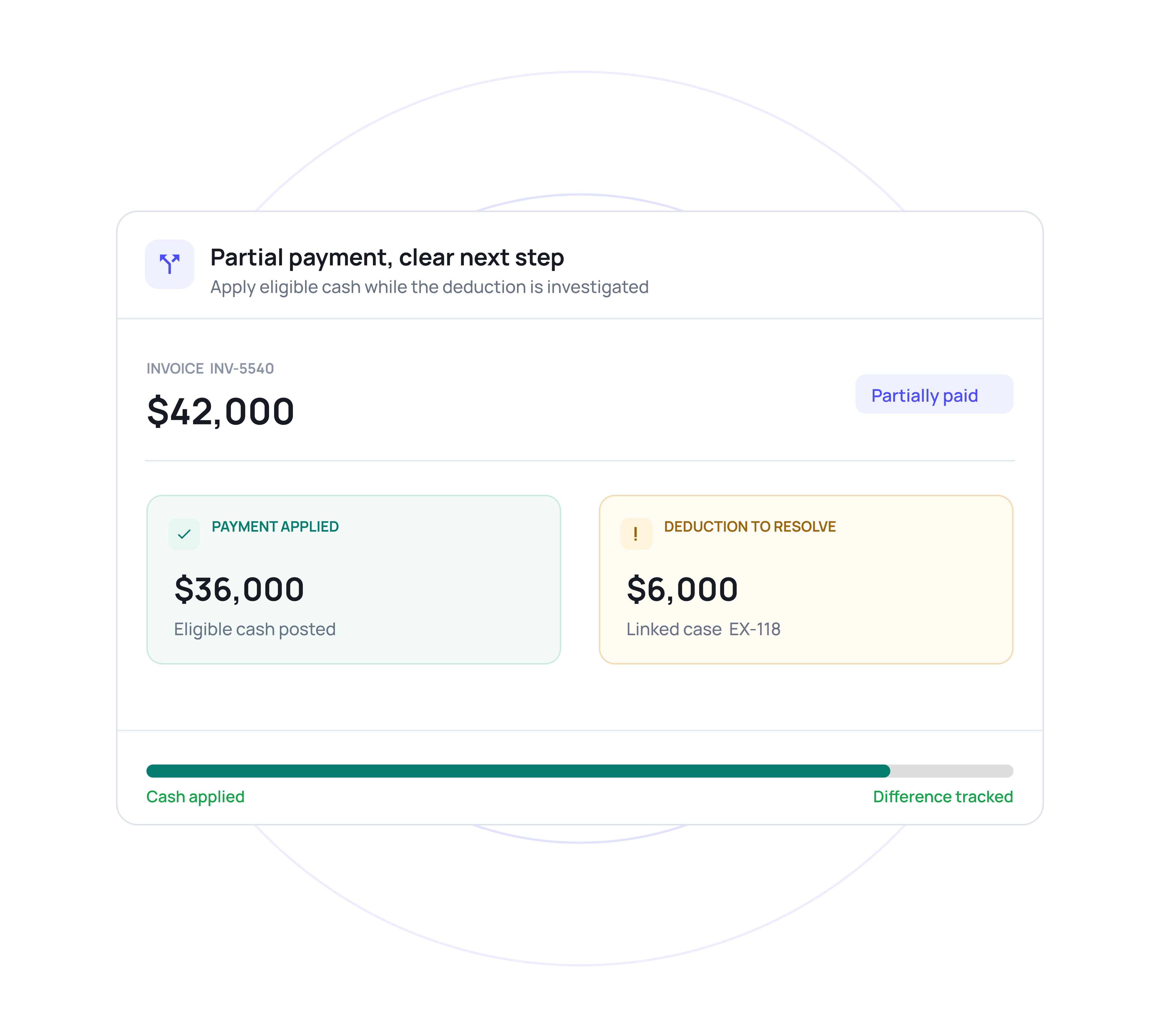
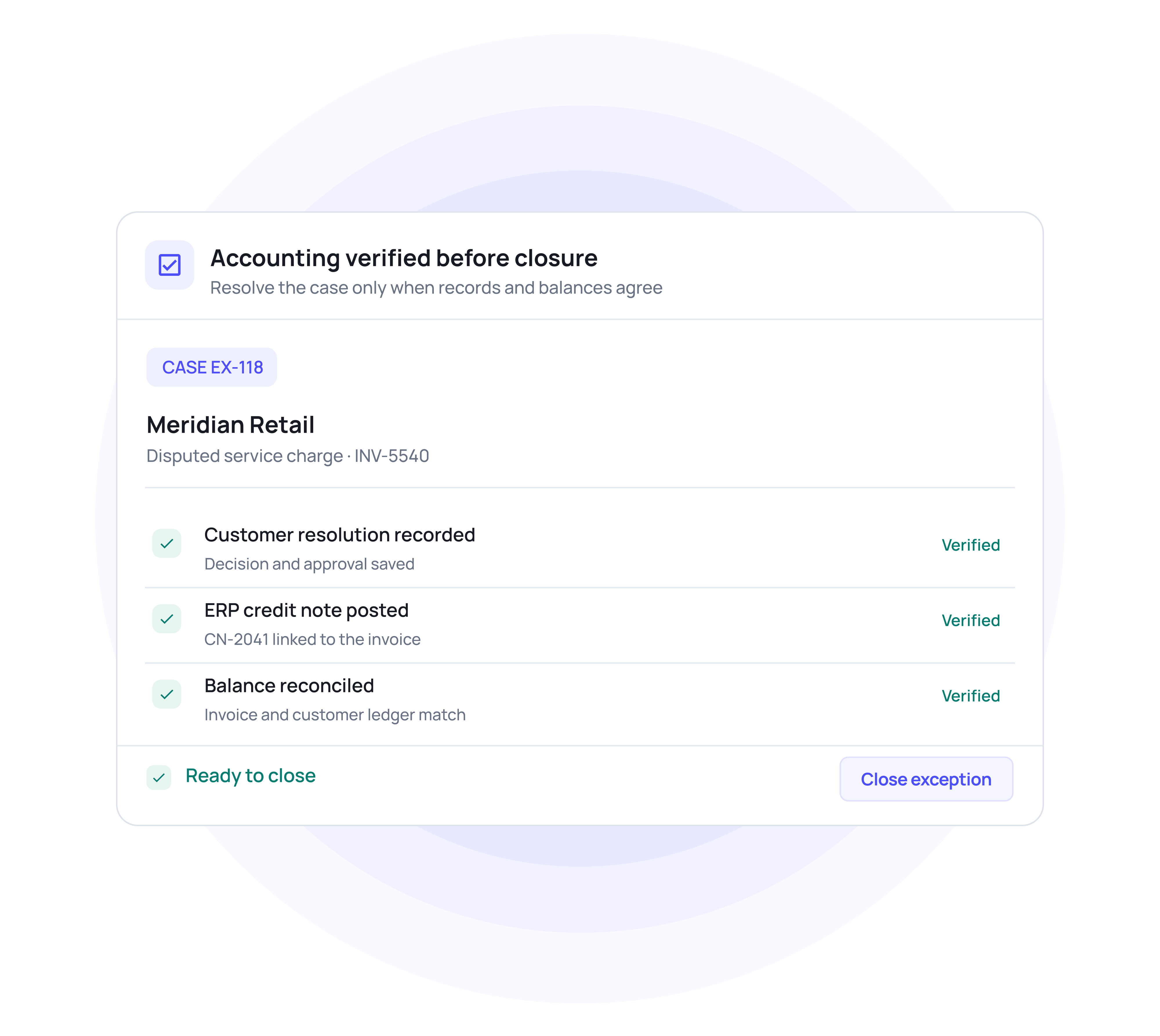
A customer may dispute only part of an outstanding invoice. Disputes and deductions management helps separate contested amounts, gather supporting evidence, and route cases for resolution. Your team can continue collecting eligible undisputed balances without waiting for the entire claim to close.
Repeated billing discrepancies can leave collectors chasing payments that customers cannot approve. Billing automation checks invoice details against approved terms and customer requirements. Your team can identify missing documentation or incorrect charges before they create another collection delay.
Why AR and collections leaders choose Volopay
Traditional AR and collections management | With Volopay |
|---|---|
Aging-driven collection queues: Collectors work through overdue invoices without sufficient context on customer commitments, disputes, or payment blockers | Context-driven prioritization: Evaluate account history, payment behavior, outstanding balances, and active issues to identify which receivables need attention and why |
Manual customer follow-ups: Collectors spend considerable time sending reminders, responding to routine requests, and tracking conversations across inboxes | AI-led collection execution: Finance Agents handle permitted outreach, interpret customer replies, and provide requested documents. Your team handles sensitive conversations and decisions requiring judgment |
Payment promises lost in email: Commitments are recorded inconsistently, and collectors must manually check whether customers paid as agreed | Structured commitment tracking: Capture promised amounts and dates, monitor receipts, and distinguish fulfilled, partial, revised, and broken commitments to inform subsequent collection actions |
Unresolved cases moving between teams: Billing discrepancies, customer disputes, and missing information require repeated follow-ups with sales, support, and finance | Accountable exception resolution: Route specific requests with supporting evidence, assigned ownership, and follow-up deadlines. Escalate unresolved internal dependencies rather than leaving cases in unattended queues |
Collection activity mistaken for results: Reminder counts and outreach volumes provide limited insight into whether collection efforts are improving payment outcomes | Outcome-based collection reporting: Review DSO, average days to pay, promise fulfillment, customer responses, and confirmed collections. Assess financial results separately from the volume of collection activity |
They loved Volopay, you will too
Connect your finance stack
Connect Volopay with your ERP, banking, and communication platforms to coordinate receivables workflows across your existing finance infrastructure. Maintain your ERP as the system of record while improving visibility and execution across the revenue-to-cash cycle.
Connect to:
● ERP and accounting: NetSuite, SAP, Oracle, Microsoft Dynamics, QuickBooks, Xero, Sage
● Email and messaging: Gmail, Outlook
● Customer AP portals: Coupa, SAP Ariba, Tungsten
● Banking: Bank feeds and virtual accounts




FAQs
Yes. Volopay's AI Finance Agents send permitted reminders, respond to customer queries, and follow up on outstanding commitments. Before sending, they check for active disputes, account holds, new receipts, and unresolved conversations to avoid inappropriate outreach.
Volopay ranks receivables using overdue value, aging, payment history, broken promises, relationship sensitivity, and active blockers. Collectors see the reason behind each priority. Managers can override priorities and assign work by entity, region, customer segment, or collector.
Yes. Volopay extracts promised amounts, dates, covered invoices, and conditions from customer conversations. It tracks fulfilled, partial, revised, and broken commitments against actual receipts. Ambiguous promises are clarified before follow-ups are scheduled or collection activity is adjusted.
Volopay interprets replies, provides approved documents, and identifies issues such as missing POs or incorrect billing details. It creates actionable cases, requests missing information, and checks whether requirements are satisfied before resuming collection activity or escalating unresolved issues.
Volopay identifies disputed amounts, gathers supporting evidence, and coordinates investigation with the appropriate teams. Collections can continue on undisputed balances. Once a decision is reached, the collectible balance is updated to reflect approved credits, corrections, or other verified financial outcomes.
No. Volopay operates alongside your ERP, banking, and communication systems. Collections agents use connected invoice records, customer conversations, and payment information to coordinate actions. Your ERP remains the accounting system of record, with financial postings handled through the relevant AR workflows.
Volopay handles permitted reminders, routine document requests, commitment tracking, and payment-blocker follow-ups. It also coordinates requests across internal teams. Collectors can concentrate on negotiations, strategic accounts, and sensitive exceptions while routine work progresses under configured collection policies.
Bring Volopay to your business
Get started now