Accounts receivable automation for CFOs
Get a clearer picture of expected customer payments with a 13-week collections forecast, refreshed daily. Pinpoint which invoices are committed, expected, or at risk, and why.
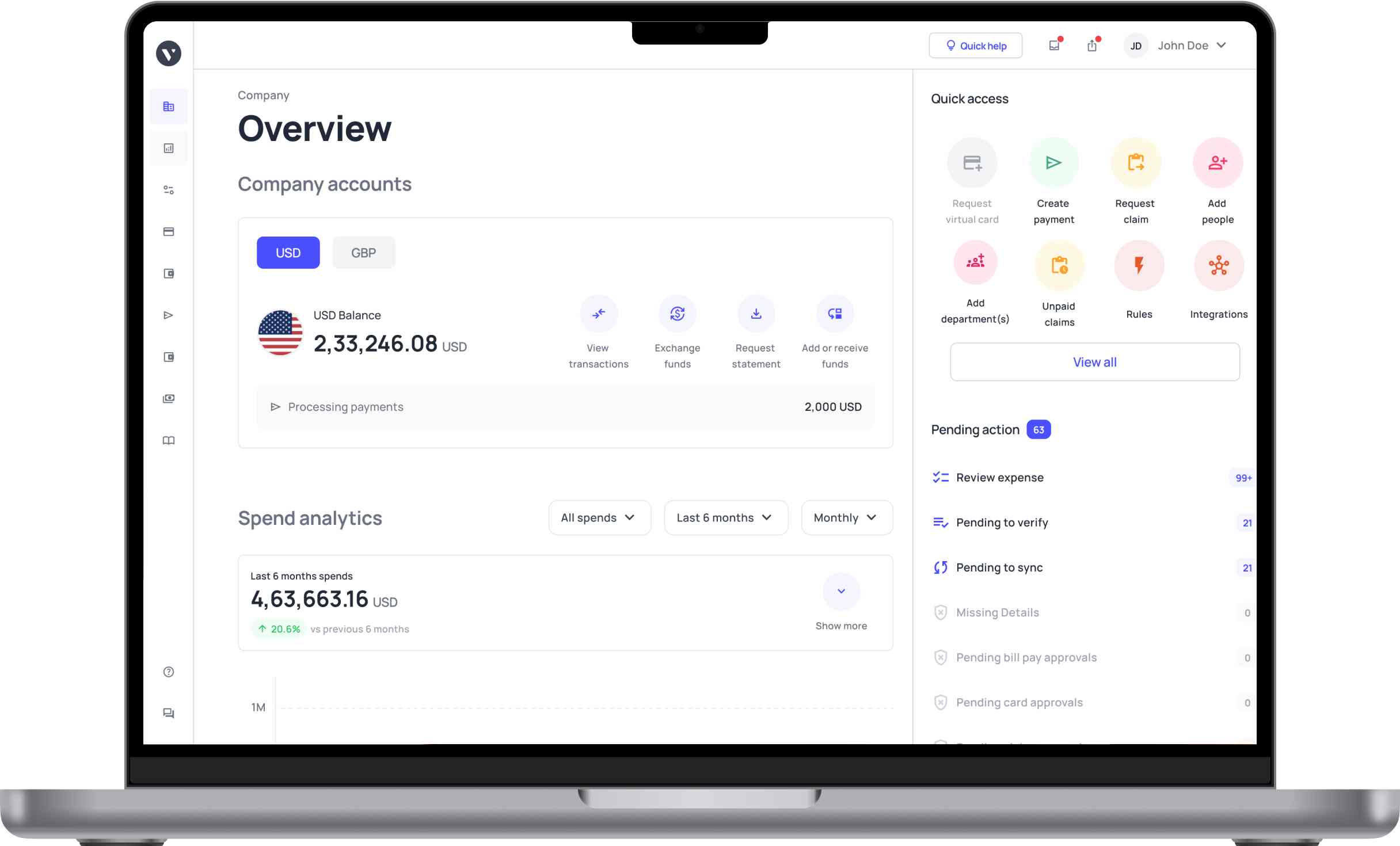














Bring more certainty to your revenue-to-cash cycle
Policy-governed financial execution
Configure AI Finance Agents around your existing approval limits and financial policies. Routine actions proceed within authorized boundaries, while sensitive exceptions, adjustments, and commercial decisions remain with the appropriate finance owners.
Receivables control across entities
Maintain separate balances, accounting records, and period controls for each billing entity. Review AR exposure across the business while preserving the distinctions needed for entity-level reporting and financial oversight.
Traceable accounting outcomes
Connect receipt allocations, approved credits, and other permitted AR transactions to their ERP records. Track posting failures and subsequent changes, giving finance a clearer view of whether intended accounting actions were completed.
Maintain control throughout the receivables close
Monitor cut-off checks, outstanding exceptions, and pending approvals throughout the reporting period. Volopay prepares receivables close reports and supporting records, while authorized finance personnel retain responsibility for sign-off and period locking.
Trace cash-flow changes to invoice-level drivers
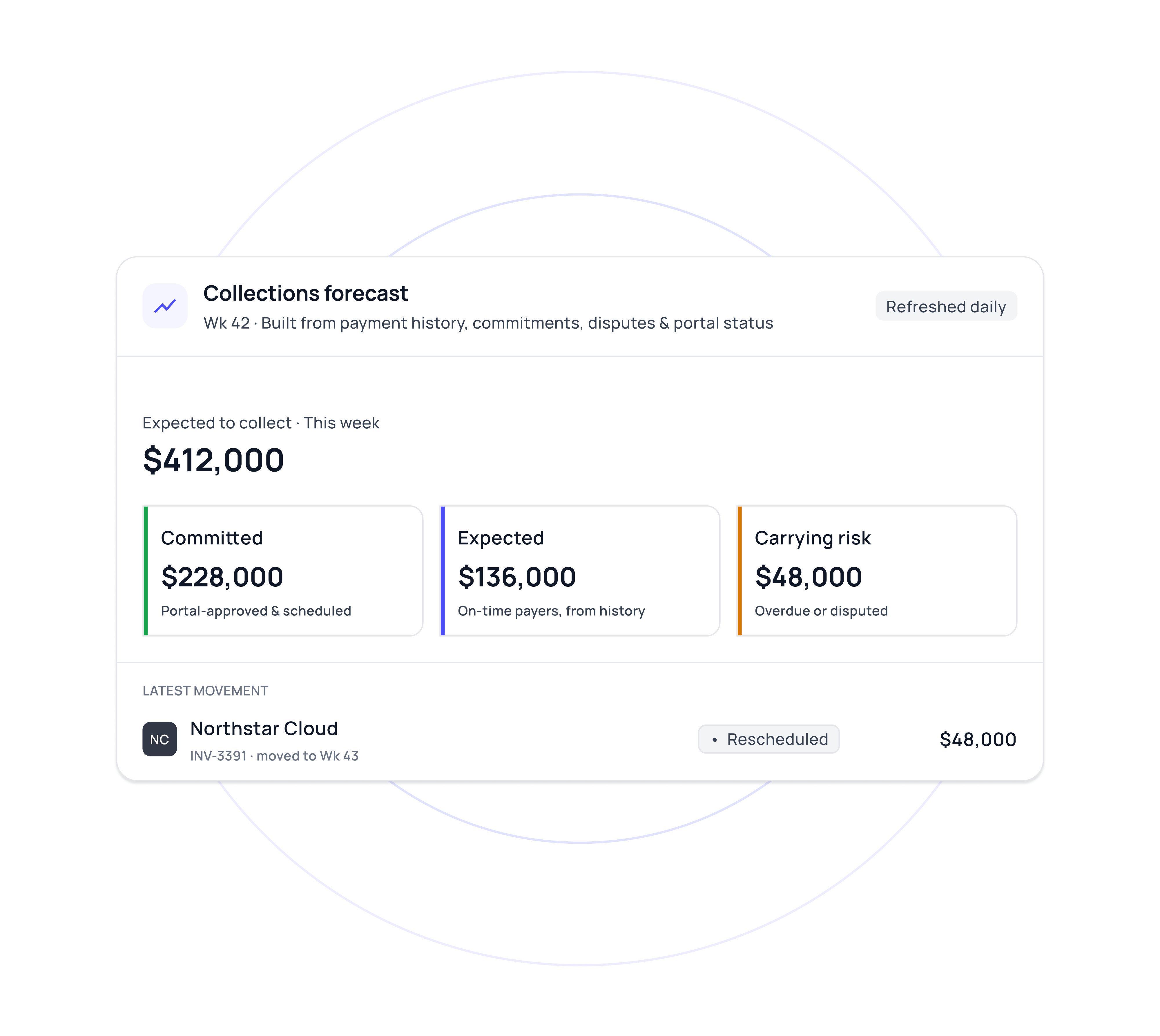
Volopay builds your collections forecast from invoice-level payment history, customer commitments, disputes, and portal status.
When a major customer revises a payment date, the next daily refresh captures the change. You can trace forecast movements to specific receivables and distinguish committed inflows from amounts carrying collection risk.
Separate disputed and collectible receivables
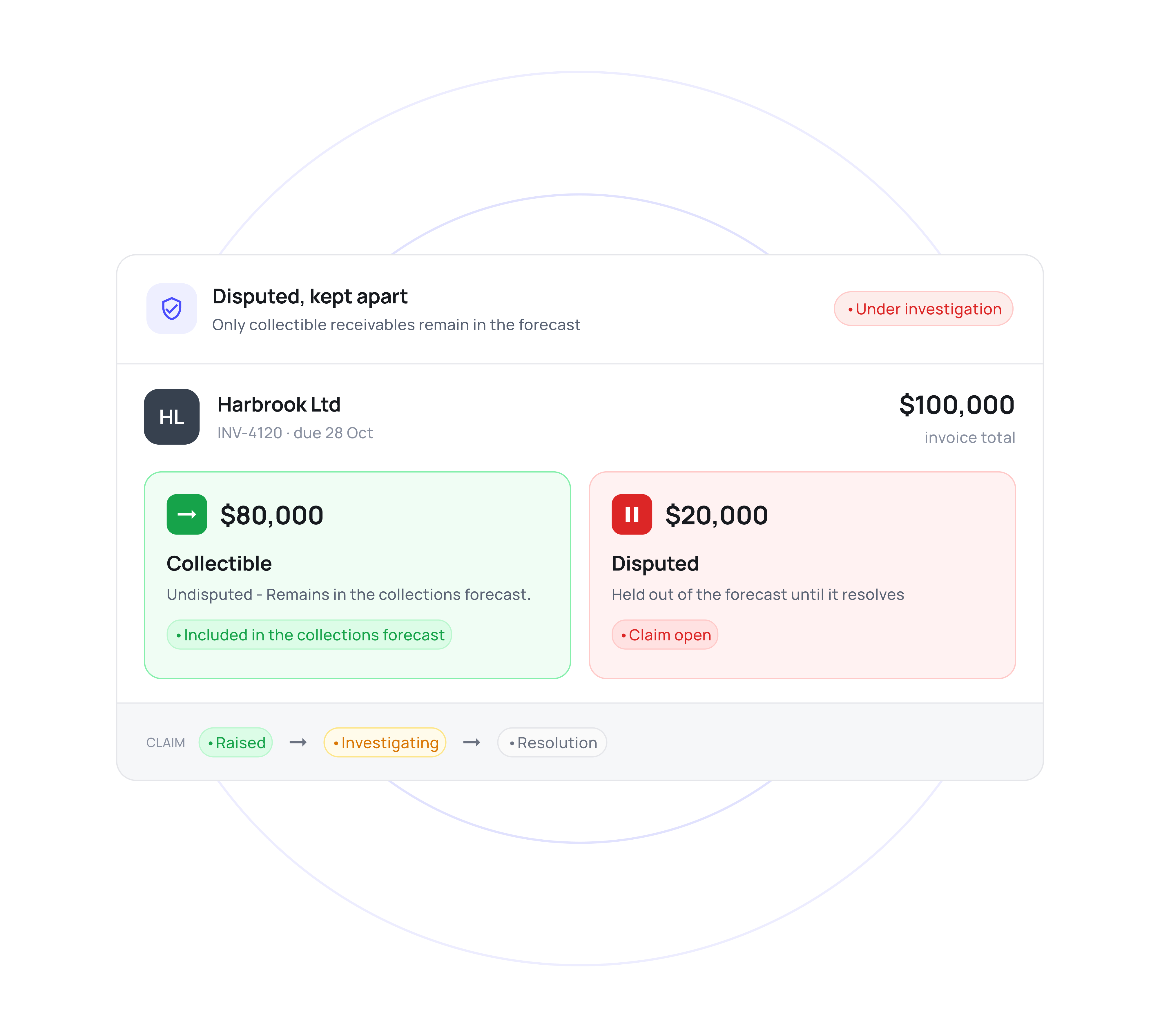
Your aging report may include balances that aren't currently collectible. Volopay distinguishes disputed amounts from undisputed receivables and maintains the underlying claim status.
If a customer contests $20,000 of a $100,000 invoice, you can track the $80,000 separately while the disputed portion moves through investigation and resolution.
Analyze collections variance by invoice
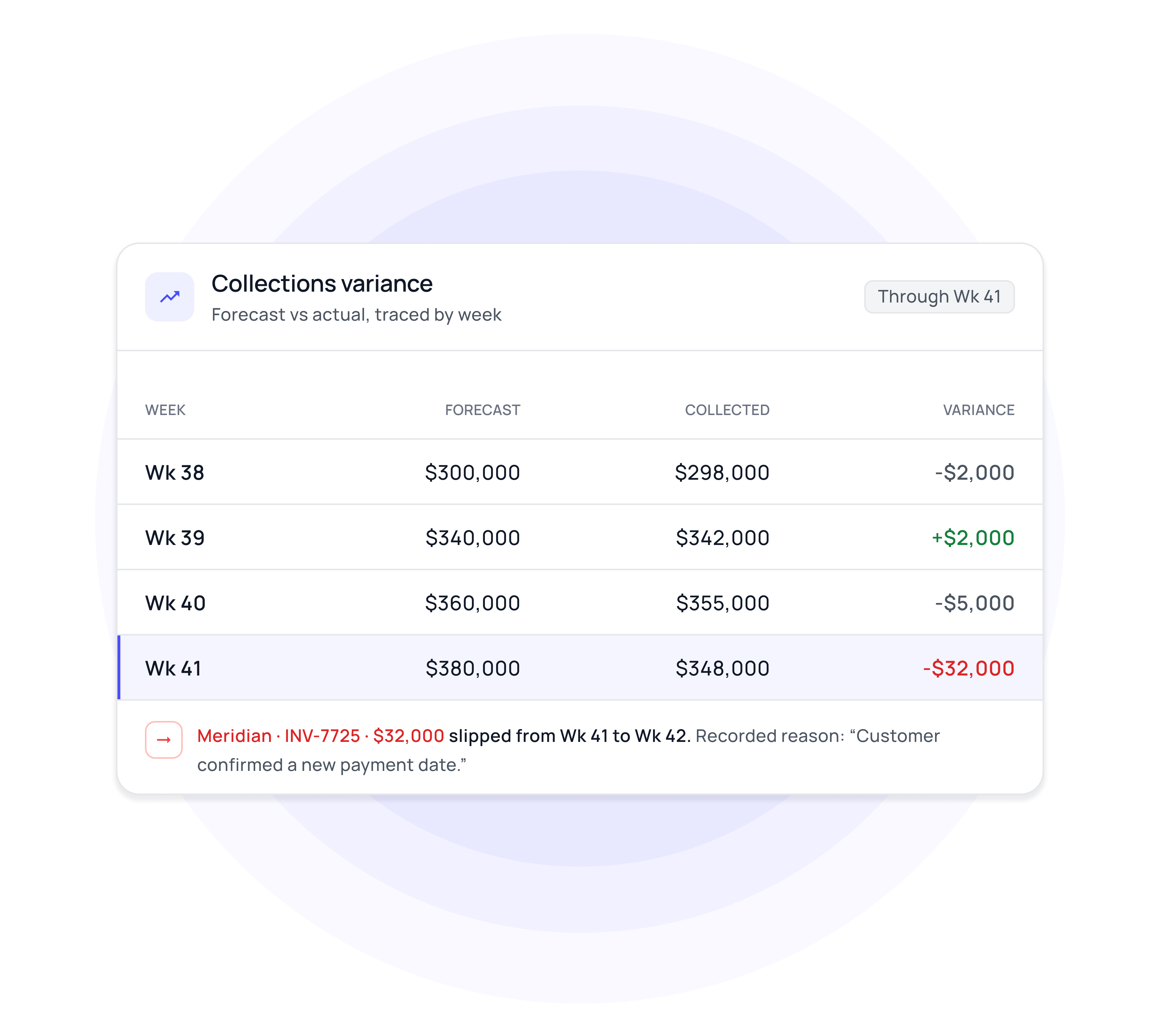
Volopay tracks forecast-to-actual collections variances by week, with customer-level explanations for differences. If a significant payment slips into the following period, you can identify the affected invoices and recorded reasons.
This gives you stronger evidence for evaluating collection performance, payment delays, and the reliability of projected customer inflows.
Take control of your receivables and improve cash flow visibility with Volopay
More AR capabilities to help CFOs take control
Deployment scoped to measurable outcomes
Start with a defined receivables workflow rather than a company-wide transformation. Volopay's deployment team examines representative transactions, establishes a baseline, and identifies the first automation opportunity.
You can assess results against existing processing times, manual effort, and exception volumes before committing to broader adoption.
Dedicated technical ownership throughout deployment
Every Volopay customer receives a deployment lead and forward-deployed engineer. They configure integrations, test workflows against historical cases, and support go-live.
You have named technical owners for subsequent changes, reducing your team's responsibility for maintaining the automation as business requirements evolve.
Progressive automation with defined authority
Volopay begins with controlled workflow execution, allowing finance to review proposed actions before expanding automation. Routine transactions can move to automatic processing once they perform reliably against established rules.
You retain authority over approval limits, exception handling, and changes to what agents can execute.
Customer-specific workflow configuration
Configure AR workflows around your existing policies, approval structures, and customer requirements. Volopay supports different collection rules and exception paths without requiring every account to follow an identical process.
You can standardize routine execution while preserving necessary differences across customer segments and operating teams.
AR automation for strategic finance priorities
A few large customers can account for a significant share of outstanding receivables.
With accounts receivable automation, you can coordinate account-specific follow-ups, track payment commitments, and address collection blockers without relying on manual intervention at every stage.
Missing purchase orders, incorrect pricing, and rejected invoices can delay collections despite completed sales.
Billing automation helps validate contractual requirements, identify missing documentation, and track invoice acceptance, reducing the risk of preventable delays between billing and payment.
When customers settle multiple invoices through a single payment, incomplete remittance information can complicate allocation.
Cash application automation matches supported amounts, investigates differences, and verifies accounting outcomes, helping your team maintain accurate receivables balances without extensive manual matching.
Why CFOs use Volopay to stay in control of AR
Traditional AR management | With Volopay |
|---|---|
Uncertain cash inflows: Collection forecasts rely on invoice due dates and manually updated spreadsheets, making it difficult to explain changes in expected receipts | Evidence-based cash forecasting: A 13-week collections forecast, refreshed daily using payment history, customer commitments, and disputes, with invoice-level explanations for projected inflows |
Working capital tied up in receivables: Payment blockers, delayed follow-ups, and unresolved exceptions keep collectible amounts outstanding longer than necessary | Connected collections execution: AI Finance Agents progress permitted follow-ups, address routine blockers, and escalate exceptions, helping finance act on receivables that require attention |
Rising AR operating costs: Growing transaction volumes increase manual matching, customer follow-ups, and exception handling workloads | Scalable AR operations: Automate routine collections, cash allocation, and exception workflows within defined policies, reducing repetitive work without removing human oversight of material decisions |
Limited insight into financial exposure: Aging reports show overdue balances but provide insufficient context on disputes, payment commitments, and amounts unlikely to arrive as scheduled | More precise receivables oversight: Separate disputed amounts from collectible balances, track customer commitments, and identify at-risk collections with supporting transaction details |
Fragmented finance systems: Billing, customer communications, bank receipts, and accounting records operate across separate platforms, creating manual handoffs and reconciliation work | Connected revenue-to-cash operations: Coordinate billing, collections, disputes, and cash application across existing systems, with permitted accounting actions posted and verified in your ERP |
They loved Volopay, you will too
Connect your finance stack
Connect Volopay with your ERP, banking, and communication platforms to coordinate receivables workflows across your existing finance infrastructure. Maintain your ERP as the system of record while improving visibility and execution across the revenue-to-cash cycle.
Connect to:
● ERP and accounting: NetSuite, SAP, Oracle, Microsoft Dynamics, QuickBooks, Xero, Zoho Books, Sage
● Email and messaging: Gmail, Outlook
● Customer AP portals: Coupa, SAP Ariba, Tungsten
● Banking: Bank feeds and virtual accounts




FAQs
Accounts receivable automation helps CFOs improve collections oversight, reduce manual AR workloads, and strengthen financial controls. Volopay coordinates billing, collections, disputes, and cash application while providing clearer visibility into expected customer payments and outstanding receivables.
Volopay provides consolidated visibility into aging balances, outstanding invoices, disputes, and unapplied cash across billing entities. Its 13-week collections forecast refreshes daily, helping you track expected inflows, identify at-risk payments, and investigate changes at the invoice level.
Yes. Volopay uses AI Finance Agents to prioritize outstanding invoices, send permitted follow-ups, interpret customer responses, and track payment commitments. Agents consider disputes, account history, and approval policies, escalating sensitive cases or decisions requiring human judgment.
Volopay combines bank transactions, remittance details, and customer records to identify payers and allocate receipts against invoices. It applies supported matches using configured rules, investigates payment differences, and verifies permitted accounting postings in your ERP.
Volopay identifies issues such as missing billing documents, broken payment promises, unexplained deductions, and unmatched receipts. It connects exceptions to supporting evidence, assigns ownership, and determines the next permitted action or approval needed to progress resolution.
No. Volopay operates alongside your existing ERP, banking, and communication systems. It connects relevant financial records, coordinates AR workflows, and posts permitted accounting transactions while your ERP remains the system of record for general ledger accounting and financial reporting.
Volopay combines deterministic matching, customer-specific rules, and AI Finance Agents to execute routine AR workflows. Agents interpret customer communications, gather evidence, and coordinate permitted actions. Low-confidence matches, sensitive exceptions, and decisions outside configured authority remain subject to human review.
Bring Volopay to your business
Get started now