Deploy AR automation with zero disruption
Connect existing finance systems, collection policies, and customer relationships within your receivables process. Volopay builds on these foundations with automated workflows, defined responsibilities, and clear approval requirements.














What shapes your AR automation setup
Business-specific workflows
Collection practices, customer expectations, and payment terms shape the initial setup, keeping automation relevant to how your finance team operates.
Connected finance systems
Existing accounting, payment, and customer applications provide the data needed to support and streamline receivables workflows.
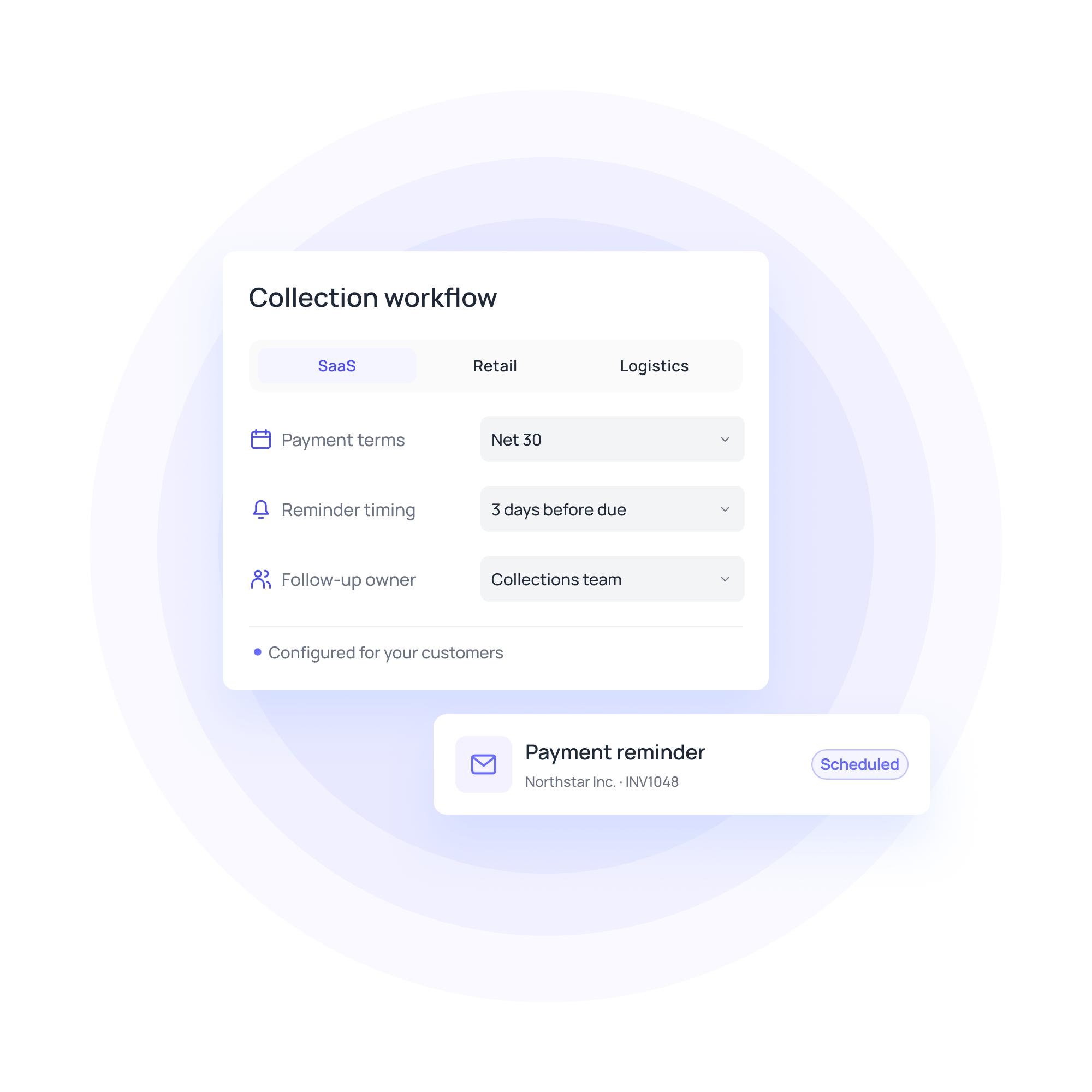
Customize collection workflows
Every business has its own collection practices, customer expectations, and payment cycles. Volopay takes these differences into account when configuring receivables workflows, bringing relevant financial processes and customer context into everyday automation.
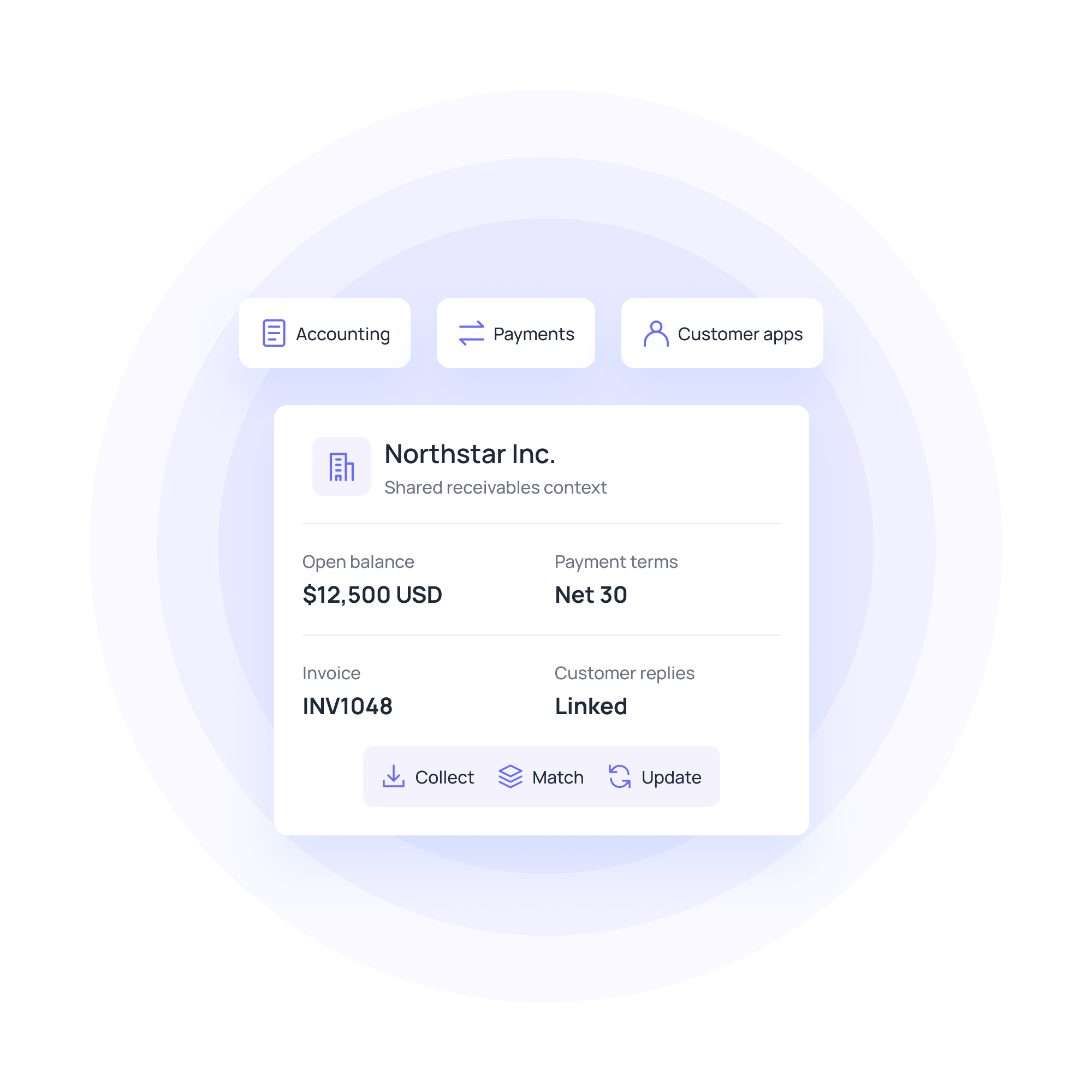
Leverage existing system data
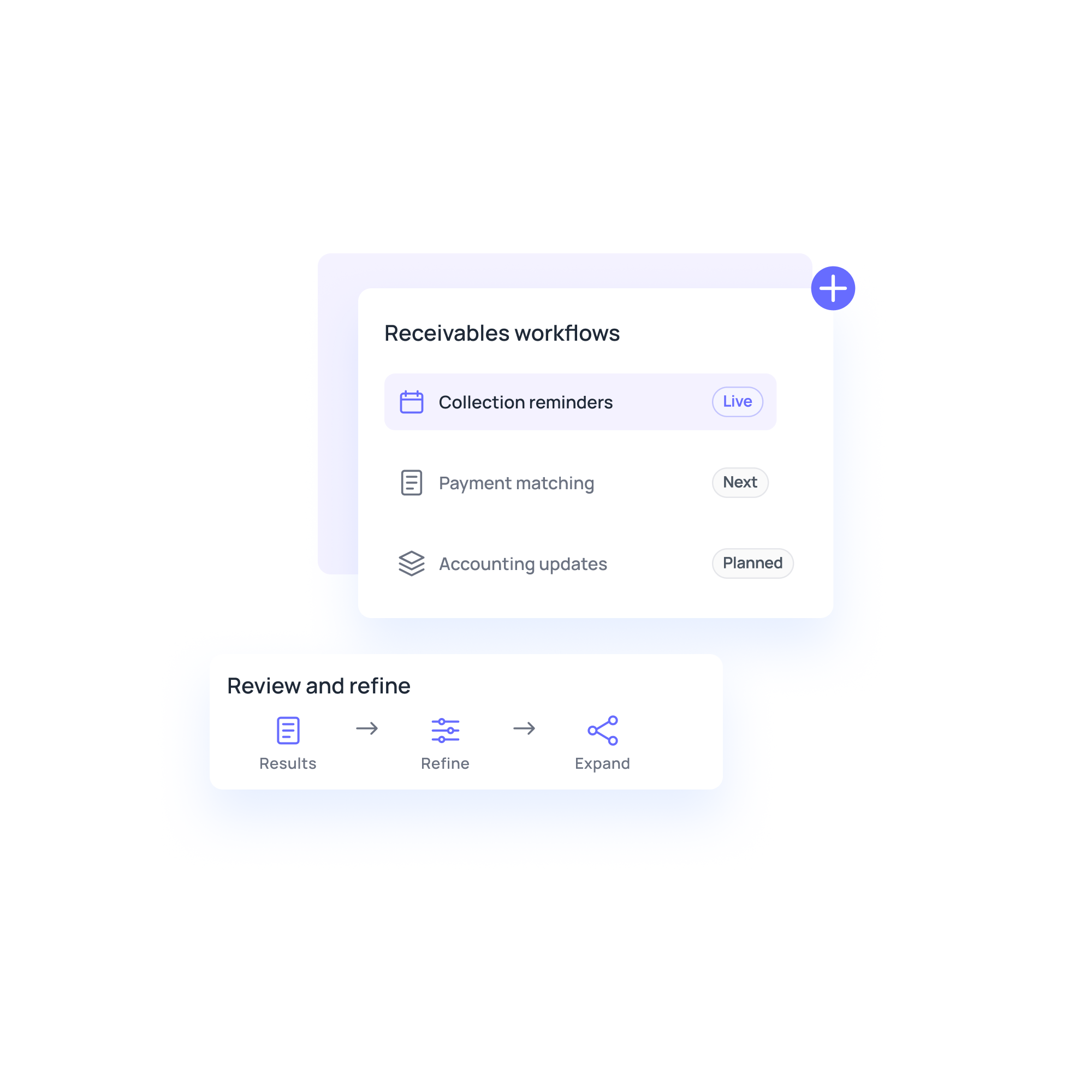
Use existing accounting, payment, and customer applications as the foundation for receivables automation. Their information supports collection activity, payment matching, and accounting updates, allowing workflows to work with the financial and customer context your business already maintains.
Expand automation as needed
Deployment establishes a foundation that can expand beyond the first workflow. As teams become more familiar with automation, additional receivables activities can be introduced and existing processes refined based on operational results.
Turn complex receivables into seamless workflows
Make automation practical to adopt and manage
Introduce changes without disrupting ongoing work
A phased rollout considers existing receivables activities, relevant records, and team readiness together. This helps maintain continuity as teams transition from established processes to automated workflows.
Keep finance involved in important decisions
Automation handles the work it is enabled for, while finance retains responsibility for decisions and exceptions. Defined ownership and review requirements give teams a consistent way to evaluate activity, approve changes, and intervene when needed.
Choose the receivables workflows to improve first
Introduce automation across reminders and follow-ups, with customer context and review requirements built into the process. Establish a consistent approach to collection activity before extending automation to more receivables tasks.
Bring payment information and outstanding invoices into the same workflow to reduce the effort involved in identifying incoming receipts. Keep finance attention focused on unclear payments and differences that need investigation.
Bring customer information, conversations, and outstanding tasks into a shared process. Maintain continuity as receivables activities move into Volopay while giving teams a more consistent way to manage customer accounts.
A rollout that reflects how your finance team works
What implementation needs to achieve | How Volopay approaches it |
|---|---|
Reflect existing business practices: Collection processes, customer expectations, and payment terms vary across businesses. | Business-specific configuration: Workflows account for collection practices, customer context, and recurring exceptions. |
Turn policies into consistent actions: Teams need clear rules for communication, approvals and responsibilities. | Defined workflow requirements: Communication rules, ownership and approval requirements form part of the automation setup. |
Use existing financial information: Automation needs relevant finance and customer records. | Existing system connections: Accounting, payment, and customer applications provide information for receivables workflows. |
Build confidence before wider adoption: Teams need to understand how workflows handle different customer and payment situations. | Workflow validation: Test automated processes against representative customer and payment scenarios before expanding their use. |
Maintain oversight as automation grows: Finance teams need control over automated actions and decisions that require review. | Clear review responsibilities: Automatic actions and finance review requirements are defined as automation expands. |
Demonstrate operational value: Teams need to understand whether automation is improving daily operations. | Measurable results: Progress is assessed against agreed business goals, helping teams identify further opportunities for improvement. |
They loved Volopay, you will too
FAQs
No. Your existing process provides the starting point. Practices that work can be retained, while manual steps and inconsistent handling can be addressed through automation.
Existing information is reviewed as part of the transition. Relevant records are identified, prepared, and checked so the new process has the information needed for daily receivables activities.
Success is assessed against the goals established during deployment. These may include reducing manual collection effort, improving payment matching, or shortening the time spent handling unresolved customer issues.
Workflows can be reviewed and adjusted as collection policies, customer needs, and connected systems evolve. Feedback from daily use helps guide further improvements.
Bring Volopay to your business
Get started now