Ramp vs Expensify: Which tool should you choose?
When comparing Ramp vs Expensify for expense management, you will find two platforms that take very different approaches to solving this problem. In most cases, the decision comes down to three factors: card strategy, workflow requirements, and budget.
We have reviewed the main differences between Ramp and Expensify across the areas that matter most, so you can make a clear and confident decision for your business.













REVIEWED BY

Akanksh Muniyappa
Head of Product
WRITTEN BY

K T Haritha
Content Writer
Quick summary: Ramp vs Expensify
Ramp and Expensify are built with a clear vision to help businesses manage spending. Both are made to address different pain points, buyer types, and priorities. Ramp is centered on a corporate card program, while Expensify focuses on expense reporting. Both were built with a primary focus: easy expense management and high productivity.
| Key factors | Ramp | Expensify |
|---|---|---|
Corporate cards & spending controls | ||
Expense management & reporting | ||
Receipt scanning and OCR | ||
Invoice automation and bill pay | ||
Cash flow management | ||
Company budget and size | ||
Pricing and plans | ||
Accounting & ERP integrations | ||
Customer support & onboarding |
Ramp
Ramp Business Corporation is an American financial technology company founded in 2019 and headquartered in New York.
Its primary purpose is to serve as a corporate charge card for businesses. It is a fast-growing multinational company focused on improving existing methods for collecting and managing invoices. By 2026, it has evolved into a full spend management platform.
Ramp primarily targets finance teams to reduce manual work, enable easier bookkeeping, speed up month-end closing, and provide real-time visibility into company spending. It is best suited for scaling SMBs and mid-market companies.
| Pros | Cons |
|---|---|
Ramp lets you manage and whitelist vendors so you can control where company cards are used and avoid unnecessary payment declines. | Ramp sets your spending limit based on the cash in your connected bank accounts, so it can change depending on how much money is available. |
You can pre-approve trusted vendors, which helps payments go through smoothly for subscriptions, suppliers, and regular expenses. | It keeps checking your balance, so big payments like taxes, vendor transfers, or moving money between accounts can affect your limit. |
Expensify
Expensify, Inc. is an expense management system for individual and company financial operations. It was founded in 2008 and is headquartered in Portland, Oregon.
Its primary purpose is to make expense reporting easier. It is a growing financial technology company focused on improving and enhancing the receipt-capturing process. Unlike Ramp, it is not built around a card. In 2026, Expensify introduced a card-agnostic foundation strategy. Additionally, Expensify is best for businesses of all sizes, from freelancers to large enterprises.
| Pros | Cons |
|---|---|
The mobile app is simple and easy to use, letting employees upload receipts and submit reports in just a few steps. | Expensify often promotes its other products, especially the Expensify Card, with frequent pop-ups and notifications. |
It also has a very low learning curve, so even new users can pick it up quickly and manage expenses without confusion. | Sometimes it shows too many prompts when you’re trying to do simple tasks like approving expenses, which can slow things down. |
In-depth comparison: Ramp vs Expensify
Let’s take an in-depth look at both platforms across nine key factors that matter most to finance teams and business owners. In each section, you’ll see a comparison of Expensify vs. Ramp on what each tool does and where it falls short.
Which tool is right for you?
Ramp
Ramp is best suited for growing SMBs and mid-market businesses.
Expensify
Expensify is best suited for businesses of all sizes, from freelancers to large enterprises.
Get your team working with Volopay
Key factors to consider in choosing the right product for you
Corporate cards & spending controls
When businesses use corporate cards, finance teams can track and record expenses before and after money leaves the account. They can notice unusual transactions, duplicate subscriptions, or unauthorized purchases. Finance teams can set spending limits for specific employees, vendors, and teams based on company policies. This helps employees make purchases without worrying about policy violations. Some platforms are built around their own corporate cards, while others work with any card your business already uses, so choose a platform that caters to your current and future card needs.
Expense management & reporting
Businesses use expense management features to maintain an organized account of their finances without much manual work. They also reduce accounting mistakes and make receipts, approvals, and payment records easier to track during reporting or audits. Employees who incur out-of-pocket expenses need a platform that makes reimbursement submission easy, trackable, and auditable. With structured reporting, finance teams can easily track department, project, and other miscellaneous expenses without further dilemmas.
Receipt scanning and OCR
Many platforms use receipt scanning features that allow employees to snap, upload, and forward receipts. It reduces the pressure of chasing down missing documentation at month-end. The OCR tool further simplifies extracting the merchant name, amount, date, and category from a photo instead of manually entering every detail. For organizations with a large number of employees, adopting receipt scanning and OCR makes receipt submission a frictionless process. Some platforms even allow employees to upload their expenses through SMS, email, or mobile apps.
Invoice automation and bill pay
Single dashboards, with vendor invoices alongside employee expenses, give finance teams an operational advantage instead of going back and forth between different expense tools. Invoice automation covers everything from capturing bills to executing payments. Whether you use ACH, checks, or cards, this feature reduces the burden of bill payments. It also helps businesses stay compliant with tax regulations while maintaining low processing costs.
Cash flow management
Your team needs cash flow management to avoid running out of money and to have structured steps for managing expenses. The payment model of a corporate card can determine your business’s cash position. It helps users avoid problems like debt, delayed payments, and incomplete bookkeeping. Irregular payment cycles can affect relationships with vendors, risking your chances of stable growth. A system with good cash flow management encourages customers to pay earlier, helps businesses negotiate with suppliers, and reduces unnecessary expenses.
Accounting automation
Accounting automation in expense platforms does more than capture data; it also makes sure spending flows into the accounting system. It helps categorize expenses, map them to the right accounts, and sync everything with accounting software. If something goes against company policy, the system can flag it so it can be approved or rejected. It also makes it easy to pull reports, access documents, and manage expenses from one place.
Company budget and size
Company budget and size matter a lot when making any major decision. The right expense tool depends on what features you actually need. A platform won’t work the same way for a 10-person startup as it does for a 100-person organization. Small teams usually care about quick setup and easy onboarding, while larger companies need more advanced features like multi-entity support and handling complex workflows. It’s also important not to ignore the total cost of ownership, since that can affect the business over time. Finally, check whether the platform can actually scale as your company grows.
Pricing and plans
Platforms today come with so many pricing plans that it often gets confusing to figure out what you actually need. It’s important to do detailed research on hidden charges and details buried under technical terms. Pricing pages can also often push features or plans that may not be relevant, and paying for things you don’t need can end up adding unnecessary cost to your business. Consider the return on your investment when evaluating pricing.
Accounting and ERP integrations
Just because an expense platform supports multiple accounting tools doesn’t mean the integration will work well. What matters is how it connects with your existing accounting system. This directly affects daily work and overall efficiency. Many businesses use NetSuite, Xero, Microsoft Dynamics, or QuickBooks. So it’s important to check how the platform works with your specific setup. During the trial, test the integration with your real accounting workflow. That will give you a clearer idea before making a decision.
Customer support and onboarding
Good support clears doubts quickly and responds without delay. It should also guide you on using the expense tool in the most efficient way. This helps avoid post-purchase regret. If a payment is declined while traveling and only an AI chatbot is available, it can be frustrating for employees. Check if your plan includes a dedicated account manager who can handle more complex bottlenecks. Onboarding should also be fast. If it takes too long or involves complicated verification, it can slow things down for the business.
Alternatives to Ramp and Expensify
Ramp with its unlimited corporate cards and Expensify with its automated reconciliation are strong tools for many businesses. But they may not fit every team.
Some organizations need global multi-currency support. Others need unified AP automation. Many also need strong customer support, reimbursements, or vendor payments. In these cases, it’s worth exploring alternatives.
Volopay
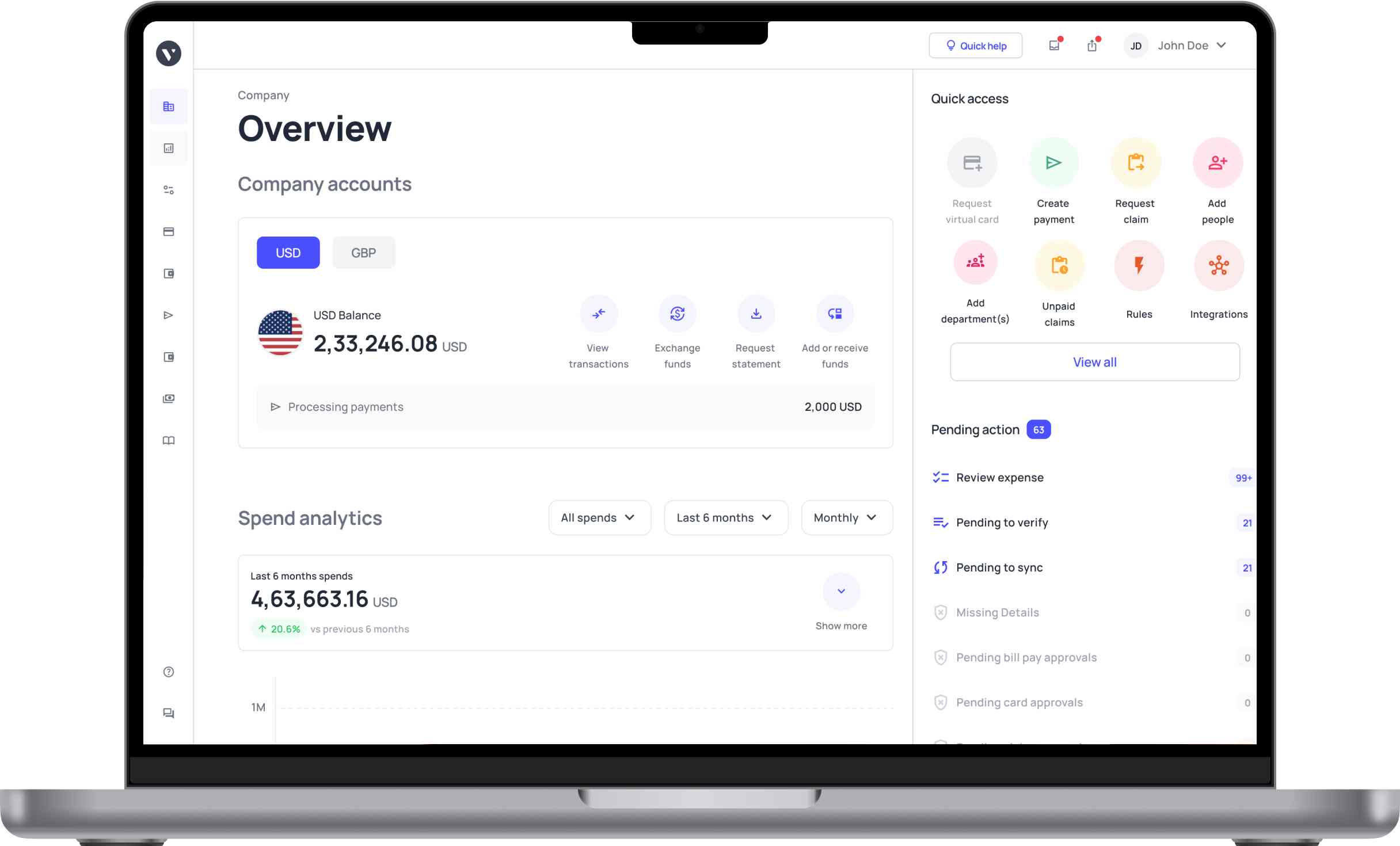
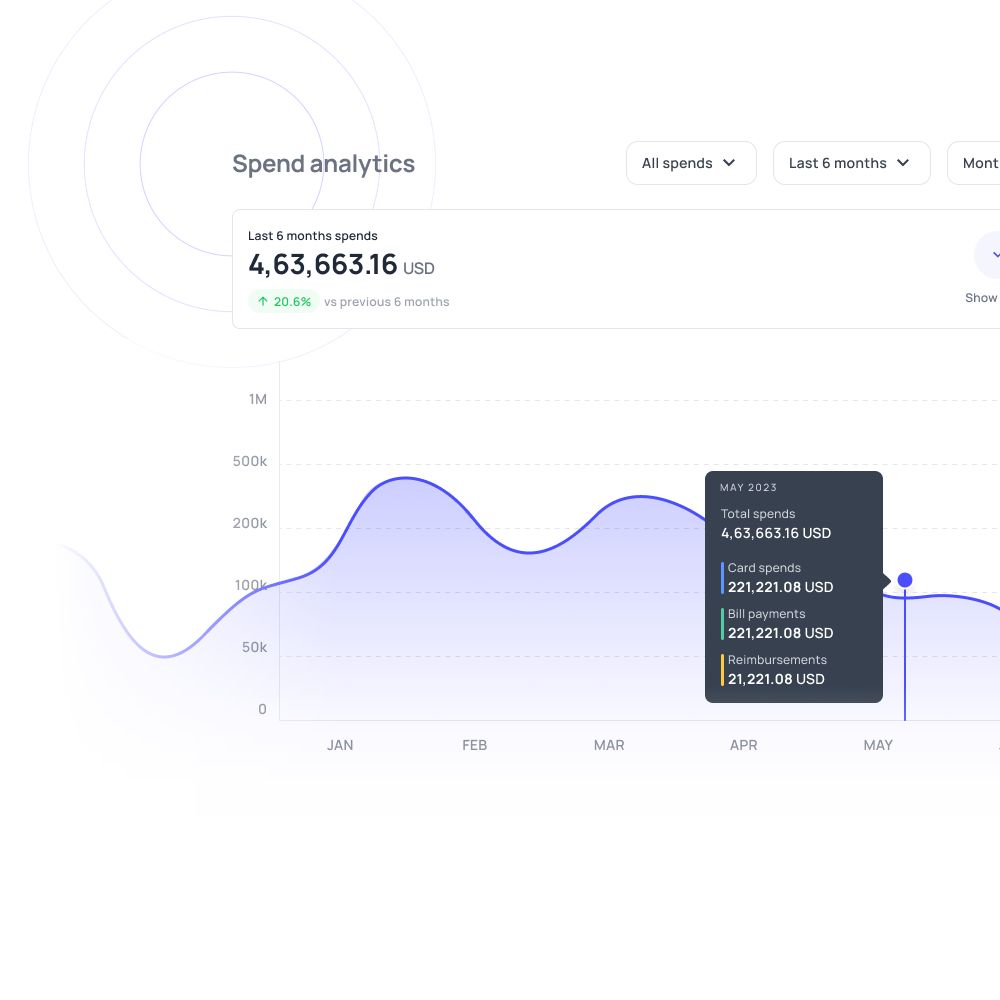
Volopay is a comprehensive alternative for businesses looking for an all-in-one financial management solution. It enables companies to manage cross-border transactions. Along with combining physical and virtual corporate cards, it brings in automated expense management and unified accounts payable automation, all on a single dashboard.
The platform also supports ERP integrations and provides responsive customer support to your enquiries. This will help to reduce gaps between finance systems and day-to-day workflows. Volopay is well-suited for global SMBs, startups, and mid-market teams, especially those operating across multiple currencies and regions.
Brex
Brex is another strong alternative for US-based venture-backed startups. It does not require a personal guarantee for corporate cards linked to a business account. It offers automated receipt capture and budget management features.
Brex is a good fit for fast-growing companies that prefer credit limits tied to cash in the bank instead of credit history. It has a free starter plan, while advanced features come with paid plans. Teams that rely on tools like Slack, NetSuite, or Carta will also benefit from Brex's integration ecosystem.
Airbase
Airbase covers corporate cards, reimbursements, and accounts payable workflows in a single system. Although it supports international vendor payments, it is more focused on the US market. It is a natural fit for mid-market finance teams.
Airbase uses custom pricing based on company size, making it a better fit for teams with 50 to 500 employees. It helps finance teams bring cards, reimbursements, and bill pay into one platform, reducing the need for multiple tools. Businesses processing a high volume of vendor invoices will get the most value from their AP automation capabilities.
They loved Volopay, you will too
Financial stack for business
No more switching between multiple bank accounts and tools to run your smart business. We have combined great software with every service you are using a bank for, to produce a state-of-the-art financial platform, Volopay.
Less time spent on manual reconciliations
Faster month-end book closing turnaround
Accurate receipt matching with automation
FAQs
Ramp is an AI-powered finance automation platform that requires its proprietary card and focuses mainly on corporate spending control. Expensify works with a wider range of corporate card programs and focuses on receipt tracking, automated expense approvals, and reimbursement processing.
It depends on the needs of the small business. Ramp is a good option for businesses with at least $25K in the bank, as it has faster onboarding and built-in transaction tracking. Expensify, meanwhile, is better suited for freelancers and sole proprietors, with minimal setup needed for travel and hospitality expense management.
Both Expensify and Ramp have OCR-powered receipt capture features. Ramp allows users to submit receipts through text or email. Expensify can sometimes pick up receipt details incorrectly, though its SmartScan feature is simple and easy to use.
Expensify syncs with 30+ accounting systems at no additional cost. Ramp, meanwhile, integrates with software like Sage, QuickBooks, Xero, and NetSuite, making it suitable for more complex accounting automation.
Ramp is better for corporate card management. It provides unlimited physical and virtual cards with custom limits, spend management controls, bill payments, and other card management features.
Ramp is a better choice for invoice automation. It has AP automation with tools for building customized approval workflows. Expensify can sometimes struggle with invoice processing and management.
Both Ramp and Expensify support international payments with certain limitations. Ramp supports transactions only in USD, while Expensify reimburses in local currencies, but managing foreign currency balances can be difficult. Neither platform fully supports multi-currency management or a dedicated FX engine.
Ramp has better cashback and rewards. It provides a better cashback system by offering 1.5% cashback on all purchases made with its corporate card.
Volopay is often praised for its strong customer support and solid performance in the APAC region. It offers corporate cards, expense management, AP automation, and multi-currency support. Brex is well-suited for VC-backed startups with travel needs and global operations.