Automate complex billing with greater control
Keep every invoice tied to its commercial basis, calculation and delivery outcome. Volopay coordinates billing requirements, approvals and exceptions while giving finance a clear record of each action.
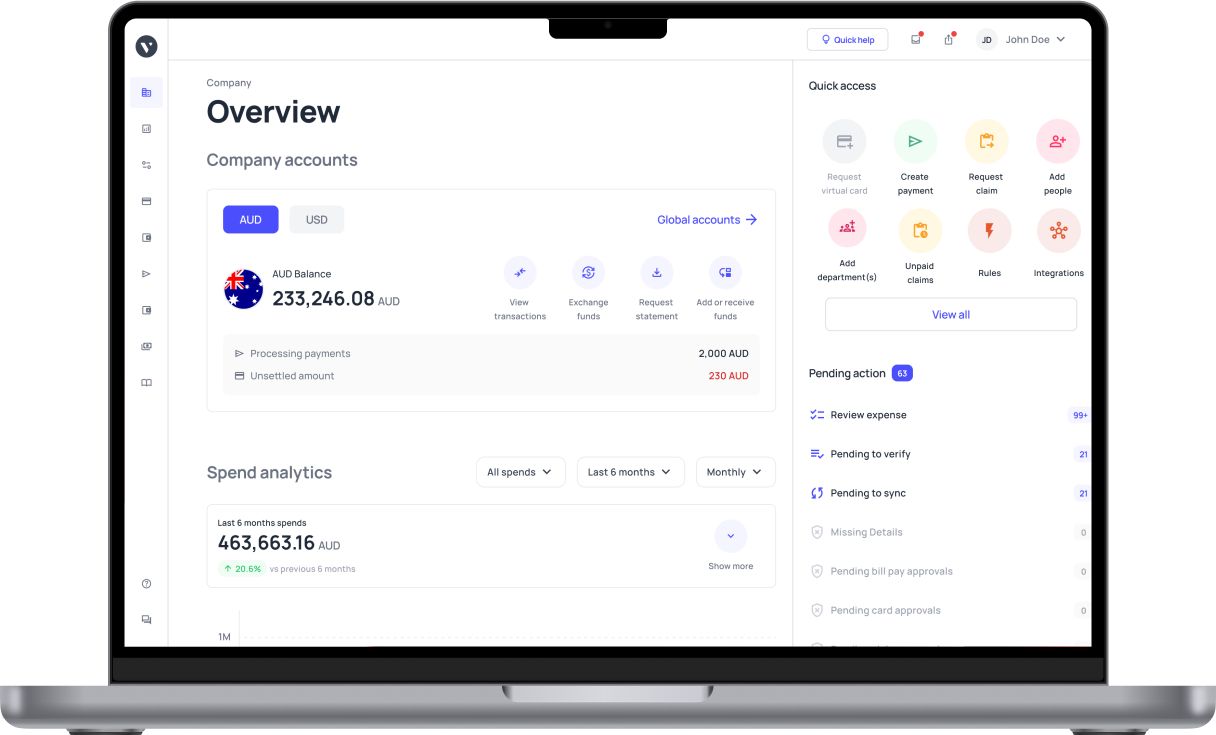













Billing built around how your business sells
Billing schedules
Translate commercial obligations into defined billing dates, service periods, instalments, payment terms, and charge structures. Support both advance and arrears billing.
Usage readiness
Ingest usage through supported sources with customer mapping, event IDs, service periods, and cutoff rules. Flag missing, duplicate, late, or anomalous inputs.
Milestone billing
Tie milestone charges to agreed completion or acceptance evidence. Missing evidence holds only the affected charge instead of blocking unrelated billing work.
Invoice creation
Generate line items, quantities, rates, discounts, service periods, due dates and configured GST results. Check customer, entity, currency, PO and document information before finance issues the invoice.
Source-linked terms
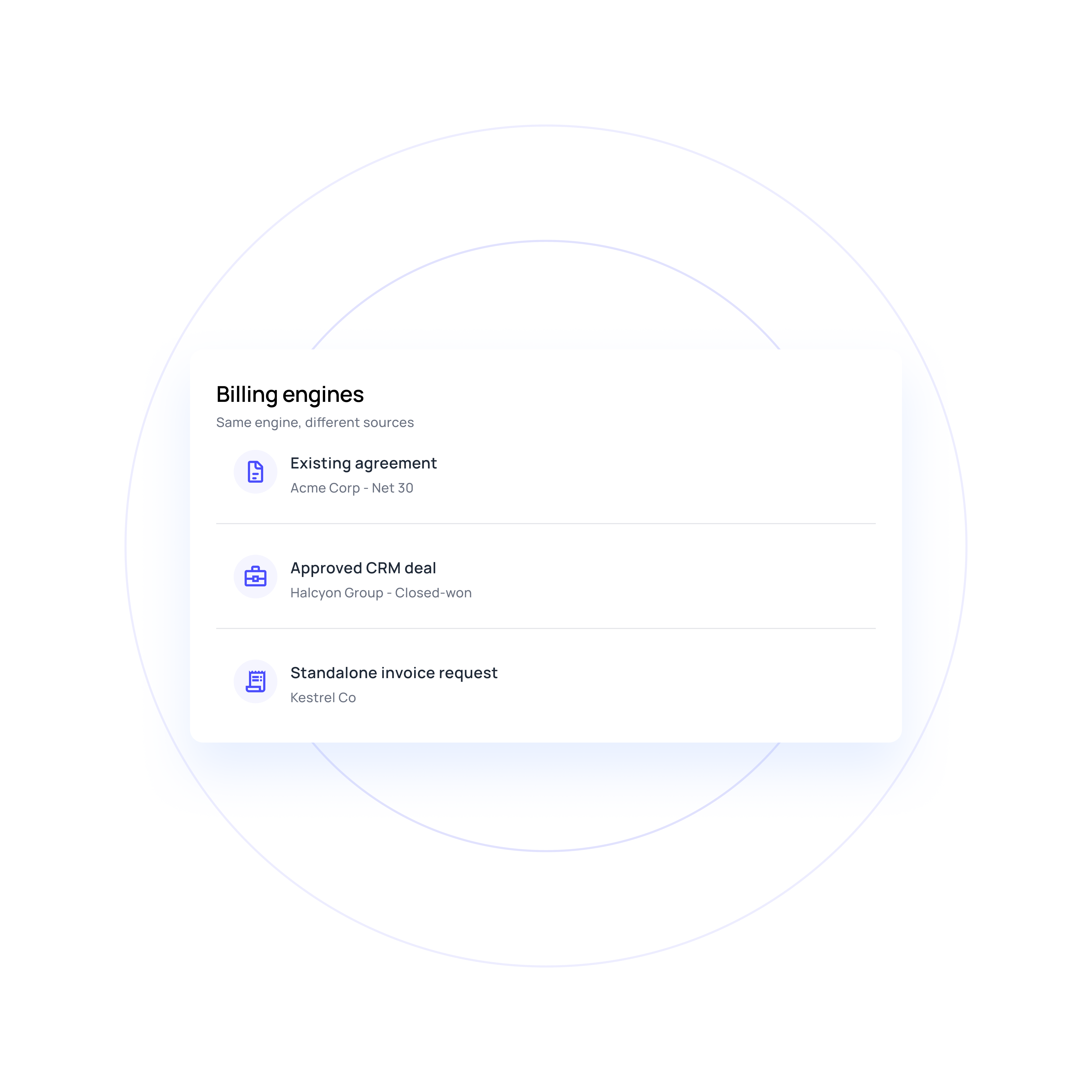
Link important billing fields to their source within contracts, order forms, SOWs, and amendments. Move conflicting clauses, missing pages, and unclear terms to review instead of assuming.
Charge calculation
Show the commercial model behind each calculated amount, including agreed rates, discounts, tiers, ramps, minimums, overages, and service periods. The calculation follows the configured billing logic.
Blocker resolution
Turn missing information into an owned task with a clear responsible person and follow-up point. Once evidence arrives, Volopay rechecks the prerequisites before releasing the invoice.
Simplify your billing process with automation
Built for the billing requirements your customers expect
Australian tax invoice requirements
Keep configured GST information alongside customer, entity, currency, address, PO, numbering and supporting-document requirements. Finance can review the required billing details before invoice issuance without reconstructing customer requirements each time.
Customer-specific requirements
Handle required templates, references, and supporting documents for each customer. Keep these requirements connected to the invoice workflow, so billing teams can prepare documents consistently, resolve missing information, and meet changing customer-specific requirements before delivery.
Electronic invoice delivery
Check required fields before submitting invoices through supported electronic-invoicing connections. Keep submission responses, rejection reasons, and correction ownership connected to the invoice so finance can act when delivery fails.
Accounting integration
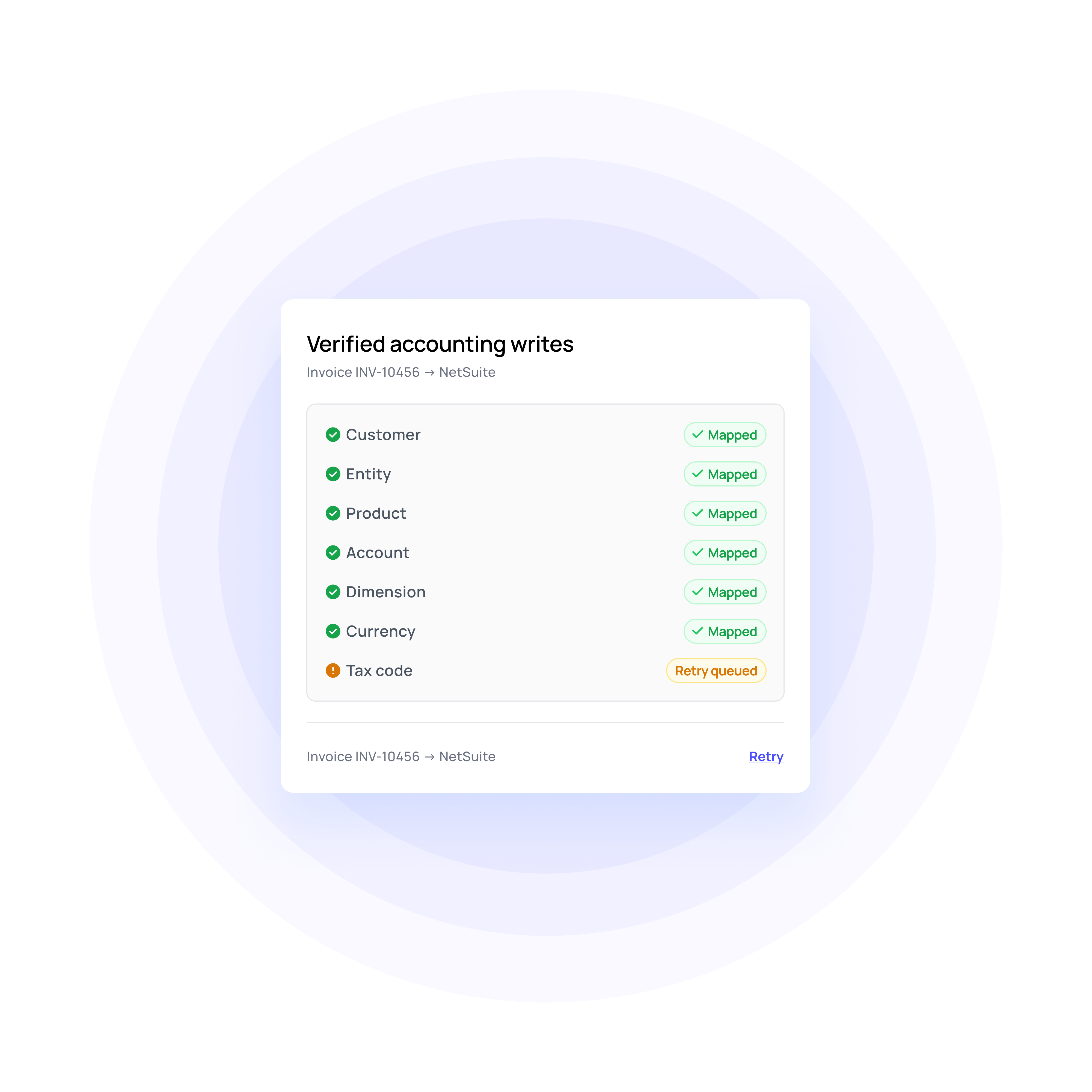
Map customers, entities, accounts, currencies, dimensions, and tax codes before syncing approved billing data. Verify the accounting result after each write and retry failed writes using stable identifiers, giving finance a clearer view of posting outcomes.
Billing automation where every customer bills differently
Large Australian customers may require purchase orders, specific references, supporting documents or defined invoice formats before they process a bill. Keep those requirements connected to the commercial terms and resolve missing inputs before delivery.
Consultancies, agencies and professional services firms may bill against retainers, project stages or customer acceptance. Tie each charge to the agreed commercial basis and hold only the affected item when milestone evidence is missing.
Australian software and service businesses may combine recurring fees with usage, seat changes, overages or one-off work. Keep each charge tied to the agreed schedule and calculation instead of forcing the account into one recurring billing pattern.
Conventional billing vs. Volopay
Manual process | Volopay billing workflow |
|---|---|
Sales closes the deal, then finance interprets the commercial details before work can begin | Approved opportunity, quote, and customer information can feed contract preparation before billing activation |
Contract versions can create uncertainty about which terms should drive billing | Version tracking and authorised final agreements help keep the billing basis explicit |
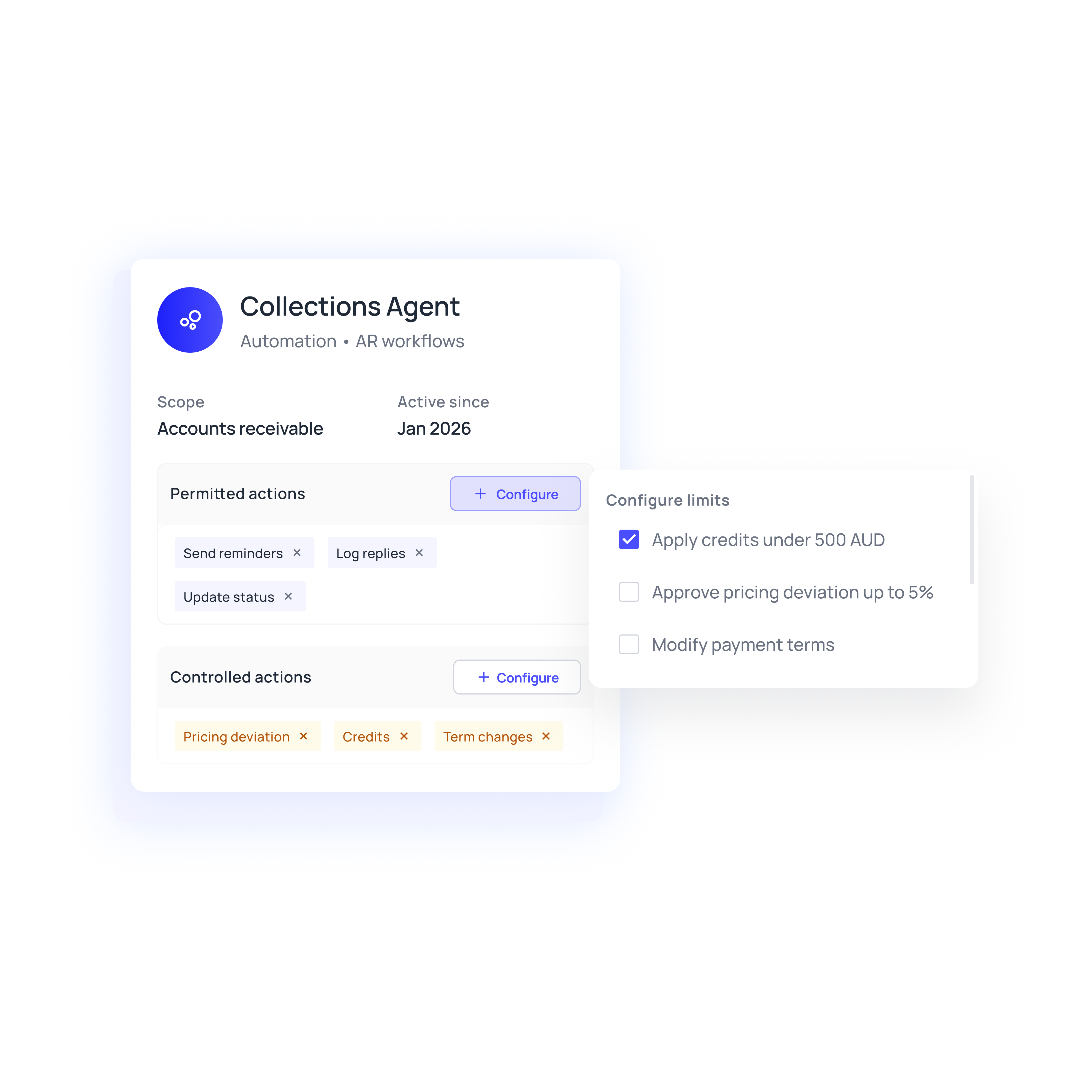
Sensitive billing decisions may require manual intervention without a clear boundary between routine and exceptional work | Permissions define who can change pricing, approve deviations, issue invoices, and grant credits |
Billing may stop when the invoice is handed to accounting | Volopay can verify the accounting write and retain the resulting ERP identifier |
They loved Volopay, you will too
FAQs
No. Standalone invoices are supported as a first-class billing path. Valid one-off billing can proceed without creating an unnecessary contract dependency.
Yes. Volopay can coordinate billing around your existing finance systems. During setup, teams define which system creates invoices, owns numbering and tax calculations, and receives approved billing data to avoid conflicting financial records.
Volopay flags conflicting or missing information and sends it to a named owner for review. Billing resumes only after the required interpretation is approved and recorded.
The affected charge can be held while the required input is requested from its owner. Unrelated billing does not need to stop because one charge lacks supporting evidence.
Finance teams define who can change pricing, approve deviations, issue invoices, grant credits and alter mappings. Volopay progresses eligible routine work within those boundaries and sends ambiguous terms or material changes to the appropriate reviewer.
Implementation connects commercial and financial sources, reconciles existing billing data, configures approvals and templates, maps accounting fields, and tests common billing and integration scenarios before automation goes live.
Measure changes against your baseline, including time to bill, avoidable invoice rejections, manual contract interpretation, and visibility into unbilled obligations. Results will vary by workflow and billing complexity.
Bring Volopay to your business
Get started now