The smarter way to manage receivables
Connect billing, collections, disputes, and cash application in one workflow. Reduce manual handoffs, act on exceptions sooner, and keep receivables moving across your existing finance systems.
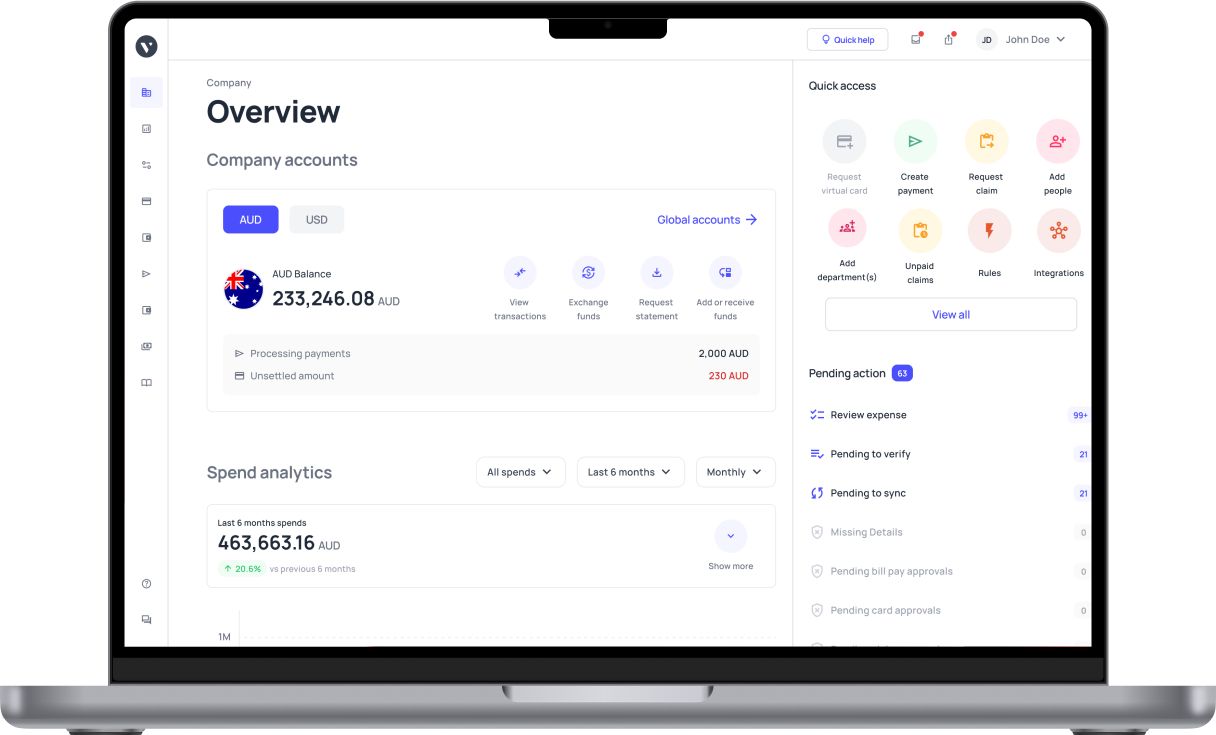













One connected workflow for every receivable
Billing automation
Translate approved terms into invoices, check customer, entity and configured GST information, and carry delivery status through to the resulting accounting reference.
Collections automation
Decide which receivables need attention, contact the right person, capture responses, and suppress inappropriate reminders when circumstances change.
Disputes and deductions
Distinguish valid claims from unsupported deductions, coordinate the required response, and keep the relevant financial outcome tied to the invoice.
Cash application
Use receipts, remittances, history, and policy to allocate payments while tracking unresolved differences through verified accounting outcomes.
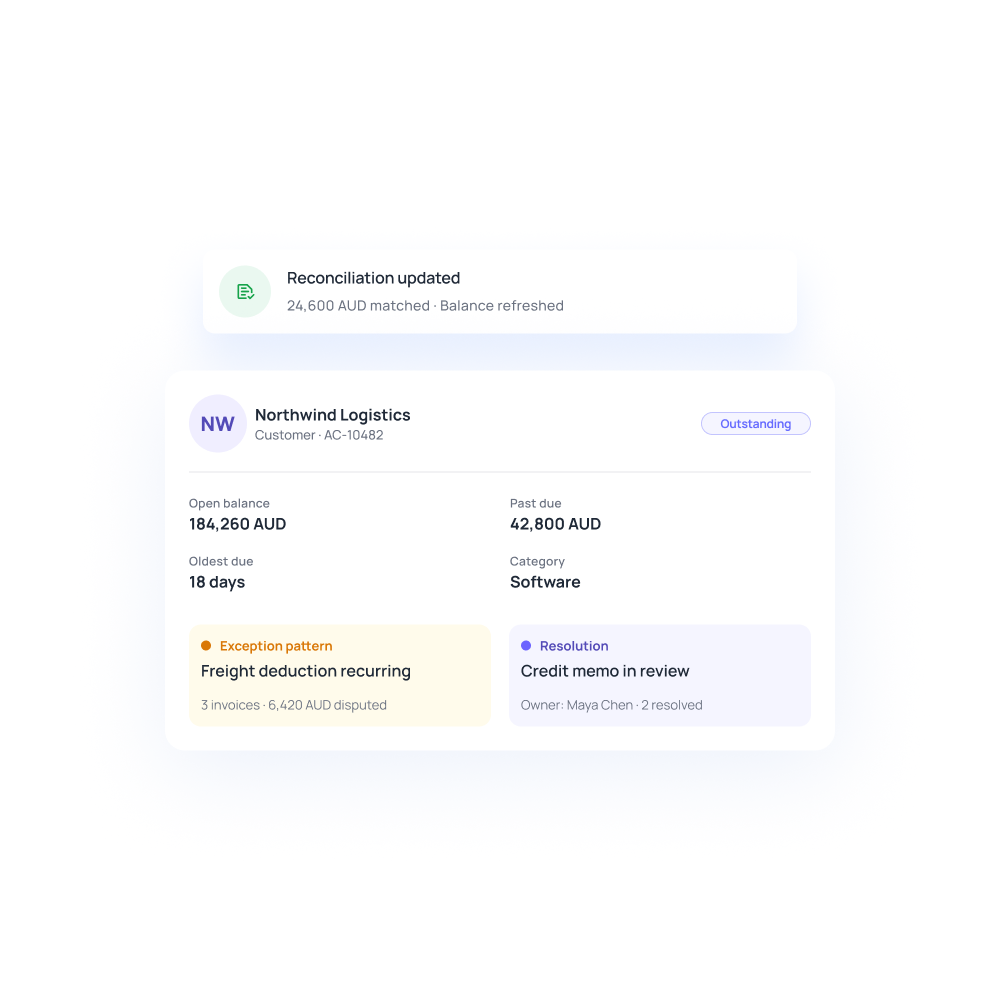
Shared receivables context
Carry the relevant agreement, invoice, customer, payment, activity, and approval history across the receivables journey. Teams avoid rebuilding context whenever work moves between different processes.
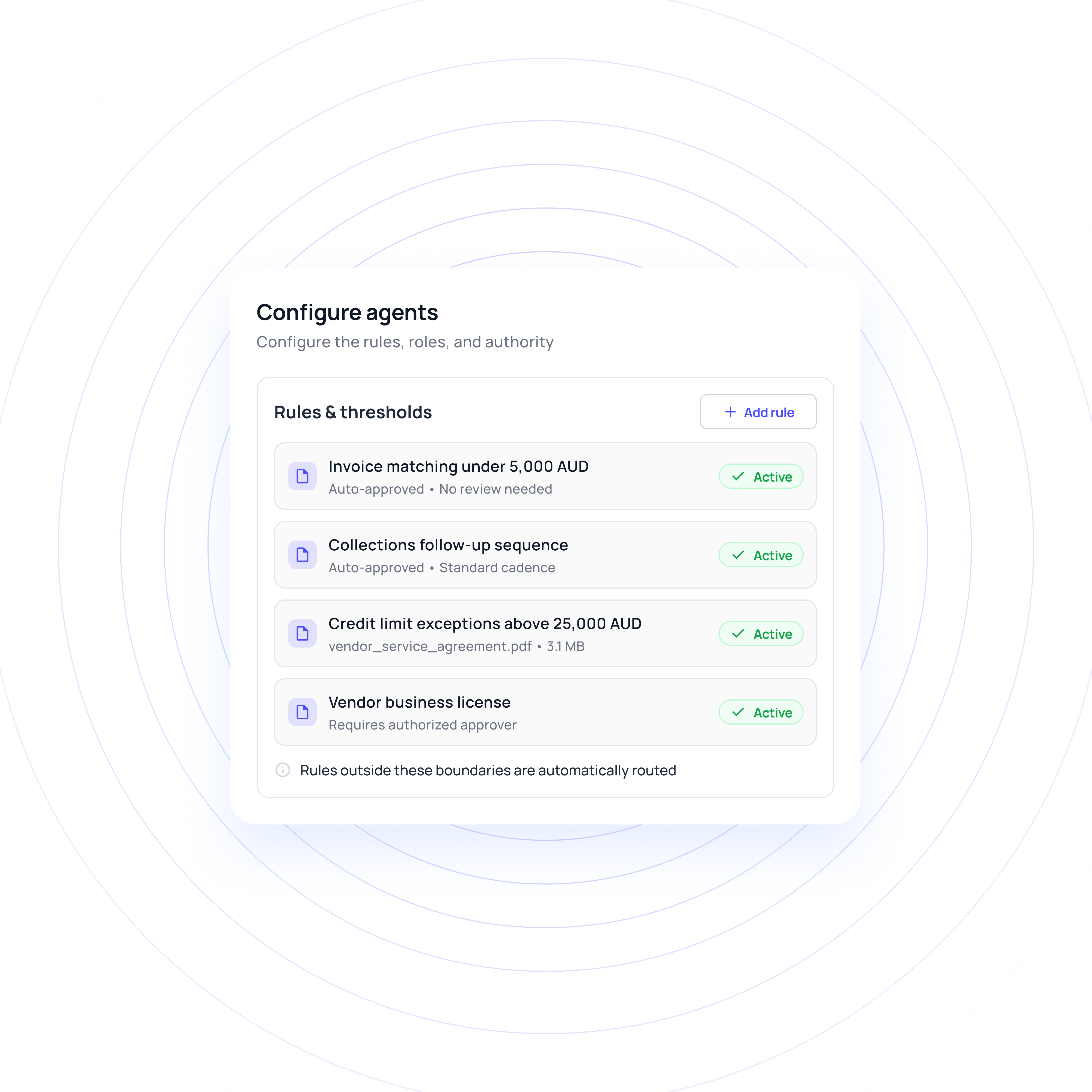
Policy-bound automation
Finance defines the boundaries for automatic actions, review, and escalation. Structured rules and natural-language instructions work together without allowing either to bypass configured authority.
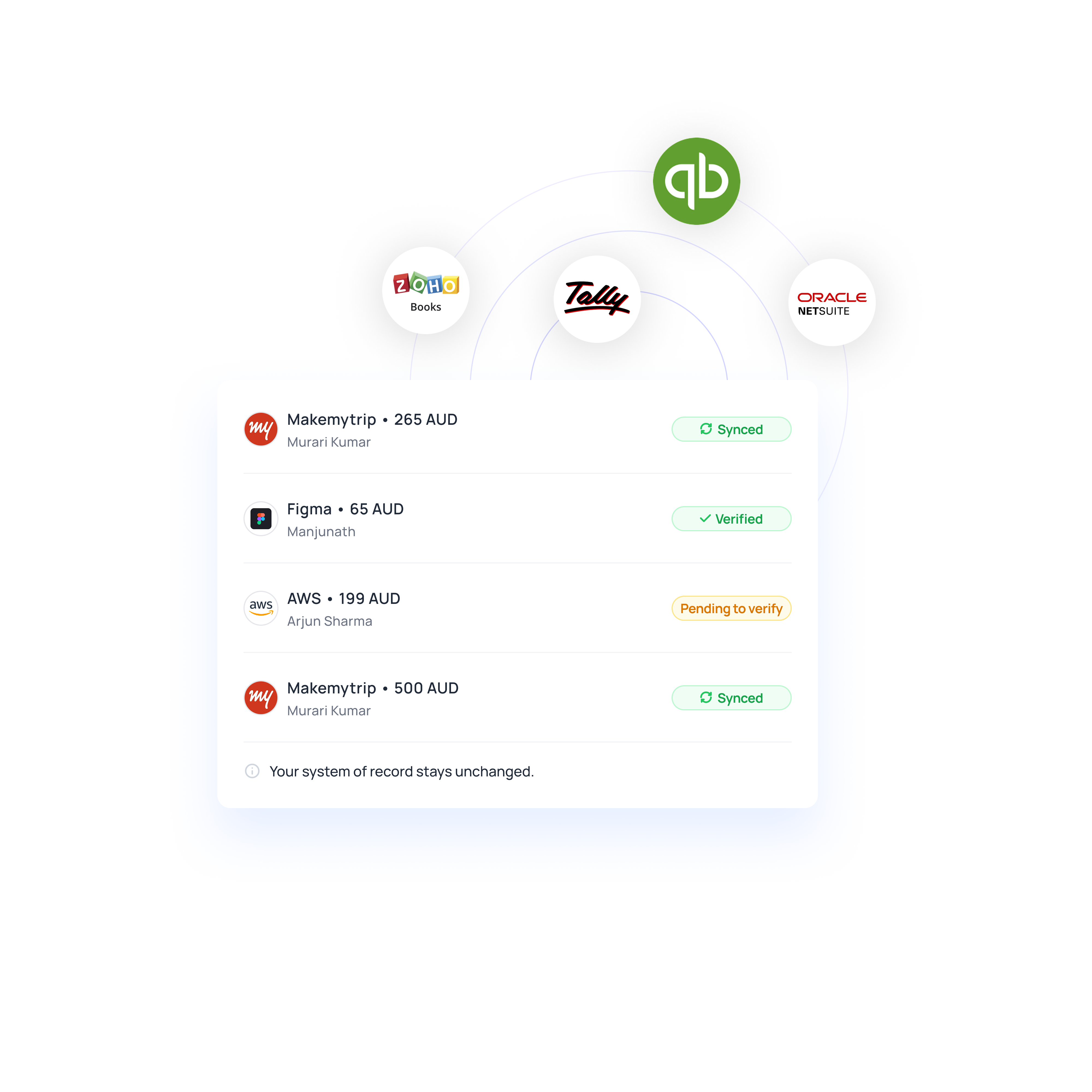
Accounting system coordination
Keep receivables actions aligned with the systems that hold financial truth. Preserve entity-specific mappings, currencies, configured GST codes and accounting periods as work moves into the relevant finance system.
Turn complex receivables into seamless workflows
Designed for finance beyond the core workflow
AR support agent
Handle routine invoice queries, share authorised documents, capture PO numbers and remittance details, and route issues to the relevant workflow without losing the receivable context.
Customer self-service
Give customers a controlled way to view invoices, provide remittance, raise queries, and initiate eligible payments without adding routine correspondence to the AR team’s workload.
Customer AP portal coordination
Submit invoices and monitor their status across supported procurement or AP portals. Submission activity stays linked to the relevant receivable rather than becoming another disconnected task.
Process improvement
Approved analyst corrections can inform suggested rule changes for the AR management software. Finance reviews the evidence, expected behaviour, and historical test results before activating an updated process.
AR use cases for Australian finance teams
Large Australian customers may require purchase orders, specific invoice references, supporting documents or AP portal submission before they progress payment. Keep those requirements alongside commitments, disputes and other account context as finance works through the receivable.
Project-based businesses may invoice after delivery milestones, customer acceptance or other agreed conditions. Keep the supporting evidence, invoice requirements and configured GST information connected as each receivable moves from billing into collection.
Australian groups may manage several entities while collecting in AUD and other currencies. Keep entity, currency, accounting and approval rules attached to each receivable while finance works through one consistent AR process.
See the difference in how AR is run
Traditional AR setup | The Volopay approach |
|---|---|
Finance manages receivables across separate systems, processes, and teams | Volopay works across the existing finance environment without changing the system of record |
Different processes can create different working practices across finance | A consistent operating model can be applied across the receivables journey |
Process changes are difficult to assess before they go live | Changes can be tested against past cases and approved before activation |
AR transformation can require a large initial commitment | A defined workflow can provide a measured starting point |
Reporting may show activity without showing whether the process improved | Performance is measured against agreed operational outcomes and the starting baseline |
They loved Volopay, you will too
FAQs
Volopay automates permitted work across billing, collections, disputes and deductions, and cash application. Agents carry relevant customer, invoice, payment and accounting context across workflows, while finance retains authority over approvals, exceptions and commercial decisions.
Yes. Volopay prioritises eligible receivables, contacts the right customer, handles responses, tracks payment commitments, and adjusts follow-ups when a hold, conversation, or new receipt changes the appropriate next action.
Volopay uses receipts, remittance information, payer history and configured policy to allocate supported payments. It investigates residual differences, sends uncertain cases to finance when required and verifies the resulting balance in the accounting system before completing the workflow.
Volopay detects claims, classifies reasons, gathers supporting evidence, and coordinates permitted resolutions. Finance can keep an Australian GST-related billing issue, commercial deduction or other contested amount under review while collections and cash application continue for the undisputed balance.
No. Volopay is designed to operate around your existing finance stack. It coordinates workflows while the appropriate ERP or accounting system remains the system of record for relevant financial objects and final accounting results.
AI agents progress permitted receivables work using relevant context, evidence, rules, and policy checks. Finance can define automatic actions, review requirements, and escalation points based on entity, customer, amount, action, and channel.
Bring Volopay to your business
Get started now