11 Tipalti alternatives for smarter AP management
Tipalti offers a comprehensive accounts payable solution with invoice automation, approval workflows, and global payment support. Even so, it isn't the right fit for every small business.
Some companies prioritize affordability, faster implementation, or a simpler user experience. The right alternative can better match those priorities. This article compares the best Tipalti alternatives for small business AP.












REVIEWED BY

Akanksh Muniyappa
Head of Product
WRITTEN BY

Alifiya Rathod
Content Writer
Quick summary of the best Tipalti alternatives
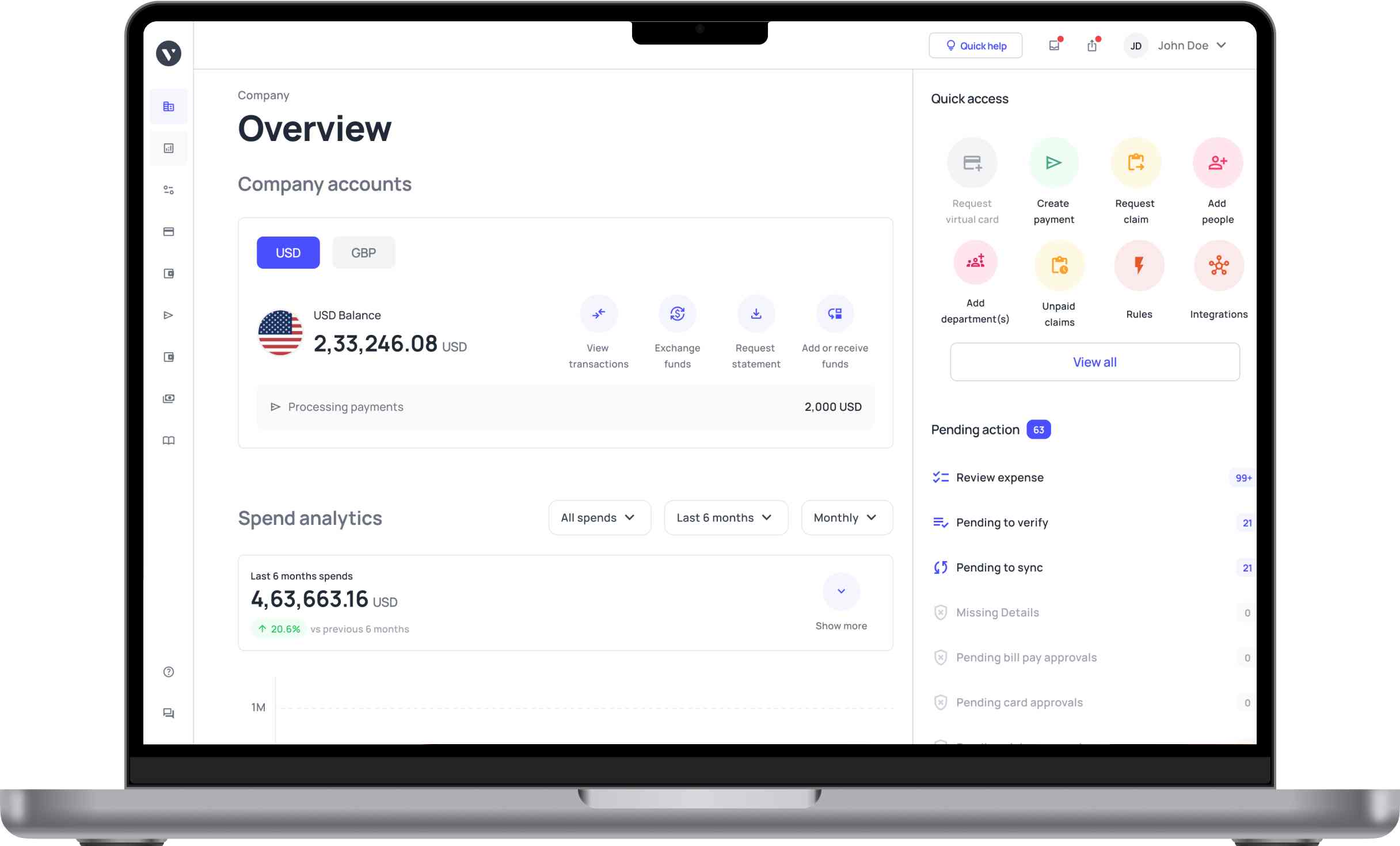
● Volopay: Best for smart expense management and real-time AP automation
● Brex: Best for integrated corporate cards with built-in spend controls
● Airbase: Best for end-to-end AP automation with strong approval workflows
● Bill.com: Best for streamlined invoice processing and payment automation
● Coupa: Best for enterprise-grade spend management and global scalability
● Ramp: Best for AI-powered spend management with real-time visibility and cost-saving automation
● Routable: Best for simplified vendor payouts and automated invoice processing workflows
● HighRadius: Best for AI-driven receivables and treasury automation at enterprise scale
● Airwallex: Best for global payments infrastructure with multi-currency accounts and FX optimization
● Spendesk: Best for centralized spend control with corporate cards and approval-driven workflows
● Rillion: Best for AP automation with strong invoice matching and ERP integrations
| Tool | AP & invoice | Spend controls | Global payments | Integrations | Compliance & controls | Ease of use |
|---|---|---|---|---|---|---|
Volopay | ||||||
Brex | (limited AP depth) | |||||
Airbase | (limited global coverage) | |||||
Bill.com | (basic controls) | (limited multi-currency) | ||||
Coupa | (complex setup) | (steeper learning curve) | ||||
Ramp | (strong automation) | |||||
Routable | Limited (no cards) | |||||
HighRadius | (enterprise-grade) | Limited (no cards) | (complex setup) | (advanced controls) | (steeper learning curve) | |
Airwallex | (strong global infra) | |||||
Spendesk | (limited global reach) | |||||
Rillion | (advanced AP depth) | Limited (no cards) |
Get your team working with Volopay
Best overall
1. Volopay
Best for: A startup, SMB, or growing business who need an AP platform that offers real-time visibility, cost control, and scalable payment workflows across teams and multiple spending categories globally.
Solutions: Volopay works well for industries like technology, eCommerce, consulting, and professional services, where you manage vendor payments, employee expenses, subscriptions, and cross-border transactions while maintaining clear financial oversight and compliance.
Integrations: Integrates with accounting systems, ERP platforms, and tools like QuickBooks, Xero, and Slack, allowing you to streamline workflows and synchronize financial data without manual effort across different business systems.
Best for startups or SMBs
2. Brex
Best for: Startups or fast-growing companies needing corporate cards, spend management, and financial tools without traditional banking limitations or requirements.
Solutions: It supports technology, ecommerce, SaaS, and venture-backed startups managing employee spending, subscriptions, travel, and vendor payments through centralized financial controls.
Integrations: It integrates with tools like QuickBooks, NetSuite, Xero, Slack, and Expensify, ensuring seamless data synchronization across financial and operational systems.
Pricing: You access free (Essentials plan- $0 user/month) and paid (Premium- $12 user/month& Enterprise- Custom pricing) plans depending on features, with premium tiers offering advanced controls, automation, and global payment capabilities.
Best for enterprises
3. Coupa
Best for: Large or scaling businesses/enterprises needing advanced spend management, procurement, and accounts payable automation across global operations and multiple entities.
Solutions: It serves industries like manufacturing, retail, healthcare, and enterprises managing procurement, supplier networks, invoicing, and compliance across complex financial ecosystems.
Integrations: It integrates with ERP systems like SAP, Oracle, NetSuite, and other enterprise tools, enabling seamless financial data synchronization and operational efficiency.
Pricing: You typically receive custom pricing based on modules, users, and scale, with enterprise-focused plans tailored to complex organizational requirements.
Best for AP automation and AI
4. High Radius
Best for: Large enterprises managing complex receivables and treasury operations. You need automation, cash visibility, and advanced analytics across global finance processes.
Solutions: Best for banking, manufacturing, retail, and large enterprises. You can manage receivables, credit, and treasury operations with better control and efficiency.
Integrations: Integrates with major ERP systems like SAP and Oracle. Data sync is reliable. It supports large-scale financial operations and reporting needs.
Pricing: Pricing is customized based on business size and requirements. There are no public plans. You need to contact sales for detailed pricing.
5. Rillion
Best for: Mid-sized and large businesses managing accounts payable. You need automation, invoice control, and seamless approval workflows across finance operations.
Solutions: Works for manufacturing, retail, healthcare, and finance teams. You can automate invoice processing and improve accounts payable efficiency across business operations.
Integrations: Integrates with ERP and accounting systems like SAP and Microsoft Dynamics. Data sync is reliable. It supports efficient reconciliation and reporting processes.
Pricing: Pricing is customized based on business needs and scale. There are no public plans. You need to contact sales for detailed pricing.
Best for high-volume payers
6. Routable
Best for: SMBs and mid-sized companies managing vendor payments. You need simple AP automation. It works well for reducing manual processing across finance teams.
Solutions: Useful for ecommerce, marketplaces, logistics, and finance teams. You can handle high-volume vendor payments. It improves workflow efficiency with automation.
Integrations: You can connect with QuickBooks, NetSuite, and Xero. Data sync becomes seamless. Reconciliation and workflow automation improve efficiency.
Pricing: Pricing is customized based on usage and features. There are no fixed tiers. You may need to contact sales for exact pricing details.
7. Airwallex
Best for: Businesses expanding globally. You need multi-currency accounts, cross-border payments, and cost-efficient foreign exchange with strong financial infrastructure support.
Solutions: Works for eCommerce, SaaS, fintech, and global businesses. You can manage international payments, treasury, and expense operations with better control and visibility.
Integrations: Connects with accounting systems, ecommerce platforms, and APIs. You can automate workflows. Data sync supports reconciliation and improves financial operations efficiency.
Pricing: Offers transparent pricing for payments and FX. Fees vary by usage. Custom plans are available for businesses with higher transaction volumes.
Best for budget and user-friendly
8. Ramp
Best for: Growing startups and mid-sized businesses. You need real-time visibility and automated expense control. It suits teams using corporate cards for better financial management.
Solutions: Works well for technology, eCommerce, SaaS, and finance teams. You can scale operations easily. It helps improve cost control and operational efficiency.
Integrations: You can connect with accounting and ERP systems. It also integrates with HR and productivity tools. Data sync and reconciliation become easier.
Pricing: You can start with a free plan. Paid tiers offer advanced controls and insights. Enterprise plans support scaling business needs.
Best for mid-market
9. Airbase
Best for: Airbase, acquired by Paylocity, is best for mid-sized or growing businesses needing a unified platform combining accounts payable, expense management, and corporate cards in one solution.
Solutions: It works for industries like SaaS, technology, and professional services, managing approvals, vendor payments, expenses, and subscription spending efficiently across departments.
Integrations: It integrates with accounting systems like NetSuite, QuickBooks, Xero, and ERP tools, enabling seamless financial data flow and reporting accuracy.
Pricing: Custom pricing based on company size, usage, and features, with tailored plans designed to fit specific business requirements.
10. Bill
Best for: You run a small or mid-sized business seeking simple, reliable accounts payable and receivable automation without complex implementation or heavy customization needs.
Solutions: It fits industries like accounting firms, retail, nonprofits, and professional services, managing invoices, vendor payments, and receivables with streamlined workflows and visibility.
Integrations: It integrates with QuickBooks, Xero, NetSuite, Sage, and other accounting platforms, ensuring smooth data synchronization and simplified financial reporting processes.
Pricing: You choose from tiered subscription plans (Basic, Team & Corporate) based on features and users, with additional fees applied for transactions, payments, and premium services. While an Enterprise plan requires a custom quote.
11. Spendesk
Best for: SMBs and mid-sized companies needing spend control. You want visibility, employee cards, and structured approvals to manage company expenses efficiently.
Solutions: Works for startups, SaaS, marketing, and finance teams. You can manage expenses, subscriptions, and invoices with better control and team accountability.
Integrations: Connects with accounting tools like Xero, QuickBooks, and NetSuite. Data sync is reliable. It supports reconciliation and improves financial workflow efficiency.
Pricing: Offers tiered pricing based on features and users. Plans include core spend management tools. Advanced features are available in higher plans.
What is the best Tipalti alternative in 2026?
When choosing a Tipalti alternative, businesses should consider factors such as AP and invoice automation, spend controls, global payments, integrations, compliance, ease of use, and pricing. The right platform will depend on your company size, budget, payment volume, and the level of automation and financial control your finance team needs.
How to choose the right Tipalti alternative for your business
Company size
Choosing a platform that matches your company size is essential because the wrong solution can slow down operations or create unnecessary complexity. You should evaluate whether the platform matches your business scale, as smaller teams need simplicity.
On the other hand, larger organizations require advanced controls, multi-entity support, and scalability when selecting from Tipalti alternatives for long-term operational efficiency and financial growth.
Budget
Choosing a platform as per budget is important because high software and transaction costs can affect your cash flow over time. You need to consider total cost, including subscriptions, transaction fees, and implementation expenses, ensuring the solution fits your financial limits while delivering value and avoiding hidden costs that can impact long-term profitability and cash flow stability.
Feature requirements
Feature requirements matter because not every business needs the same level of automation or finance controls. Choosing the right features can also improve team productivity and reduce manual finance work over time.
You should prioritize essential capabilities like automation, invoice processing, approvals, and reporting, ensuring the platform supports your workflows efficiently while avoiding unnecessary complexity that does not align with your operational needs or business processes.
Customer support
Customer support is important because finance teams need quick help when payment or system issues affect daily operations. Strong customer support can also reduce downtime and help your team adapt to the platform more easily.
You must assess the quality of customer support. This includes response times, onboarding assistance, and ongoing technical help, because reliable support ensures smoother implementation, faster issue resolution, and better overall user experience when managing financial operations at scale.
Integrations
Integrations are crucial because disconnected systems can create extra manual work and increase reporting errors. Good integrations also help your team save time by keeping financial data updated automatically.
You should check compatibility with your existing accounting, ERP, and productivity tools, ensuring seamless data flow across systems, reducing manual work, and improving accuracy while maintaining efficiency across your financial operations and reporting processes.
Limited automation
Automation is important because manual finance work can slow down approvals, increase errors, and reduce productivity. Choosing the right platform can also help your business handle growing transaction volumes more efficiently over time.
You need to evaluate whether the platform reduces manual effort effectively, as limited automation can slow processes, increase errors, and reduce productivity, making it important to choose a system that streamlines repetitive financial tasks efficiently and reliably when choosing the best Tipalti alternative.
FAQs
You can consider Volopay, Ramp, and Spendesk depending on your needs. Volopay is ideal for small businesses that want real-time expense control and easy scalability. Ramp works best if you need AI-driven automation and cashback cards, while Spendesk is a strong fit for teams that want simple budgeting, prepaid cards, and clear spend visibility.
Companies may switch due to high costs, limited flexibility, or integration gaps. Many businesses seek better automation, improved user experience, and scalable pricing that aligns more closely with evolving operational and financial needs.
You should prioritize automation, invoice processing, approval workflows, integrations, reporting, and multi-currency support. These features help streamline accounts payable, reduce manual effort, and improve accuracy and financial visibility across operations.
You can consider Volopay, Airbase, and Bill when looking for options suited to accounting firms. Volopay works well for managing client expenses, approvals, and real-time tracking across multiple accounts.
Airbase is better for firms needing strong spend control and unified workflows, while Bill is useful for simplifying invoice approvals and speeding up payables for multiple clients.
Yes, you may find a few platforms offering free or freemium plans, but they usually come with limited features like basic invoicing or simple expense tracking. Tools such as Wave and Zoho Invoice offer free tiers for small-scale use. However, most businesses eventually move to paid solutions because advanced automation, integrations, and scalability are needed for smoother financial operations.