12 SAP Concur alternatives to consider in 2026
If you're on SAP Concur and something feels off, the reason is usually familiar. The interface hasn't aged well, so employees put off submitting expenses. Implementation ran longer than the timeline you were sold. Support tickets sit for days. Approval workflows won't bend to how your team actually works.
For SMBs and growing teams, the math rarely works either. Between licensing, implementation, and ongoing maintenance, total cost of ownership outpaces what the platform delivers. This guide covers 12 alternatives, each mapped to the team size, budget, and workflow it genuinely fits.












REVIEWED BY

Akanksh Muniyappa
Head of Product
WRITTEN BY

Anushka Sharma
Content Writer
Quick summary of the best SAP Concur alternatives
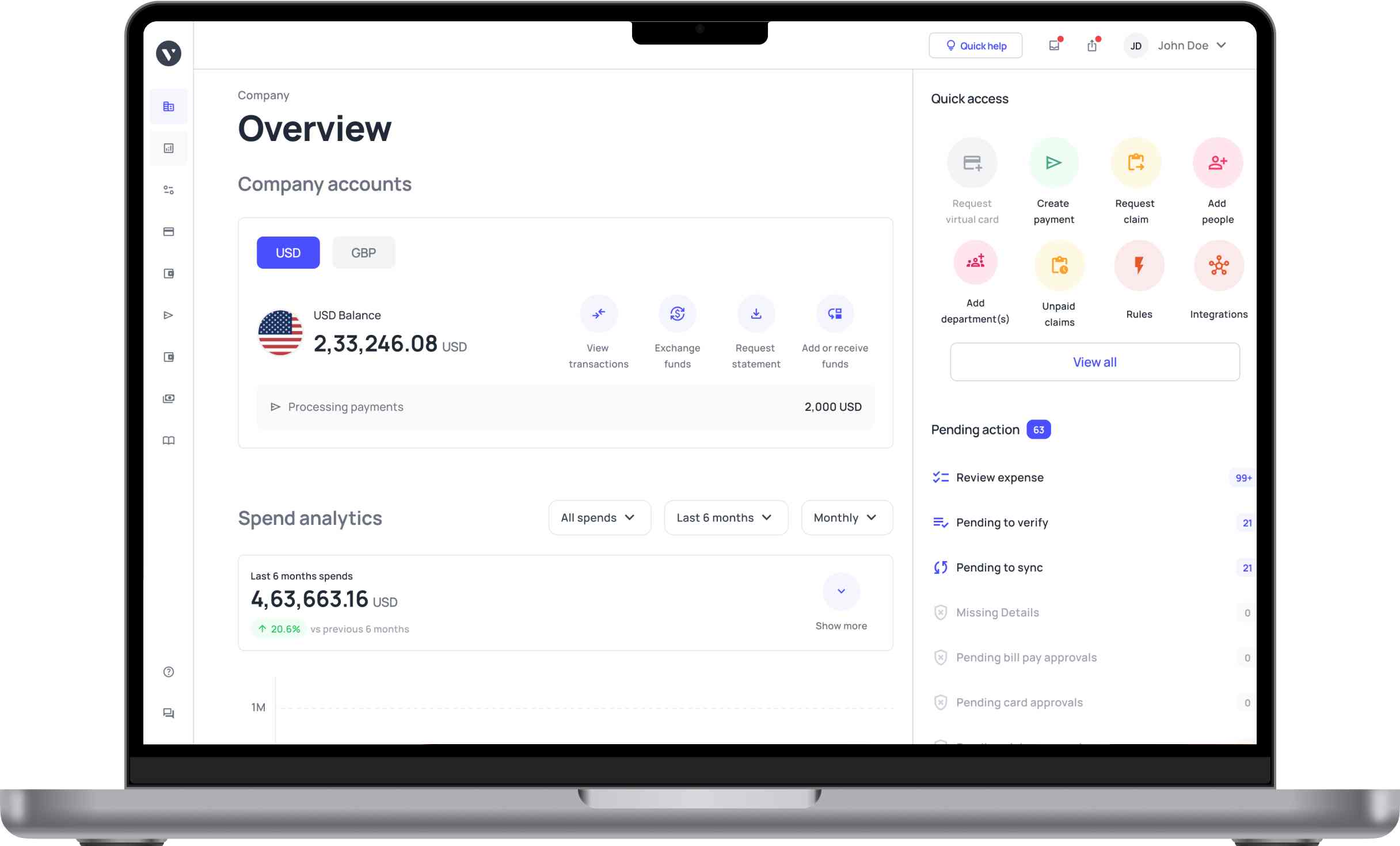
● Volopay: Best for SMBs and mid-market companies wanting an all-in-one platform covering corporate cards, expense management, bill payments, and multi-currency transfers.
● Ramp: Best for high-growth startups and finance-forward teams wanting AI-powered spend insights, automated expense categorization, and a free core plan.
● Brex: Best for VC-backed startups and tech companies needing high corporate card limits without a personal guarantee and integrated travel booking.
● Expensify: Best for small businesses and freelancers wanting a card-agnostic, mobile-first expense tool with SmartScan OCR receipt capture.
● Zoho Expense: Best for SMBs already in the Zoho ecosystem wanting deeply integrated expense automation.
● Coupa: Best for large enterprises in manufacturing, healthcare, and financial services needing a unified platform covering procurement, expenses, invoices, and supplier management.
● Emburse: Best for compliance-heavy mid-market and enterprise teams in healthcare and legal needing granular policy controls, virtual cards, and detailed audit trails.
● Navan: Best for mid-market to enterprise companies with active travel programmes wanting AI-powered policy enforcement at the point of booking, not after.
● Webexpenses: Best for UK-based SMBs and mid-market teams wanting active-user-only pricing with Google Vision-powered OCR and configurable approval workflows.
● Divvy: Best for small businesses wanting free expense management software with pre-spend budget controls that decline transactions before they happen.
● Airwallex: Best for globally operating SMBs and mid-market companies managing multi-currency spend and cross-border payments.
● Rydoo: Best for multinational SMBs and mid-market companies needing automated local compliance and per diem management.
| Tool | Best for | Core focus | Key differentiator | Starting price |
|---|---|---|---|---|
Volopay | Global & growing teams | Cards + expense + bill pay + multi-currency | All-in-one spend across 130+ countries | Custom (book a demo) |
Ramp | Startups & high-growth | Cards + AI spend intelligence | Surfaces wasted spend and savings automatically | Free; Plus $15/user/mo |
Brex | Scaling teams wanting one stack | Cards + banking + spend (Capital One-owned) | Corporate cards with no personal guarantee | Free; Premium $12/user/mo |
Expensify | Budget-conscious SMBs & freelancers | Card-agnostic expense reporting | SmartScan OCR that works with any card | $5/user/mo (Collect) |
Zoho Expense | Zoho-ecosystem SMBs | Expense automation | Native Zoho Books & CRM sync | Free (3 users); $3/user/mo |
Coupa | Large enterprises | Source-to-pay procurement suite | Procurement + expenses + AP in one platform | Custom |
Emburse | Compliance-heavy mid-market/enterprise | Configurable policy & card controls | Granular rules engine + audit trails | ~$3,000/yr |
Navan | Travel-heavy mid-market/enterprise | Travel + expense unified | Policy enforced at the point of booking | Free ≤5 users; custom |
Webexpenses | UK & European SMBs | Expense reporting | Active-user-only pricing + HMRC rates built in | £7.50/active user/mo |
BILL Spend & Expense | SMBs wanting free software + a card | Budget-based corporate cards | Transactions decline before you overspend | Free with the BILL Divvy Card |
Airwallex | Global SMBs & mid-market | Multi-currency accounts + cards | Hold and send 50+ currencies at low FX | Free (Explore); custom |
Rydoo | Multinational SMBs/mid-market | Expense + local compliance | Local tax rules across 100+ countries | ~$10/user/mo (min. 5) |
Get your team working with Volopay
Best overall
1. Volopay
Best for: SMBs and mid-market companies in APAC and globally expanding businesses
Solutions: Fintech, SaaS, e-commerce, logistics, professional services, retail
Integrations: Xero, QuickBooks, NetSuite, Zoho Books, MYOB, and more via API
Pricing: Subscription-based (monthly or annual). No hidden fees, no onboarding costs, no per-transaction charges. You can sign up for a demo for custom pricing.
Best for startups and high-growth companies
2. Ramp
Best for: High-growth startups, mid-sized businesses, finance-forward teams
Solutions: SaaS, e-commerce, fintech, professional services, consumer goods
Integrations: QuickBooks, Xero, NetSuite, Sage Intacct, Workday, Slack, and more
Pricing: Free core plan. Ramp Plus: $15/user/month. Enterprise pricing available on request.
3. Brex
Best for: VC-backed startups, tech companies, life sciences firms
Solutions: Startups, SaaS, biotech, e-commerce, high-growth companies
Integrations: QuickBooks, NetSuite, Xero, Workday, Sage Intacct, Slack
Pricing: Brex Essentials is free. Premium and Enterprise plans are custom-priced. Contact sales for details
Best for SMBs
4. Expensify
Best for: Small and medium businesses, freelancers, teams wanting simple expense reporting
Solutions: Professional services, consulting, healthcare, non-profits, education
Integrations: QuickBooks, Xero, NetSuite, Sage, Gusto, Workday, Zenefits, and more
Pricing: Collect plan: $5/user/month. Control plan: $9/user/month. Best rates apply when using the Expensify Card.
5. Zoho Expense
Best for: SMBs and growing businesses already using the Zoho ecosystem
Solutions: Retail, manufacturing, professional services, IT, education
Integrations: Zoho Books, Zoho CRM, QuickBooks, Xero, Sage, Salesforce, and more
Pricing: Free (up to 3 users). Standard: $3/user/month. Premium: $5/user/month (both billed annually). Enterprise pricing available on request.
Best for enterprises
6. Coupa
Best for: Large enterprises with complex procurement and global spend management needs
Solutions: Manufacturing, retail, financial services, healthcare, energy, government
Integrations: SAP, Oracle, Workday, NetSuite, Microsoft Dynamics, Salesforce, and more
Pricing: Custom enterprise pricing. Contact Coupa sales for a quote.
7. Emburse
Best for: Mid-market to enterprise companies needing detailed policy controls and audit trails
Solutions: Healthcare, legal, financial services, higher education, non-profits
Integrations: NetSuite, SAP, Oracle, Workday, Sage Intacct, QuickBooks, ADP, and more
Pricing: Plans start at approximately $3,000/year. Custom quotes available for enterprise accounts
Best for travel expense management
Best for a budget-friendly and user-friendly experience
9. Web Expenses
Best for: US SMBs and mid-market businesses seeking a straightforward, budget-friendly expense tool with active-user pricing
Solutions: Retail, construction, healthcare, financial services, education, non-profits
Integrations: QuickBooks, Xero, Sage, SAP, Oracle, Microsoft Dynamics, Workday, Salesforce, ADP, and many more
Pricing: Active-user billing across editions; you're charged only when a user submits or approves, with no cap on claims per period. US pricing is quote-based; contact Webexpenses for a tailored plan.
10. BILL Spend & Expense (formerly Divvy)
Best for: SMBs that want free expense management software bundled with a corporate card
Solutions: Small business, retail, healthcare, real estate, professional services
Integrations: QuickBooks, Xero, NetSuite, Sage Intacct, and the broader BILL AP platform
Pricing: Software is free when used with the BILL Spend and Expense card. The platform is monetized via card interchange.
Best for global expense management
11. Airwallex
Best for: Globally operating SMBs and mid-market companies managing multi-currency spend
Solutions: E-commerce, SaaS, fintech, import/export, professional services
Integrations: Xero, QuickBooks, NetSuite, and major ERP platforms
Pricing: Explore plan is free (5 free card users, up to 10 company cards). Grow plan expands to 5 free Spend users and up to 50 company cards. Custom pricing for enterprise.
12. Rydoo
Best for: Multinational SMBs and mid-market companies with compliance requirements across multiple countries
Solutions: Technology, consulting, healthcare, logistics, manufacturing
Integrations: QuickBooks, Xero, NetSuite, SAP S/4HANA, Workday, Microsoft Dynamics 365, Salesforce, Egencia, Sage, Uber, Mastercard, Amex, Visa, and more
Pricing: Starts at approximately $10/user/month. Minimum of 5 users. No hidden fees; active-user-only pricing.
What is the best SAP Concur alternative in 2026?
When choosing an SAP Concur alternative, businesses should consider factors such as expense management, corporate cards, approval workflows, automation, reporting, integrations, travel management, global payments, and pricing.
The right platform will depend on the company’s size, budget, geographic reach, operational needs, and the level of flexibility and scalability the finance team requires.
How to choose the right SAP Concur alternative for your business
The right alternative to SAP Concur depends on factors specific to how your business operates today and where it's headed. Here's what's worth working through before you make a decision:
Company size and structure
Your company's size and structure determine which tools will actually work for you rather than around you. A platform built for a 10-person startup will buckle under the reporting hierarchies of a multi-entity enterprise, and an enterprise tool will overwhelm a lean team with complexity they don't need.
Map your organisation structure first. Count your entities, cost centers, and approval layers. Then shortlist tools that explicitly serve businesses at your scale. If vendors don't list company size on their website, ask during the demo.
Budget and total cost of ownership
The per-user fee on a pricing page rarely tells the whole story. Implementation, training, integrations, and ongoing maintenance can push your real cost well above what you budgeted for.
Build a 3-year cost model. Include the license fee, implementation support, any custom integration work, and internal hours your team will spend on setup and training. Compare that number across vendors, not just the monthly rate.
Feature requirements
Paying for a full procurement suite when you only need expense reporting is money you're spending without return. It also creates unnecessary complexity for your team.
Audit what you actually use in your current tool. List the features your team relies on weekly and the ones that haven't been touched in months. Use that list to filter vendors. If a tool covers your essentials cleanly, that's often better than one that does everything.
Geographic coverage
Multi-currency transactions, local tax rules, and country-specific rates don't manage themselves. If your team operates across borders and your tool doesn't handle this natively, someone on your finance team is filling the gap manually.
Ask vendors for a specific list of countries they support, not a vague "global coverage" claim. Confirm whether local tax compliance and configurations come built-in or require manual setup for each territory.
Integration requirements
A gap between your expense tool and your ERP or accounting system doesn't just create extra work. It creates errors, delays, and reconciliation headaches that cost you time every close cycle.
List your current systems including your ERP, accounting software, and HRIS before you evaluate any vendor. Then verify native integrations, not just API access. A native connector maintained by the vendor is more reliable than a custom integration your team has to build and maintain.
User experience
Your employees submit expenses every day. If the interface is clunky or the mobile app is unreliable, submissions come in late, receipts go missing, and your finance team spends more time chasing people than closing books.
Run a pilot before you commit. Get a cross-section of employees including frequent travelers, occasional submitters, and approvers to test the tool in real conditions. Ask them directly whether they would find it easier or harder than what they use today.
Implementation timeline
Some enterprise platforms take months to implement. If your finance team is already stretched, absorbing a major system change alongside normal operations can create real strain and costly mistakes.
Be honest about your internal bandwidth. Ask vendors for a realistic implementation timeline and what they expect from your side. If you are mid-cycle or heading into a busy period, factor that into when you plan to switch.
Customer Scalability
Switching expense platforms is disruptive. If you choose a tool you will outgrow in two years, you will go through the same pain twice and pay for it again in time, money, and employee frustration.
Think about where your business will be in three to five years. If you are growing headcount, expanding into new markets, or adding entities, ask vendors directly how their platform handles that growth. Request references from customers who scaled on the platform.
Customer support
Support quality is invisible until something breaks at the worst possible moment, whether that is end of quarter, mid-audit, or during a system update. That is when it matters most, and by then it is too late to evaluate it.
Before you sign, ask prospective vendors what their support model looks like. Find out their response time commitments, whether you will have a named contact, and how escalations work. Ask for that in writing, not just as a sales promise.
FAQs
Volopay is worth considering if you need cards and reimbursements managed in one place. Expensify and Zoho Expense are strong options for smaller teams, offering accessible pricing and simpler interfaces.
Teams often look for alternatives when they need faster implementation, more flexible pricing, a better mobile experience, or tools that fit a smaller or faster-moving organization more naturally than an enterprise platform does.
SAP Concur does not offer a free plan. Expensify and Zoho Expense both have limited free tiers. Volopay is a great alternative as well, which isn’t free but is definitely affordable and offers competitive pricing.
Volopay and Ramp both offer strong expense management with spend control built in. Expensify remains a reliable option for teams that need clean, straightforward reporting without added complexity.
Zoho Expense and Divvy offer competitive entry-level pricing.Volopay also comes with no hidden fees, no onboarding costs and no per-transaction charges.
Yes. Navan combines travel booking and expense management in one platform, making it a strong option for companies where travel is a regular and significant spend category.