10 PEX card alternatives for managing expenses
If you're heading into month-end with a pile of PEX transactions that still need coding, you already know the problem isn't the cards. Cardholders can't always code straight to the GL, and Auto Tagger needs remapping every time your chart of accounts shifts, so the cleanup lands on finance at close.
Most of what PEX leaves out, like bill pay, reimbursements, and two-way accounting sync, now comes standard elsewhere. And if any of your spend crosses currencies, that narrows the field fast. Here are 10 alternatives worth your time, with pricing, integrations, and who each one isn't right for.














REVIEWED BY

Akanksh Muniyappa
Head of Product
WRITTEN BY

K T Haritha
Content Writer
Quick summary of the best PEX alternatives
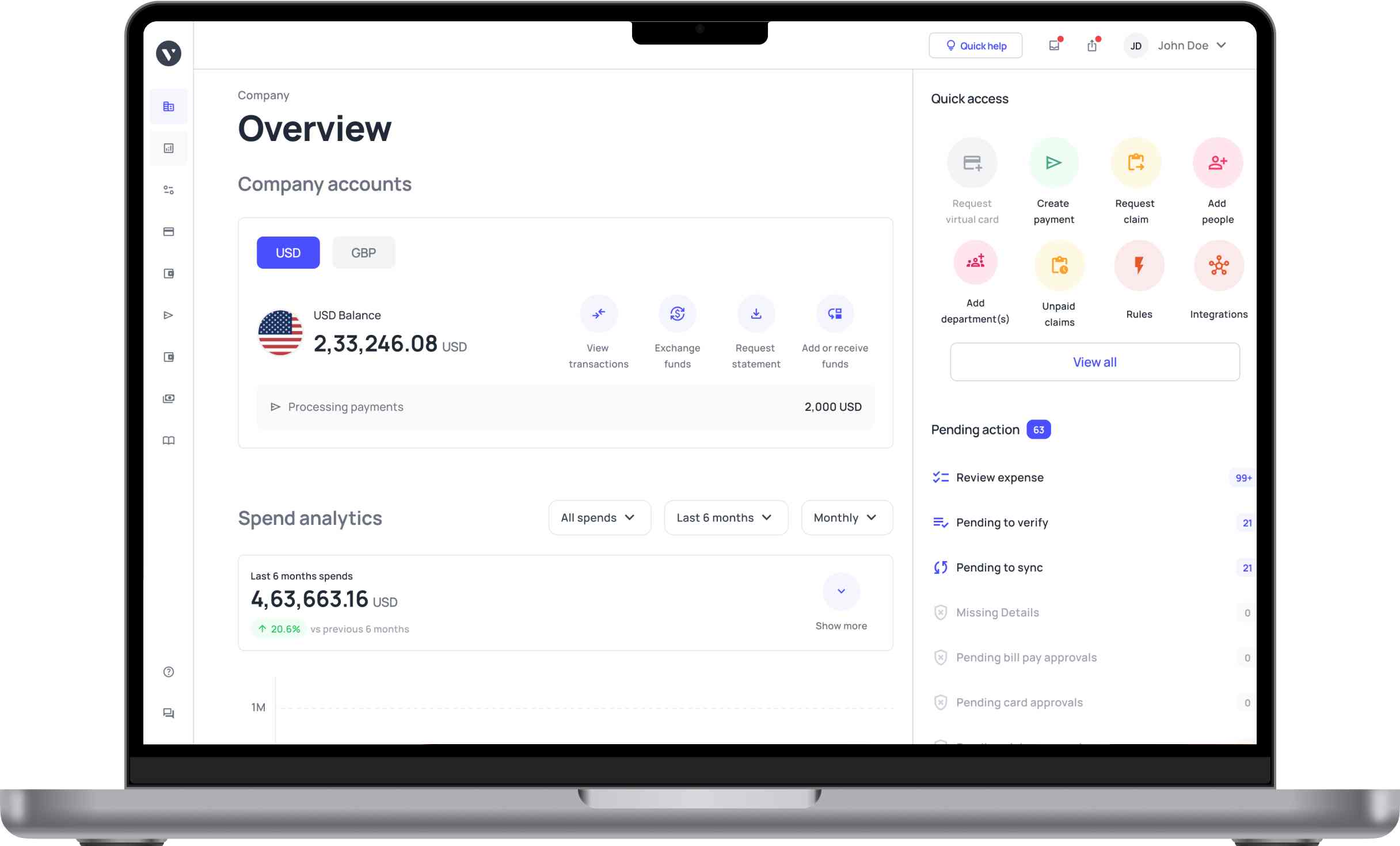
● Volopay: Best for global growing teams that need cards, bill pay, and expense management in one platform.
● Moss: Best for European SMBs that want decentralized employee spending with real-time finance team visibility.
● Ramp: Best for US fast-growth companies focused on automating expense workflows and cutting spend.
● BILL (Spend & Expense): Best for US SMBs already using BILL for accounts payable who want integrated corporate cards.
● Wallester: Best for EEA businesses that need scalable card issuance or a white-label embedded finance solution.
● Budgetly: Best for Australian SMEs that want simple, AI-assisted expense management with native Xero sync.
● Payhawk: Best for multi-entity enterprises managing global spend across currencies and ERP systems.
● Expensify: Best for freelancers and small teams needing a free, easy-to-start receipt and expense tool.
● SAP Concur: Best for large global enterprises requiring deep travel, expense, and ERP integration at scale.
● Brex: Best for venture-backed startups and high-growth tech companies needing flexible corporate credit with no personal guarantee.
| Tool | Prepaid cards | Multi-currency | Approval workflows | Best for |
|---|---|---|---|---|
Volopay | Global growing teams | |||
Moss | European SMBs | |||
Ramp | US fast-growth companies | |||
BILL | US SMBs using BILL AP | |||
Wallester | EEA card issuance & white-label | |||
Budgetly | Australian SMEs on Xero | |||
Payhawk | Multi-entity enterprises | |||
Expensify | Freelancers & small teams | |||
SAP Concur | Large global enterprises | |||
Brex | Startups & high-growth teams |
Get your team working with Volopay
Best overall
1. Ramp
Best for: Well-suited for startups, incorporated businesses (LLCs, corporations, limited partnerships), and modern mid-market companies.
Solutions: Ramp caters to technology and SaaS companies, professional services firms, nonprofits, healthcare organizations, and multi-location businesses.
Integrations: More than 100+ accounting, ERP, HRIS, and productivity tool programs are connected to Ramp. QuickBooks Online, Xero, NetSuite, Sage Intacct, Acumatica, Microsoft Dynamics 365, Oracle Fusion Cloud, and Workday are among the accounting-related integrations.
Pricing: Ramp uses a three-tier pricing structure. Ramp Enterprise is quote-based for large businesses that need to tailor the platform's capabilities to their business requirements, while Ramp Plus costs $15 per user per month. The base plan is free.
Rating on G2 : 4.8/5 (based on 2,375 reviews)
Best for startups
2. Brex
Best for: Best suited for VC-backed startups, high-growth companies, and enterprises.
Solutions: Brex provides excellent services for tech startups and e-commerce businesses, SaaS companies, professional services firms, and multi-entity organizations with global teams.
Integrations: Brex integrates with QuickBooks, NetSuite, and Xero.
Pricing: Brex has a three-tier model. The Essentials plan is free, Brex Premium is $12 per user per month (billed annually), and Enterprise is custom-priced.
Rating on G2 : 4.8/5 (based on 1,541 reviews)
Best for budgeting & real-time spend tracking
3. Budgetly
Best for: Australian SMEs, startups, and growing mid-sized businesses
Solutions: Budgetly serves all industries, including NDIS, not-for-profit, professional services, technology, hospitality, healthcare, property management, construction, engineering, and architecture
Integrations: Advanced native two-way Xero sync (transactions, categories, tags, GST, and receipt attachments—one-click reconciliation). Accounting exports to MYOB and QuickBooks.
Pricing: Budgetly offers three plans: Essentials ($99/month, billed annually) with 4 physical and virtual cards included, Premium ($279/month, billed annually), and Enterprise with custom pricing.
Best for enterprises
4. SAP Concur
Best for: Large enterprises, mid-to-large organizations (typically 100+ employees), and global companies with high-volume travel, expense, and invoice workflows.
Solutions: SAP Concur gives solutions to a wide variety of industries, including computer software, information technology and services, health care, financial services, pharmaceuticals, manufacturing, government contracting, higher education, and professional services.
Integrations: 330+ prebuilt connectors with major ERP/CRM/HR/accounting systems, including SAP, Oracle, Workday, NetSuite, Microsoft Dynamics, Salesforce, QuickBooks, Sage Intacct, ADP, Gusto, and more.
Pricing: SAP Concur has custom pricing, and the details are not listed on its website.
Rating on G2: 4/5 (based on 6974 reviews)
5. Expensify
Best for: Small to mid-sized businesses (SMBs), startups, freelancers, and growing teams (typically 5–200 employees)
Solutions: Expensify helps businesses, including startups, small businesses, and professional services firms such as legal and consulting, media, technology, non-profit, retail, and field services.
Integrations: 45+ integrations including QuickBooks Online/Desktop, Xero, NetSuite, Sage Intacct, Workday, Gusto, ADP, and travel tools (Uber, Lyft, Kayak)
Pricing: Expensify offers two plans: Collect and Control. The Collect plan costs $5 per unique member per month. The Control plan is priced at $9, $18, or $36 per active member per month, depending on the features included.
Rating on G2: 4.5/5 (based on 5,609 reviews)
Best for travel expense management
6. Payhawk
Best for: Mid-sized to large enterprises and scaling global businesses (50–1,000+ employees, often multi-entity or operating in 32+ countries)
Solutions: Payhawk delivers solutions to tech & SaaS, Food & drink, hospitality, manufacturing, logistics, professional services, consulting, retail, e-commerce, and any multi-entity or global business.
Integrations: two-way ERP/accounting sync with NetSuite, Sage Intacct, Microsoft Dynamics 365 (Finance & Business Central), Xero, QuickBooks, and more.
Pricing: Payhawk offers three packages with custom pricing: Premium Cards, All-In-One Spend, and Enterprise.
Rating on G2: 4.6/5 (based on 873 reviews)
Best for mid-sized companies
7. Wallester
Best for: European and EEA-based SMBs, fintechs, freelancers, and enterprises.
Solutions: Fintech, SaaS, media buying, digital advertising, lending, e-commerce, professional services, and any business that issues high volumes of virtual cards for vendor or subscription management.
Integrations: Native accounting sync with Xero and QuickBooks Online. Full REST API for ERP/CRM/HR systems, custom accounting automation, and white-label integrations.
Pricing: Wallester offers a free plan that includes up to 300 virtual cards at £0. Its paid plans include Premium (£0.66 per card/month), Platinum (£0.56 per card/month), and an Enterprise plan with custom pricing.
Rating on G2: 4.7/5 (based on 127 reviews)
8. Moss
Best for: European SMBs and mid-market companies that want an all-in-one spend management platform.
Solutions: Technology & SaaS, professional services, agencies, retail, e-commerce, manufacturing, and financial services.
Integrations: Moss connects to 40+ accounting, ERP, HR, and productivity tools. The key native integrations include DATEV, Xero, QuickBooks, Microsoft Dynamics, Lexware, and Exact Online.
Pricing: The Moss Starter plan is free for up to 3 users, while paid plans are modular and custom-priced based on your requirements.
Rating on G2: 4.7/5 (based on 224 reviews)
Best for budget & user-friendly
9. Volopay
Best for: Best candidate for startups, growing businesses, and small to mid-sized organizations.
Solutions: Volopay provides services to startups, small businesses, and large companies in a list of industries, including SaaS, fintech, logistics, professional services, and any sector where teams frequently pay vendors, manage software subscriptions at scale, or handle travel expenses.
Integrations: Volopay connects with Xero, QuickBooks, and NetSuite (and more accounting systems) to facilitate accounting. The technology reduces reconciliation errors by keeping tracking categories, tax codes, and the chart of accounts synchronized across systems.
Rating on G2: 4.3/5 (based on 106 reviews)
Best for mid-market
10. BILL
Best for: US-based small to mid-sized businesses (SMBs, typically 10–500 employees), growing startups, and accounting firms.
Solutions: BILL Spend & Expense provides financial automation for a wide range of industries, including non-profit organization management, construction, healthcare, marketing, and advertising.
Integrations: Native two-way sync with 100+ systems, including QuickBooks Online/Desktop, Xero, NetSuite, Sage Intacct, Acumatica, Oracle, and Microsoft Dynamics.
Pricing: BILL has two pricing sections: Accounts Payable & Receivable, and Spend & Expense. The former includes Essential ($49/user/month), Team ($65/user/month), Corporate ($89/user/month), and Enterprise (custom pricing). The latter starts at $0 per user per month.
Rating on G2: 4.5/5 (based on 2,088 reviews)
What is the best PEX alternative in 2026?
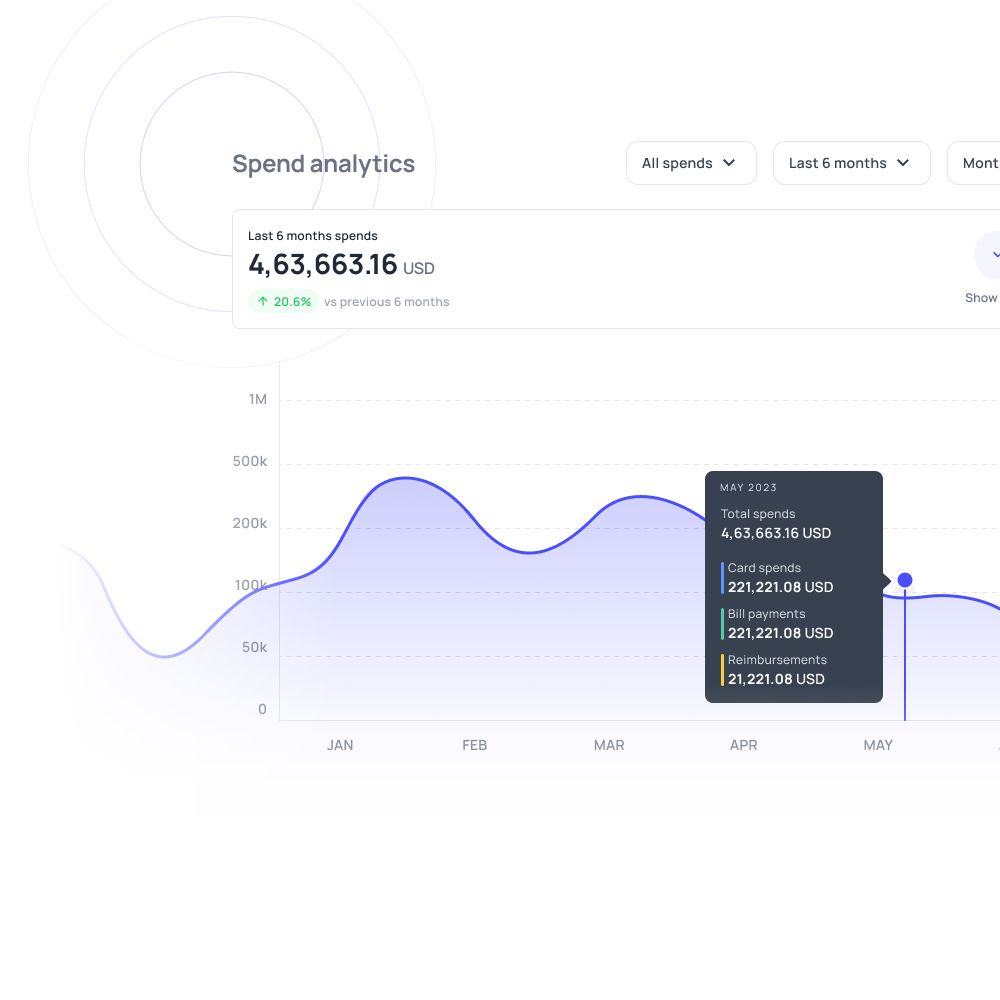
When choosing a PEX alternative, businesses should consider factors such as expense management, corporate cards, approval workflows, accounting integrations, multi-currency support, pricing, and ease of use. The right platform will depend on your company size, budget, geographic reach, spending needs, and how much automation and flexibility your finance team requires.
How to choose the right PEX alternative for your business
Company size and budget requirements
Every business is at a different growth stage, and the expense tool that works for a 10-person startup won’t be the same for a 200-person mid-market company needs. Smaller teams usually prefer something simple, affordable, and quick to set up, without paying for features they don’t really use yet. Bigger teams need more control, visibility, multi-entity support, and deeper integrations to handle more complex tasks.
Complicated workflow setup
When choosing the right PEX alternative, prioritize tools that offer flexible, easy-to-use, no-code workflow setups. Overly technical configurations can confuse employees and increase the risk of approval teams missing out-of-policy expenses.
System integration
Your software should align with your preferred expense management tool and integrate seamlessly with your company’s financial, accounting, and ERP systems. This kind of automation reduces the need for manual data entry and minimizes errors in expense tracking.
Simple and easy-to-use interface
An intuitive interface allows users to manage and control expenses without a steep learning curve. A simple, well-structured design with clear navigation helps employees easily submit receipts, upload invoices, and track reimbursements. When a system is easy to use, it encourages adoption and prevents employees from avoiding the tool, which can lead to out-of-pocket spending and budget overruns.
Access anytime, anywhere
Relying only on desktop portals to submit receipts can be inconvenient, and employees may forget to do it on time. Mobile access makes it easier to upload expenses instantly, helping avoid delays and keeping the process smooth for both employees and finance teams.
No credit flexibility
One common feature of many providers is a prepaid-only model, where employees can only spend the funds that have already been loaded onto their cards. If an unexpected expense arises, it can disrupt the workflow and create friction. This lack of flexibility may slow down urgent purchases and impact overall efficiency.
FAQs
Ramp, BILL Spend & Expense, and Volopay are among the best PEX alternatives for small businesses. Ramp’s core plan is completely free, BILL offers a zero-cost model for US-based teams, and Volopay stands out for international spending, corporate cards, and SaaS subscription management.
Companies are switching to PEX alternatives mainly due to modern automation, lower fees, wider integration options, streamlined workflows, and increased scalability.
Modern challenges can be addressed with updated systems. For streamlined expense control, businesses should prioritize tools with multi-level approvals, corporate cards, real-time tracking and reporting, and automated accounting reconciliation.
Volopay and Payhawk are among the best PEX alternatives for global teams. Volopay supports multi-currency accounts and is built for APAC businesses across Singapore, India, Australia, and more. Payhawk offers strong global compliance (including VAT and local regulations) along with multi-entity management.
Yes, PEX alternatives offer strong, one-click accounting integrations. Tools like Volopay, Ramp, BILL, and Expensify integrate with accounting software such as QuickBooks, Xero, and NetSuite.
Yes, Ramp and BILL are more cost-effective options for small businesses. Other alternatives like Volopay, Expensify, and Moss also offer affordable per-user or platform-based pricing, often lower than PEX.