10 Fyle alternatives for expense management
Sage acquired Fyle. If you have been holding a renewal until the roadmap is clear, now is the time to compare.
Fyle reads corporate card transactions, collects receipts by text, and syncs data to accounting systems. But it doesn’t issue cards, pay vendors, handle international payments, run procurement, or support multiple entities, forcing teams to use multiple tools.
This guide covers ten alternatives. Four work with your existing cards. Six replace your card program.














REVIEWED BY

Akanksh Muniyappa
Head of Product
WRITTEN BY

Mahasweta Bose
Content Writer
Quick summary of the best Fyle (Sage Expense Management) alternatives
● Volopay: Best for global businesses that need a unified platform combining corporate cards, international money transfers, vendor payments, and expense management.
● Ramp: Best for businesses wanting a free, all-in-one finance platform with corporate cards, AI-powered expense automation, bill payments, and vendor management.
● Expensify: Best for companies with fewer than 500 employees that need automated receipt scanning and one-click expense reports.
● Navan: Best for travel booking plus expense management in one place.
● SAP Concur: Best for enterprise travel and expense governance with policy enforcement and robust analytics.
● Zoho Expense: Best for mid-market businesses wanting affordable expense reporting with strong receipt automation.
● Brex: Best for VC-backed startups and high-growth tech companies.
● Mesh Payments: Best for real-time insights throughout the payment journey.
● Rho: Best for businesses that want a full-stack financial operations platform, combining FDIC-insured business banking.
● Emburse: Best for highly configurable enterprises needing deep customization.
| Tools | Best for | Card issuance | AP automation depth | Multi-currency support | Receipt scanning | All-in-one platform | Approval workflows | Travel management |
|---|---|---|---|---|---|---|---|---|
Volopay | Best overall | |||||||
Ramp | Startups & growing teams | Limited | Limited | |||||
Expensify | SMBs & freelancers | Limited | ||||||
Navan | Travel expense management | Limited | Limited | |||||
SAP Concur | Enterprises | Limited | Limited | |||||
Zoho Expense | Budget-friendly | Limited | Limited | Limited | ||||
Brex | High-growth startups | Limited | ||||||
Mesh Payments | Mid-sized companies | Limited | ||||||
Rho | SMBs with banking needs | Limited | ||||||
Emburse | Enterprise/accounting firms | Limited | Limited |
Get your team working with Volopay
Best overall
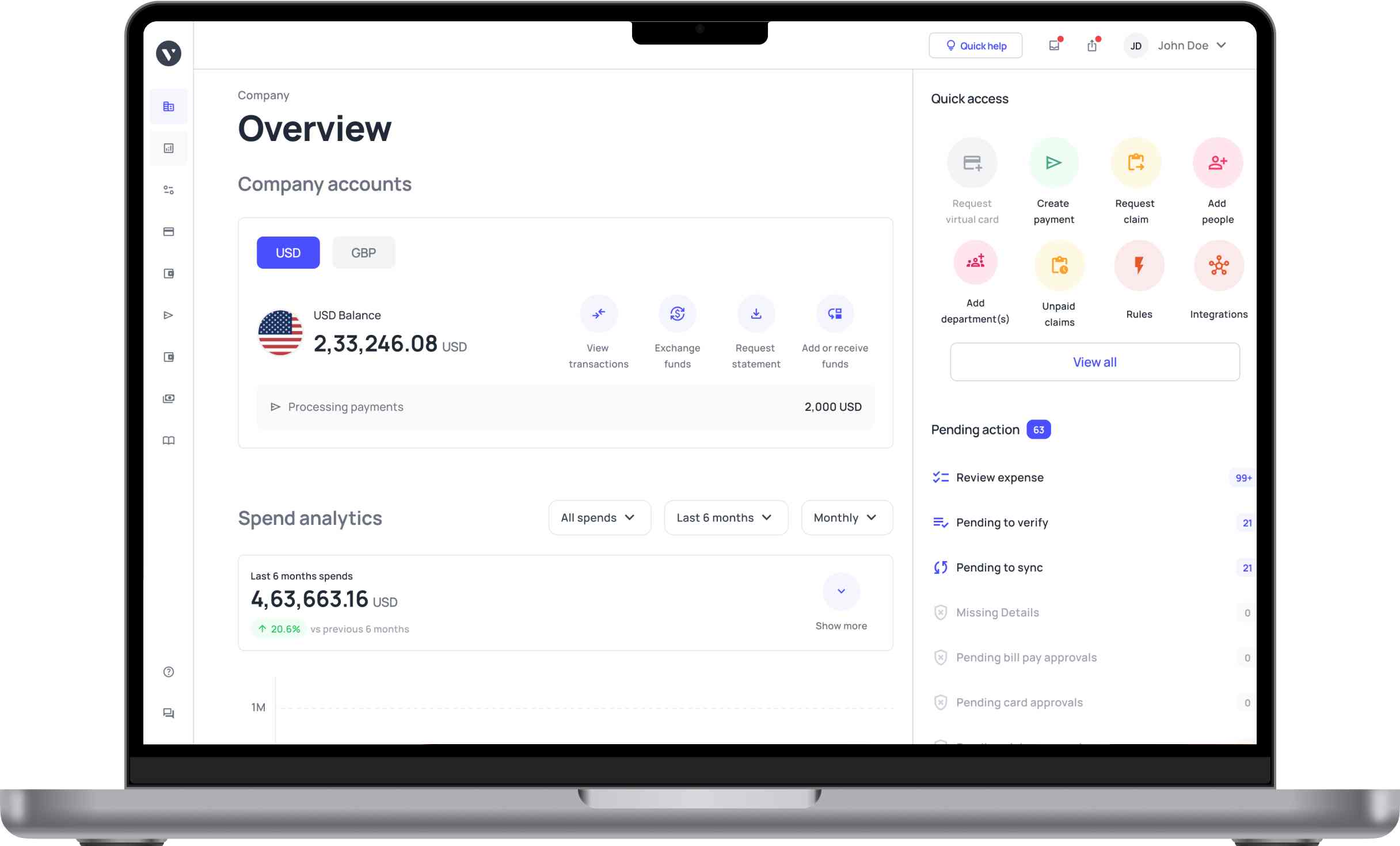
1. Volopay
Best for: Startups, SMBs, mid-market, and enterprises managing multi-department or cross-border spend.
Solutions: Logistics, retail, education, construction, hospitality, manufacturing, D2C, and healthcare.
Integrations: QuickBooks, Xero, NetSuite, Zoho Books, and MYOB. The platform also has a Universal CSV feature to integrate with accounting tools that don't have a native integration with Volopay.
Best for startups & high-growth companies
2. Brex
Best for: VC-backed startups, scaled tech companies, and ecommerce brands needing high-limit corporate cards without a personal guarantee.
Solutions: Technology startups, scaled companies, and ecommerce brands.
Integrations: Accounting integrations available on all plans, including NetSuite, QuickBooks, Xero, Oracle Fusion, and Microsoft Dynamics 365.
Pricing: Essentials at $0/user/month; Premium at $12/user/month; Enterprise is custom-priced.
3. Rho
Best for: Venture-backed and high-growth startups wanting banking, corporate cards, and spend management in a single, fee-free platform.
Solutions: High-growth companies looking to streamline treasury, payments, and finance operations, particularly digitally native, incorporated businesses.
Integrations: QuickBooks Online, Oracle NetSuite, Microsoft Dynamics 365 Business Central, and Sage Intacct.
Pricing: Platform is free with $0 per-user fees. Only charges a 1% fee on foreign currency transfers.
Best for SMBs
4. Expensify
Best for: Small and medium-sized businesses wanting simple, affordable expense reporting without switching their existing corporate cards.
Solutions: Accountants, churches, colleges, construction, financial services, insurance, legal, logistics, nonprofits, and retail.
Integrations: QuickBooks, Xero, NetSuite, Sage Intacct, Workday, Gusto, Uber, Lyft, and 45+ more.
Pricing: Collect plan at $5/user/month; Control plan available for teams needing advanced policy enforcement.
Best for enterprises
5. SAP Concur
Best for: Large enterprises and global organizations needing unified travel, expense, and invoice management at scale.
Solutions: Public sector, regulated industries, and organizations with complex global compliance requirements. Also widely used across financial services, healthcare, and manufacturing.
Integrations: SAP ERP, SAP S/4HANA, NetSuite, QuickBooks, Xero, ADP, Microsoft Teams, Uber for Business, and 150+ partner apps.
Pricing: Usage-based, transaction-volume pricing; custom quotes only; contact SAP Concur directly.
6. Emburse
Best for: Mid-market and enterprise companies needing highly configurable expense, AP, and travel management without being locked into a single card program.
Solutions: Education, healthcare, insurance, retail, legal, and banking.
Integrations: ERP, HRIS, banking and card gateways, travel booking systems, and sustainability platforms.
Pricing: Three subscription models - Transaction-based, submitter-based, and custom enterprise; pricing available on request.
Best for travel expense management
Best for mid-sized companies
8. Ramp
Best for: Fast-growing startups and mid-market companies that want to streamline financial operations and uncover savings opportunities.
Solutions: Technology, SaaS, professional services, nonprofits, and multi-entity businesses.
Integrations: QuickBooks Online and Desktop, Xero, NetSuite, Sage Intacct, Acumatica, and 200+ platforms.
Pricing: Free plan for core AP and expense features; Ramp Plus at $15/user/month; Enterprise pricing is custom based on your conversation with the sales team.
9. Mesh Payments
Best for: Mid-sized companies needing real-time visibility into spending throughout the payment journey, particularly those with global operations or multi-entity structures.
Solutions: Technology, SaaS, marketing, and global enterprises managing multi-entity, multi-currency spend.
Integrations: QuickBooks, Sage Intacct, NetSuite, BambooHR, Amadeus, and Azure AD.
Pricing: Platform is completely free on the Pro plan up to 3 users with limited capabilities. You get a Premium plan at $13/month with added functionalities, and an Enterprise plan that requires custom quotes.
Best for budget-friendly & easy-to-use
10. Zoho Expense
Best for: Small businesses, freelancers, solopreneurs, and growing teams looking for enterprise-level features at an affordable price.
Solutions: Consulting, IT services, construction, non-profits, and retail. Also widely used in SMEs, technology startups, and manufacturing.
Integrations: QuickBooks, Xero, Zoho Books, Zoho CRM, Zoho Analytics, Slack, Uber, Lyft, G Suite, and Microsoft Office 365.
Pricing: Free (up to 3 users); Standard at $3/user/month; Premium at $5/user/month; Enterprise custom pricing.
What is the best Fyle alternative in 2026?
When choosing a Fyle alternative, businesses should consider factors such as corporate card issuance, expense management, vendor payments, AP automation, multi-currency support, integrations, and pricing.
The right platform will depend on your company size, spending needs, existing finance stack, global payment requirements, and whether you need a broader all-in-one solution beyond expense reporting.
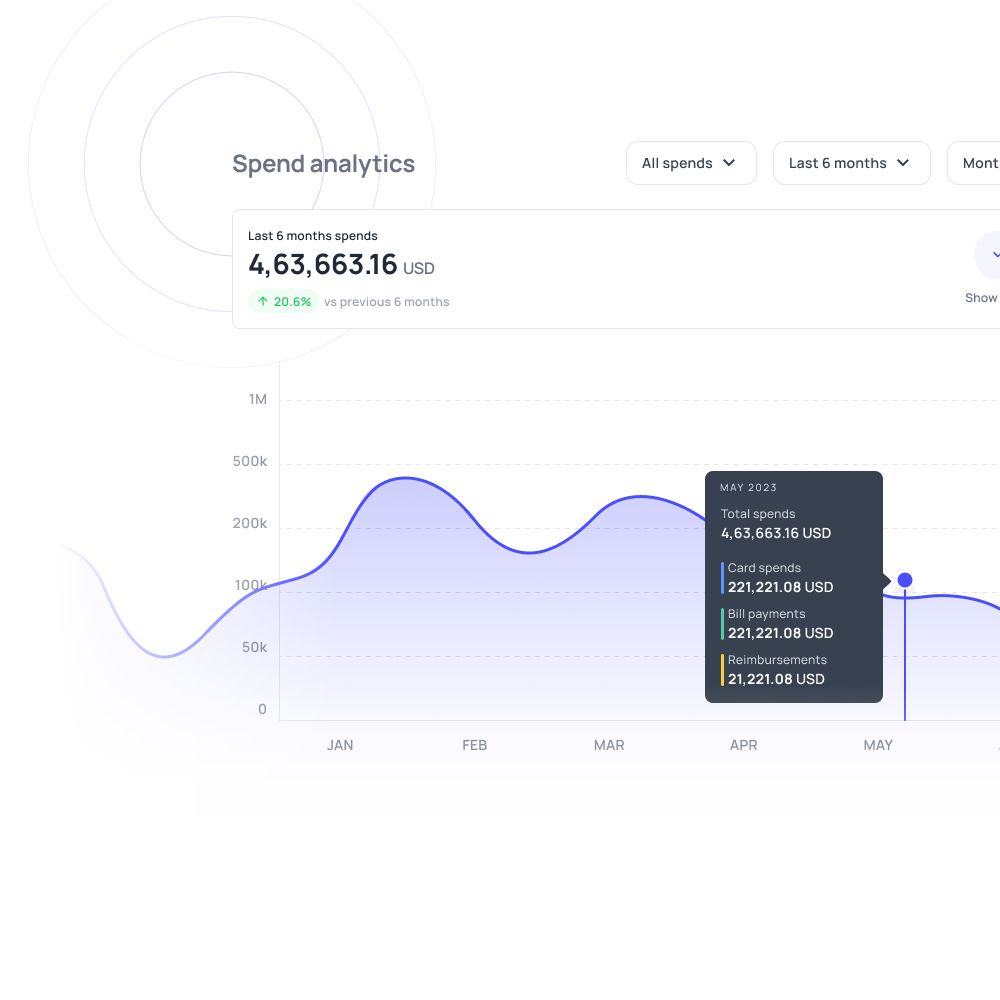
How to choose the right Fyle alternative for your business
Don't compare Fyle alternatives feature by feature. Start with the specific workflow you need to change, then shortlist platforms that solve that gap.
Step 1: Decide if expense management is enough
If you only need employees to submit expenses, automate approvals, and reconcile transactions, an expense-focused platform may be sufficient. If you also need cards, vendor payments, or invoice workflows, look for a broader spend management platform.
Step 2: Check how employees will spend
If employees already use company cards, check whether the platform can connect those cards cleanly. If you want finance to issue and control cards directly, prioritize alternatives with physical and virtual corporate cards, spend limits, and category-level controls.
Step 3: Map your payment workflows
List the payments your finance team handles outside employee expenses: vendor invoices, international suppliers, freelancers, or employee payments. If these sit in separate tools today, an alternative that brings more of these workflows together may make more sense.
Step 4: Test your scaling requirements
Check what happens when you add another entity, country, currency, or finance team. Multi-entity controls, multi-currency support, and entity-level reporting become more important as these requirements increase.
Step 5: Compare the total setup, not just the subscription
Before choosing, check the price of the features you will actually use, including cards, payments, integrations, and additional entities. Then test the accounting or ERP integration with a real workflow rather than relying on the feature list.
FAQs
Expensify and Zoho Expense are top choices as they are affordable, easy to use, and require minimal setup.
Fyle lacks natively issued corporate cards, vendor payments, global transfers, and procurement. This forces businesses to use multiple tools.
Volopay and Navan lead for global teams supporting multi-currency, multi-entity, and international payment capabilities.
Yes, most alternatives natively integrate with QuickBooks, Xero, NetSuite, and Sage Intacct out of the box.
Zoho Expense, Ramp, and Mesh Payments all offer free plans with features that match or exceed Fyle's paid tiers.