Corporate cards for Australian businesses to manage and track business expenses
A corporate card is one of the most powerful tools businesses in Australia can use to manage employee spending, simplify expense processes, and gain real-time financial visibility. Yet many companies still rely on reimbursements, shared payment methods, or manual expense tracking, which slows teams down and reduces control.
Volopay’s business corporate card solution combines smart spending controls, automated expense management, and accounting integrations in one platform. Built for modern companies operating in Australia, it helps finance teams stay in control of budgets while giving employees a seamless way to pay for approved business expenses.








What is a business corporate card?
A business corporate card is a company-issued payment card that employees can use for approved work-related expenses instead of paying out of pocket. Modern solutions from corporate card providers go beyond simple payments by including spend controls, real-time tracking, and integrated reporting tools.
Unlike traditional corporate expense cards that operate separately from expense systems, today’s platforms connect transactions directly with receipt capture, policy enforcement, and accounting workflows. This allows businesses in Australia to issue cards to employees, teams, or departments while maintaining strong financial oversight and reducing manual reconciliation work.
Volopay's business corporate card: Key features for modern businesses
Issue and manage corporate cards with custom spend controls
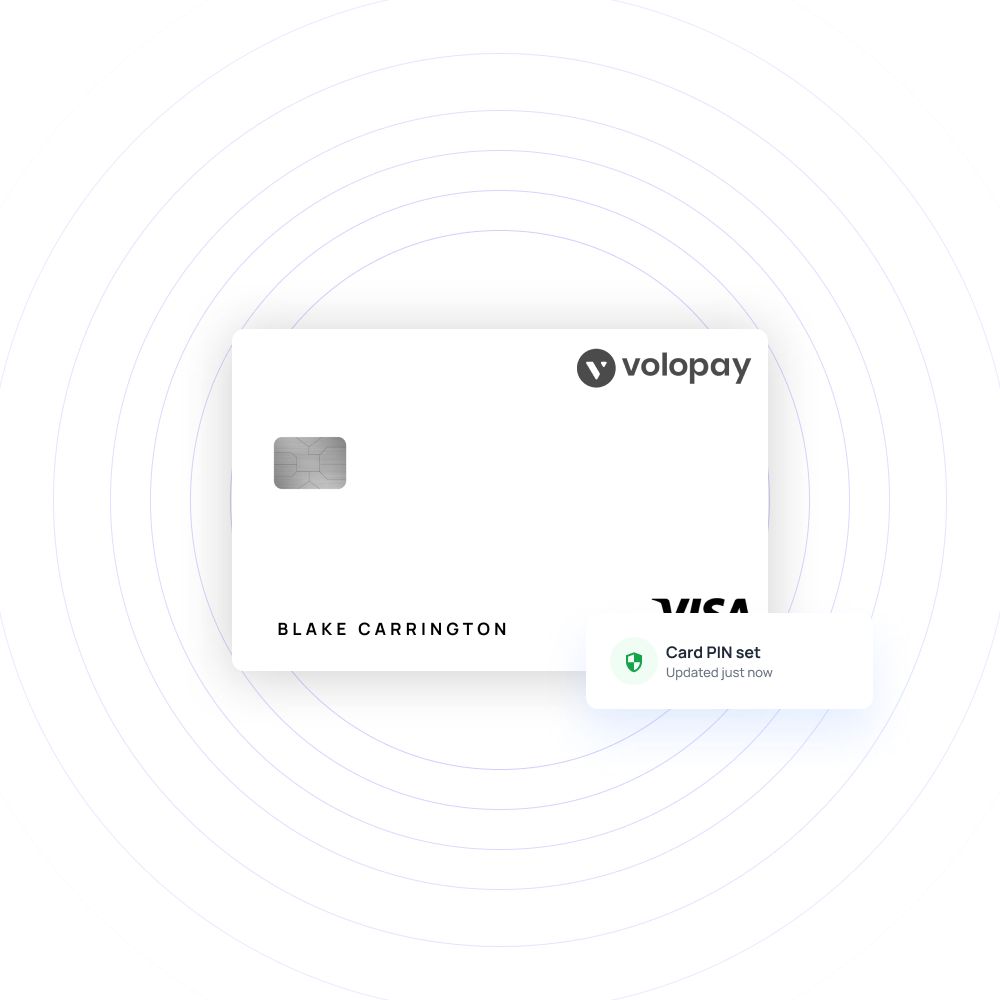
Volopay allows businesses in Australia to issue physical and corporate virtual cards to teams, making it easy to deploy corporate cards for employees with clearly defined purposes and built-in spending controls.
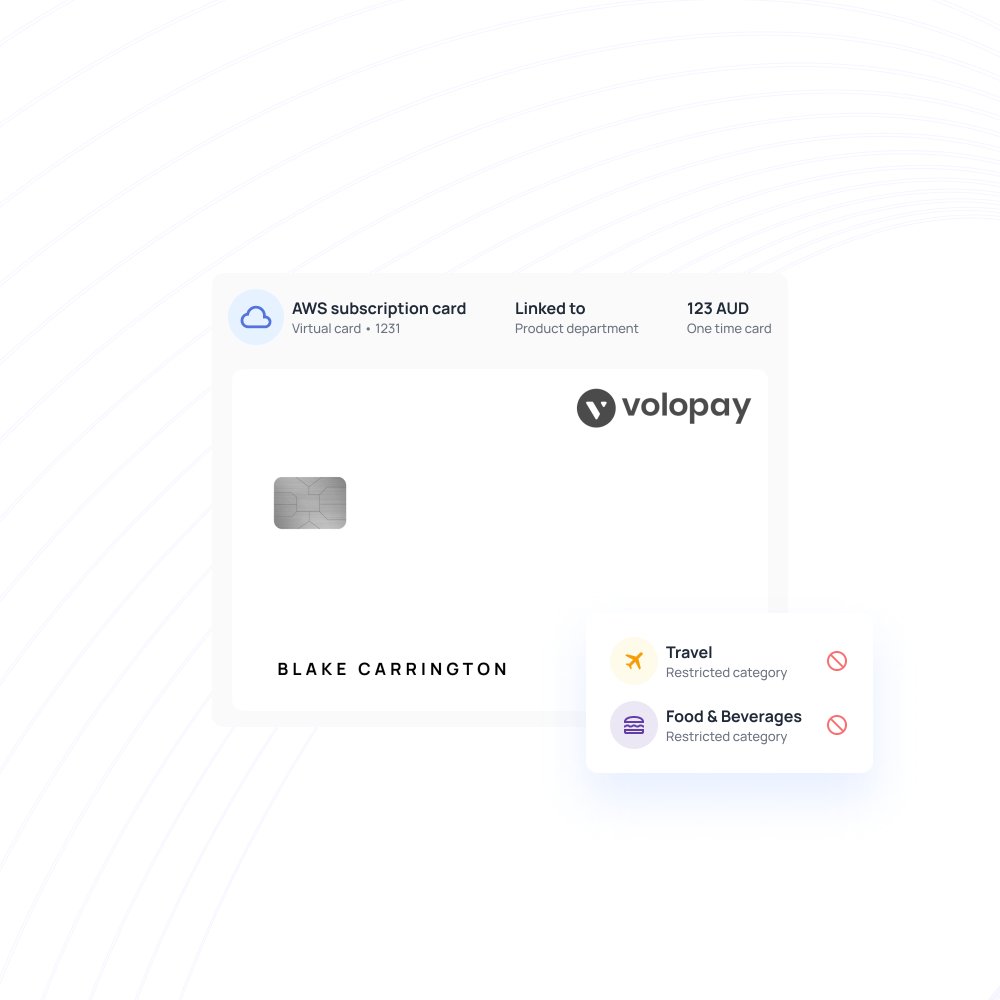
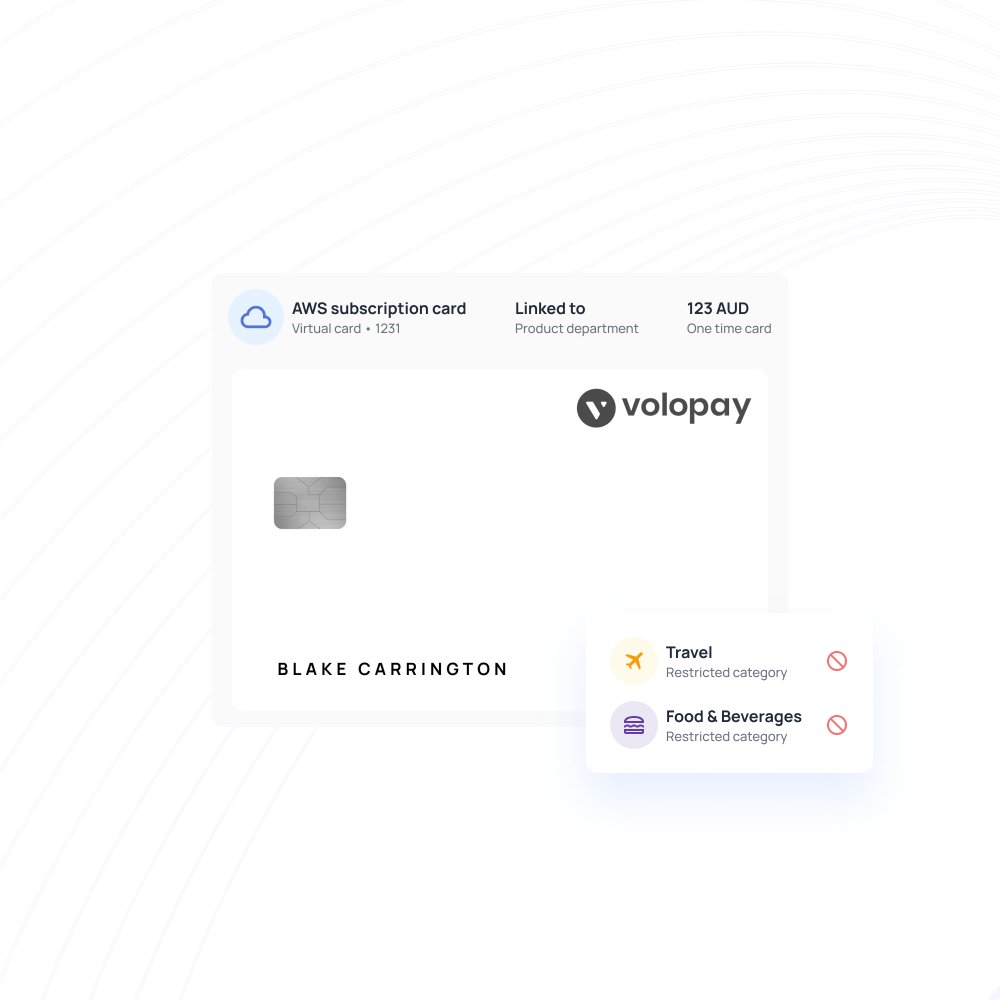
Each card can be configured for a specific purpose, such as travel, marketing, or vendor payments, ensuring it is used only for approved business activities.
Transactions are authorised in real time, giving finance teams immediate insight into who is spending and where. This structured approach reduces the risk of misuse while giving employees the flexibility they need to pay for legitimate expenses quickly. Centralised card management also makes it easier to scale as teams grow.
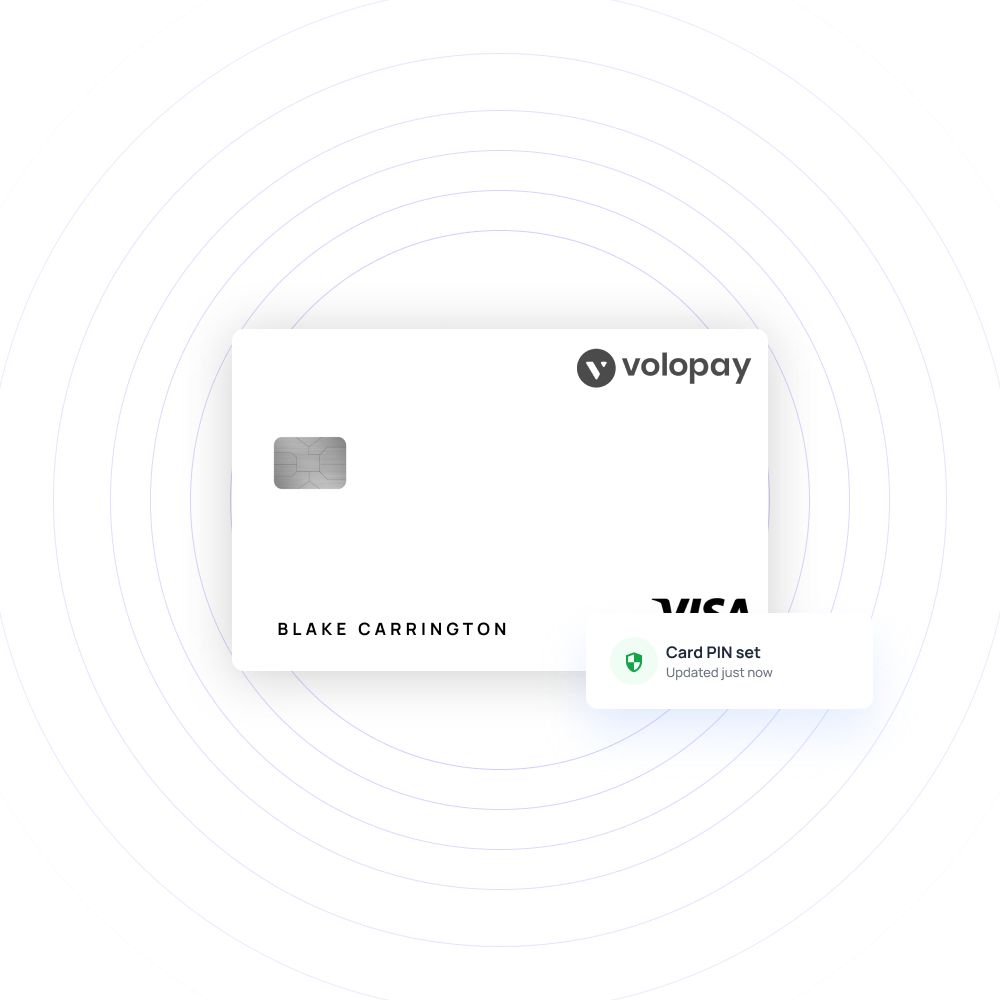
Set and enforce spending limits with granular restrictions
Finance teams can apply daily, weekly, or monthly limits to each corporate card, ensuring budgets are enforced automatically. These limits reset on a recurring basis, removing the need for manual monitoring. Per-transaction caps help prevent unusually large purchases from slipping through, while temporary overrides can be granted for approved exceptions.
Merchant category restrictions and vendor-specific controls provide another layer of protection by blocking purchases at unauthorised retailers. For companies in Australia, this proactive control structure helps prevent overspending before it happens and keeps financial policies consistently enforced.
Automate card controls with intelligent freezing and blocking
Volopay enables administrators to freeze or unfreeze cards instantly if a card is misplaced or suspicious activity is detected. Beyond manual intervention, automated rules can pause cards based on triggers such as inactivity, missing receipts, or repeated policy violations. This ensures policies are enforced consistently without constant manual oversight.
Cards can also be permanently blocked when necessary, protecting company funds from further risk. These layered security controls help businesses manage distributed employee spending with confidence while reducing the administrative workload on finance teams.

Be on top of your business expenses with corporate cards
Automate expense management with AI-powered intelligence
Manual expense reporting can be slow and error-prone. Volopay uses AI-powered tools to match receipts with transactions, spot duplicate claims, and suggest accurate expense descriptions.
Line-item analysis boosts categorisation accuracy, cutting down on manual data entry and later corrections.
For finance teams in Australia, this means faster processing, cleaner data, and fewer back-and-forths with employees. Employees also benefit from a simpler process through the Volopay corporate card app, where receipts, transaction details, and expense submissions are handled in one place.
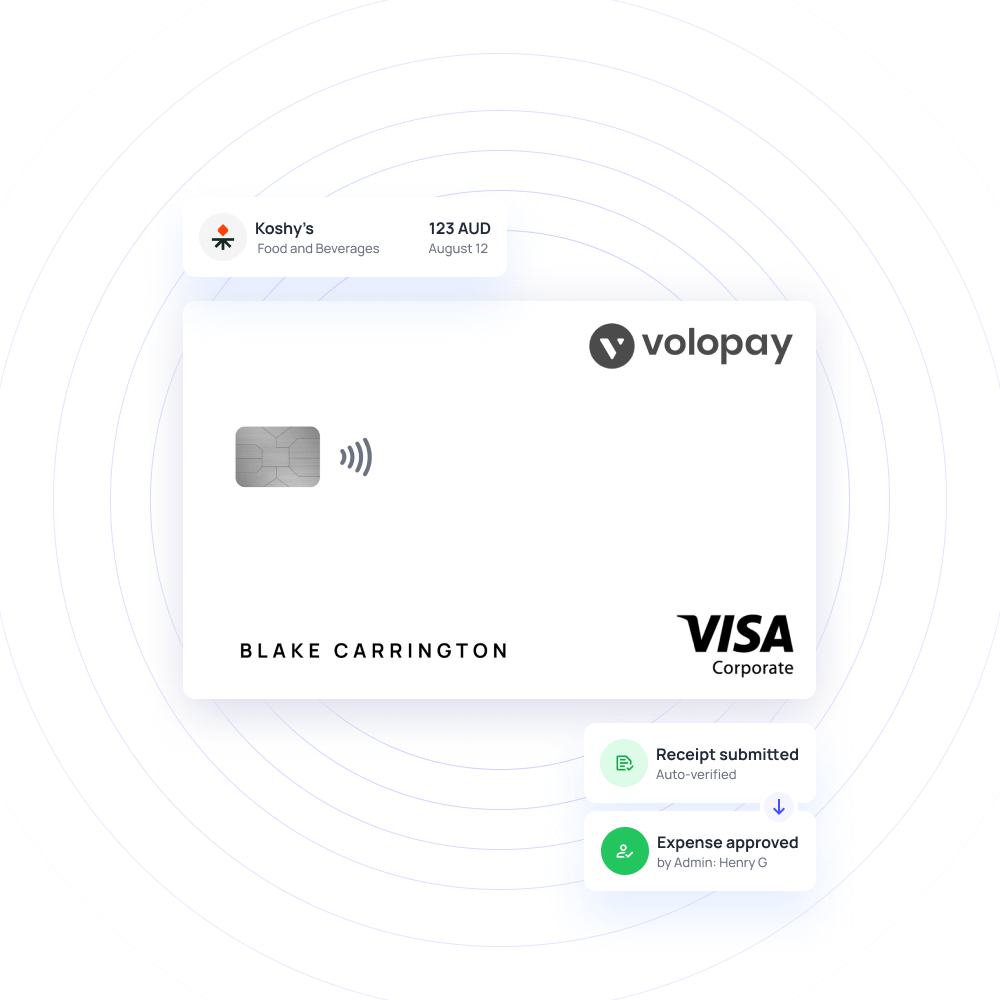
Configure approval workflows and enforce policy compliance
Every organisation has its own spending policies, and Volopay allows these to be reflected directly in the system. Approval workflows can be configured based on department, role, or expense amount, ensuring transactions are reviewed at the right level.
Expenses that fall outside policy can be flagged automatically, while approvers receive real-time alerts when action is needed. This structured approach to corporate card expense management helps businesses enforce compliance without creating unnecessary bottlenecks that slow down day-to-day operations.
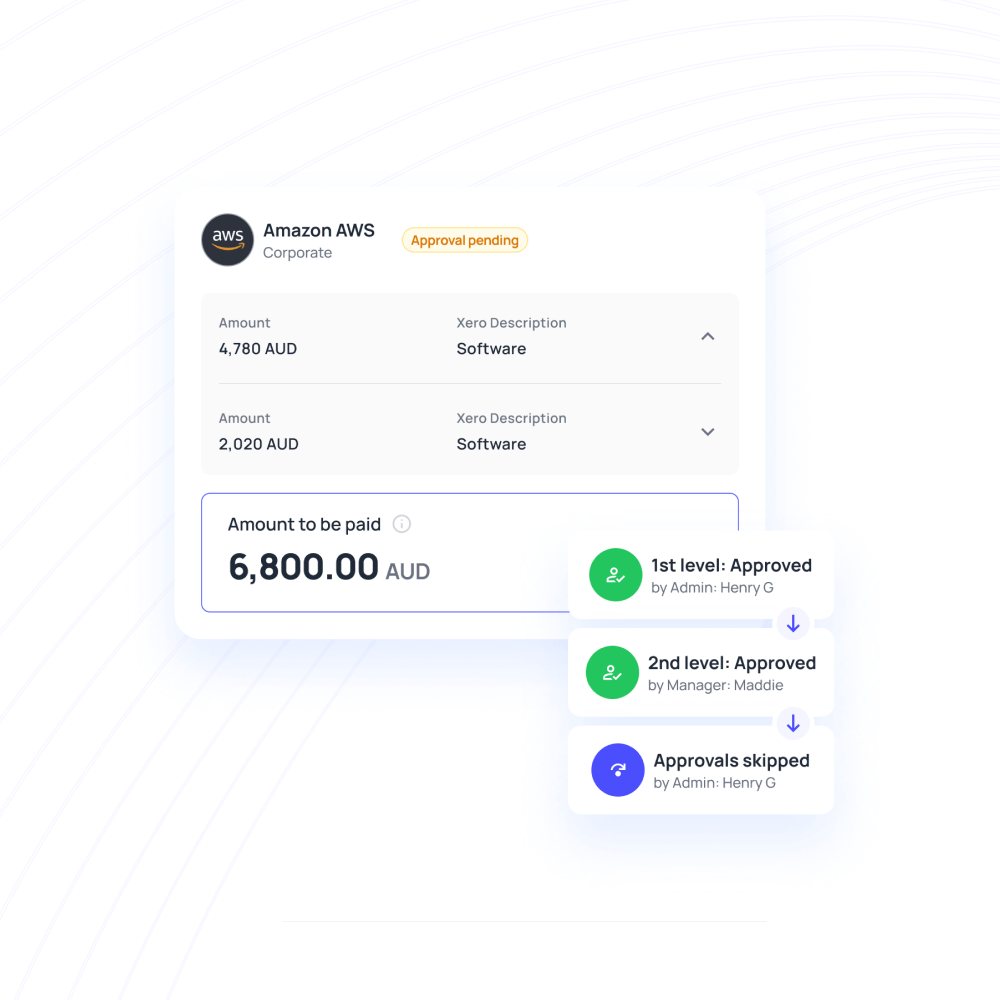
Categorise and attribute expenses for accurate accounting
Each corporate card can be linked to predefined accounting rules, allowing transactions to be categorised automatically. Expenses can be assigned to departments, cost centres, or projects at the time of issuance, ensuring accurate data from the start.
For complex purchases, transactions can be split across multiple categories. This reduces the need for manual reclassification during reconciliation and helps finance teams maintain clean, audit-ready records with less effort and fewer errors.

Seamless integration with accounting systems
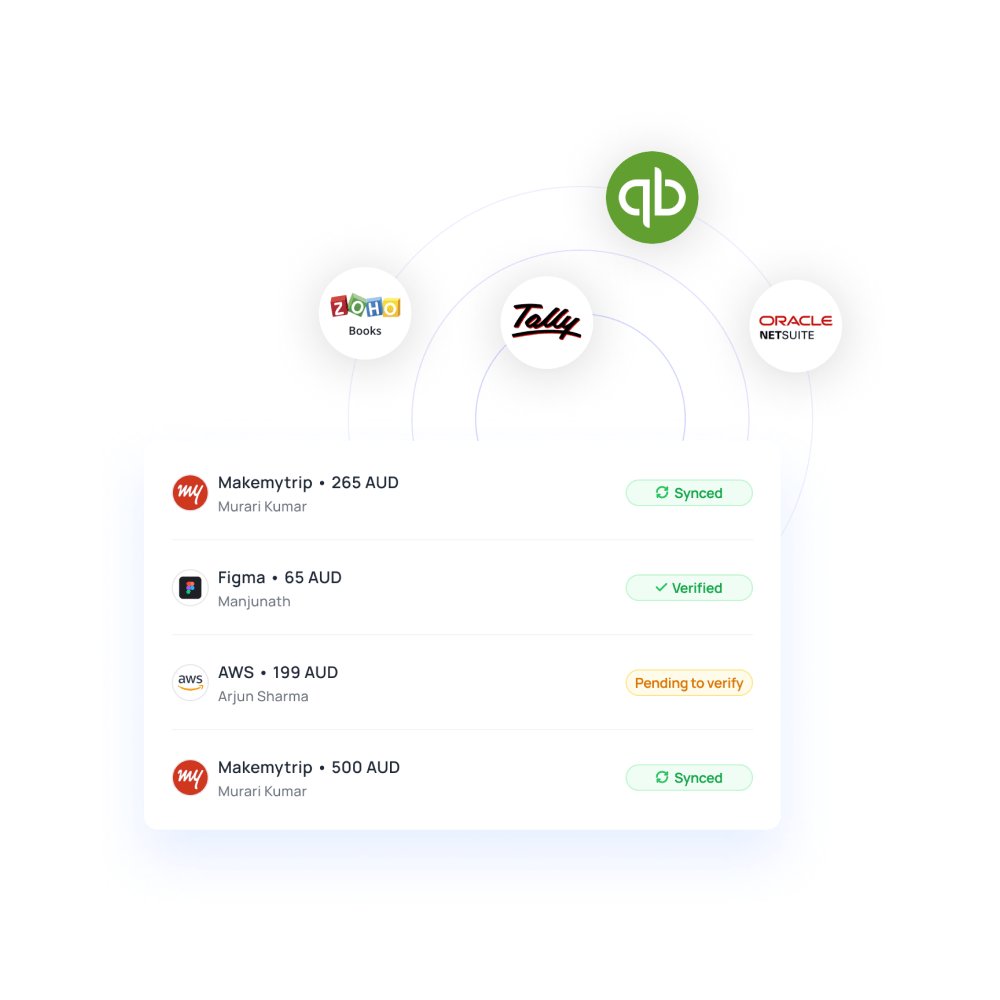
Volopay integrates with leading accounting systems such as Xero, QuickBooks, NetSuite, MYOB, and more that are used by Australian companies, allowing corporate card transactions and expense data to sync automatically. This removes the need to manually transfer information between platforms and reduces the risk of errors during reconciliation.
By connecting spend directly with accounting records, businesses gain a more accurate and up-to-date view of their financial position, leading to faster month-end close processes and more reliable financial reporting for leadership teams.
Financial stack for business
No more switching between multiple bank accounts and tools to run your smart business. We have combined great software with every service you are using a bank for, to produce a state-of-the-art financial platform.
Empower your employees with physical and virtual cards
Manage and track every dollar that leaves your company
Open a global account with multi-currency payments
Manage vendors, approve invoices and automate payments
Save hours daily, and close your books faster every month
Integrate with the all the tools and software that you use daily
Volopay business corporate cards benefits
Eliminate out-of-pocket expenses and reimbursement delays
When employees pay for business expenses using personal funds, reimbursement processes can be slow and inconvenient.
A corporate card removes this burden by providing a dedicated payment method for approved expenses. Employees no longer have to wait for repayments or manage cash flow for business travel and purchases.
For finance teams in Australia, this significantly reduces the volume of reimbursement claims to process and eliminates the need to track repayment timelines manually. This is one of the most immediate corporate card benefits, improving employee experience while reducing administrative work for finance teams.
Prevent overspending before it happens
Traditional expense systems often detect issues only after money has already been spent. Volopay’s real-time controls enforce spending limits and merchant restrictions at the point of purchase. This prevents unauthorised or excessive transactions before they impact the budget.
Companies can define limits by employee, department, or use case, ensuring spending stays aligned with financial plans.
This proactive approach reduces the need for corrective action, reimbursement disputes, or uncomfortable follow-up conversations, while giving finance teams stronger control over company funds.
Stop wasting time chasing receipts and transaction details
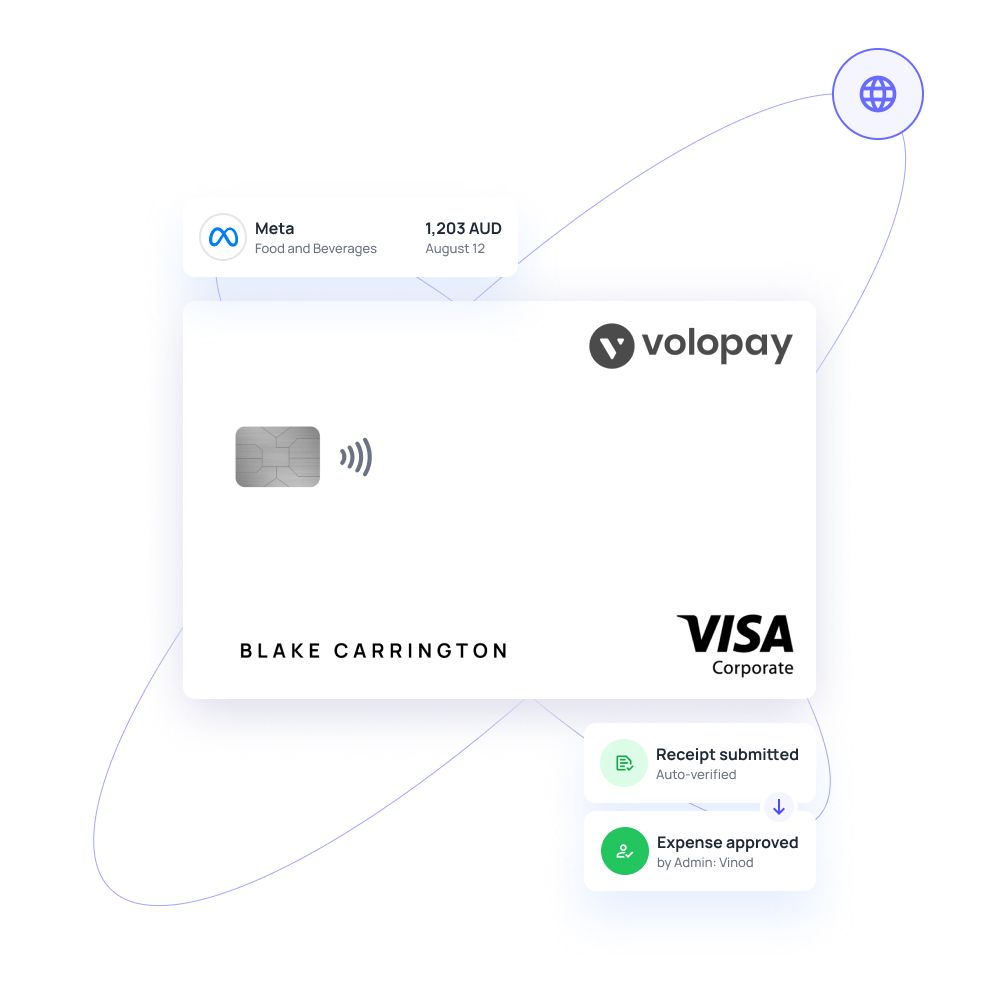
Finance teams often waste hours chasing missing receipts and clearing up vague expense descriptions. Volopay takes care of this by automating receipt capture and nudging employees when documents are needed.
It automatically adds relevant details to transactions, cutting down on manual follow-ups.
It keeps expense records complete and audit-ready without constant oversight. For businesses, that means fewer audit or reporting delays and more time for finance teams to focus on strategic work instead of admin tasks.
Gain real-time visibility into company spending
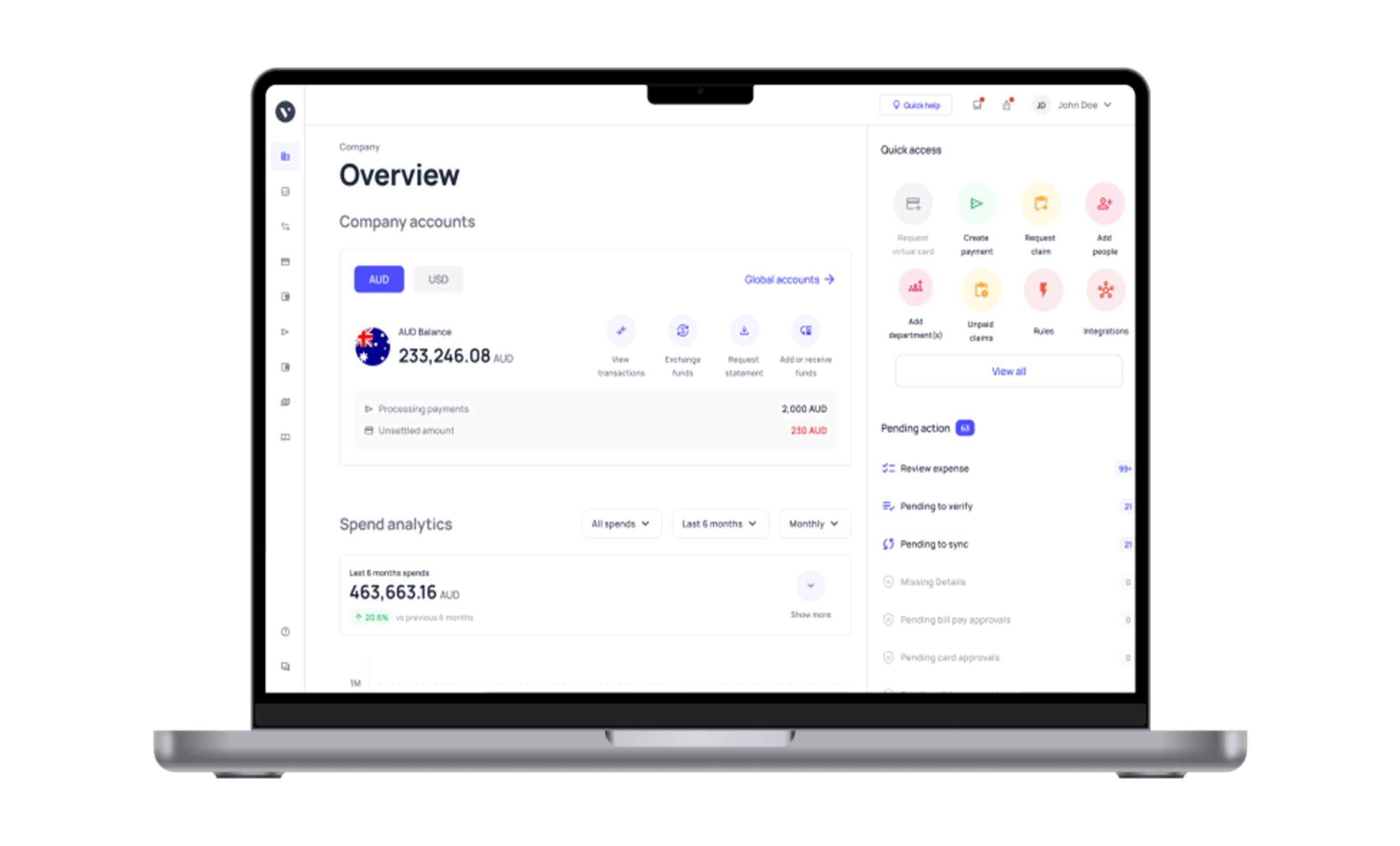
Real-time dashboards provide finance teams with instant insight into corporate card activity. Spending can be viewed by employee, team, or category, allowing faster decisions and stronger budget oversight.
This is especially valuable for growing companies in Australia, managing multiple departments or remote teams.
Instead of relying on outdated monthly reports, leaders can respond to live financial data that reflects current operations.
Reduce accounting close time with pre-categorised expenses
Because transactions are automatically coded and linked to accounting categories, much of the work typically required during month-end is already completed.
This helps finance teams close books faster and reduces pressure during reporting periods.
Pre-categorised data improves accuracy and gives leadership more timely insights into financial performance.
Simplify vendor management and subscription control
Recurring vendor payments and software subscriptions can be difficult to track manually.
Assigning dedicated cards to vendors or services provides clearer oversight of ongoing commitments.
Finance teams can quickly see which subscriptions are active and which department owns them, helping avoid duplicate tools and unnecessary spending.
Volopay corporate card use cases
Marketing teams managing multi-channel advertising spend
Marketing teams often manage campaigns across search engines, social media platforms, content networks, and industry events, each with different budgets and payment requirements. Corporate cards make it easier to assign spend to specific campaigns or channels while keeping finance teams informed in real time.
Limits can be set by platform or project to prevent overspending, and transactions are automatically captured for reporting and analysis.
For businesses operating in Australia, this helps marketing teams move quickly in competitive markets while ensuring all advertising spend remains aligned with approved budgets and broader company financial goals.
Finance teams issuing employee cards for business expenses
Finance teams are responsible for enabling employees to spend where necessary while protecting company funds. Corporate cards allow finance to issue controlled payment methods to employees across departments, locations, and remote teams.
Each card can be configured with specific limits, merchant restrictions, and approval workflows to reflect company policies.
Transactions feed directly into expense and accounting systems, reducing manual reconciliation and reporting work. This approach is especially valuable for growing businesses and corporate cards for startups that need to scale spending controls without increasing finance overhead.
Travel and entertainment expenses
Business travel frequently involves time-sensitive purchases such as flights, accommodation, ground transport, and meals. A corporate travel card allows employees to pay for these expenses directly, removing the need to use personal funds or wait for reimbursement.
Built-in spending limits and merchant controls help ensure travel costs stay within company policy. Transactions are automatically linked to expense reports, reducing paperwork when employees return from trips.
For organisations in Australia with travelling staff, this simplifies travel expense management, and in cases involving fleet or road travel, a corporate fuel card setup can also be supported through controlled card issuance.
Manage software subscriptions
Software subscriptions are often purchased by different teams across the organisation, making it difficult to track total spend and renewal dates. Assigning corporate cards to specific tools, platforms, or departments helps centralise visibility into recurring payments.
Transactions are categorised automatically, making it easier to review software costs during budgeting and planning cycles.
Companies can use such insight to identify overlapping tools, negotiate better vendor agreements, or cancel underused subscriptions. This structured approach reduces subscription sprawl and ensures technology budgets are used more effectively across the business.
Procurement and operations
Operational teams regularly need to purchase equipment, supplies, or services to keep day-to-day activities running smoothly. Corporate cards provide the flexibility to make approved purchases quickly, without waiting for lengthy approval cycles for every small transaction.
At the same time, finance teams maintain control through predefined spending limits and merchant restrictions.
Every transaction is recorded instantly and linked to the appropriate cost centre or department. For businesses, this balance between speed and oversight helps operational teams stay productive while ensuring procurement spending remains transparent and aligned with company budgets.
Human resources and administration
HR and administrative teams handle a wide variety of expenses, including recruitment advertising, employee training programmes, office services, and staff engagement initiatives. Using dedicated corporate cards for these functions ensures spending is tracked clearly and linked to the correct department.
Transactions are captured automatically, reducing the need for manual reimbursement requests and paperwork.
For companies in Australia, this improves visibility into administrative costs while allowing HR teams to focus on supporting employees rather than managing expense claims. Finance teams benefit from more accurate, real-time data on internal operational spending.
Make secure and convenient business payments with corporate cards
Why should your business opt for corporate card program?
1. Seamless reimbursement
Employees who frequently travel often find the reimbursement process to be inconvenient and time-consuming. However, corporate card can simplify this process for both employees and their employers. Employees do not need to use their own money or hold onto receipts.
Additionally, corporate credit card allow employees to access funds quickly, enabling them to book tickets in advance and potentially save money on travel costs.
2. Hassle-free business travel
If employees have to pay for business travel out of their own pocket, it can cause delays due to less funds. They also have to keep track of all receipts and expenses until they return and submit them for reimbursement.
Corporate cards with credits eliminate these issues and allow employees to travel with peace of mind. They don't have to worry about managing expenses and can focus fully on their trip.
3. Manage vendors easily
A large portion of your business funds go towards paying vendors. If you want to organize and track these payments, corporate credit cards can be useful. Each vendor can be assigned their own card, which can be used to make payments on a regular basis.
You can also tag each vendor with the relevant department. This makes it easier and more accurate to track vendor payments by department.
4. Fewer instances of expense fraud
Expense fraud can take many forms, such as unauthorized spending, fake bills, and double-submitting the same expense report.
To protect your company's finances, it's important to have a transparent system that tracks expenses and makes the data accessible to finance team and all relevant parties.This helps finance teams to stay vigilant and prevent misuse and fraud.
Why businesses prefer Volopay
At Volopay, we understand that every business has unique needs when it comes to managing finances. Here's how our features align perfectly with what businesses look for when choosing a reliable spend management solution.
Consistently rated at the top
Volopay takes pride in being consistently recognized as a top performer on G2. Our G2 badges are a testament to the outstanding value and satisfaction we deliver to our users.
These recognition demonstrates our commitment to offering cutting-edge financial solutions and outstanding customer support, which positions us as a reliable option for companies all around the world.







Customer stories
Volopay provides your business with the perfect financial control centre. Don't take our word, let our customers tell you how we empower their organisation.

Paralleldots streamlined their daily expenses and simplified the recording process.

Volopay helped Nexlabs solve the challenges of expense management.

Volopay helped EdgeRed with budget management and spend policies.
Know more about corporate cards
Know more about the requirements, things to consider and how to get corporate credit card for your business.
Know more about the major differences between business and corporate credit card and choose the right one for your business.
Know more about the importance of corporate credit card and how it can streamline your business expenses.
Bring Volopay to your business
Get started now
FAQs on corporate cards
Corporate cards eliminate the hassle of employees covering business expenses themselves. Purchases are automatically tracked and matched with receipts, cutting down on reimbursement requests and tedious manual work. For Australian businesses, this not only enhances the employee experience but also gives finance teams instant insight into spending.
A corporate travel card lets employees pay directly for flights, hotels, and meals without using personal funds. Transactions are captured instantly and matched with receipts, simplifying reporting. Australian businesses can apply travel-specific limits to keep spending aligned with company policy.
Corporate cards connect transactions directly with receipt uploads and expense data. This reduces manual entry and missing information. Finance teams get more complete records, which speeds up approvals and reconciliation while keeping expense reporting accurate and audit-ready.
Yes, virtual cards can be created with defined spending limits and expiry dates. This makes them ideal for marketing campaigns or short-term projects. Businesses in Australia can control budgets more precisely and prevent ongoing or unintended charges.
The best corporate card combines strong spending controls, real-time visibility, and automated expense management. Australian businesses should look for flexible limits, merchant restrictions, and accounting integrations to balance employee convenience with finance team oversight.
Consider spending controls, ease of issuing cards, accounting integrations, and approval workflows. Businesses in Australia should also look at security features and merchant restrictions. The right solution should support both employee flexibility and strong financial oversight.
Physical cards are used for in-person purchases, while virtual cards are created digitally for online or vendor payments. Virtual cards can have custom limits and expiry dates, giving Australian businesses more control over specific types of spending.
Yes, Volopay corporate cards support international business spending. Transactions made overseas are tracked in the same system, helping Australian finance teams maintain visibility and manage global travel expenses with consistent controls and reporting.
Corporate cards can be issued to remote employees for approved business expenses. Spending limits and merchant controls ensure policy compliance, while transactions are recorded in real time. This helps Australian businesses support flexible work without losing financial oversight.
Yes, corporate cards can be issued across locations with centralized controls. Transactions from different offices feed into one platform, giving Australian finance teams consolidated visibility while supporting distributed teams and growing operations.
Startups can reduce manual finance work through automated receipt matching, expense categorisation, and accounting sync. Real-time visibility also helps Australian founders and finance leads manage budgets more effectively as the business scales.
Yes. Using Volopay corporate cards, businesses can block specific merchant categories or limit purchases to approved vendors. These controls help Australian companies prevent unauthorised spending while still allowing flexibility for approved expenses.
Yes, transactions appear in real time, giving finance teams immediate insight into company spending. This helps Australian businesses monitor budgets, detect unusual activity, and make faster financial decisions.
Volopay corporate cards include real-time monitoring, instant card freezing, and structured approval workflows. These features help Australian businesses respond quickly to suspicious activity and maintain strong financial control.