Collection software for managing receivables
Prioritise receivables, interpret replies and adjust the next action as promises, disputes and payments change.














Agentic collections, configured to your rules
Know who to chase
Worklists combine value, age, history, broken promises, and blockers, so collectors see where to start and why.
Chase the right way
Set timing, contact hierarchy, language, tone and escalation by customer or segment. Account-specific holds override the standard cadence.
Keep the conversation going
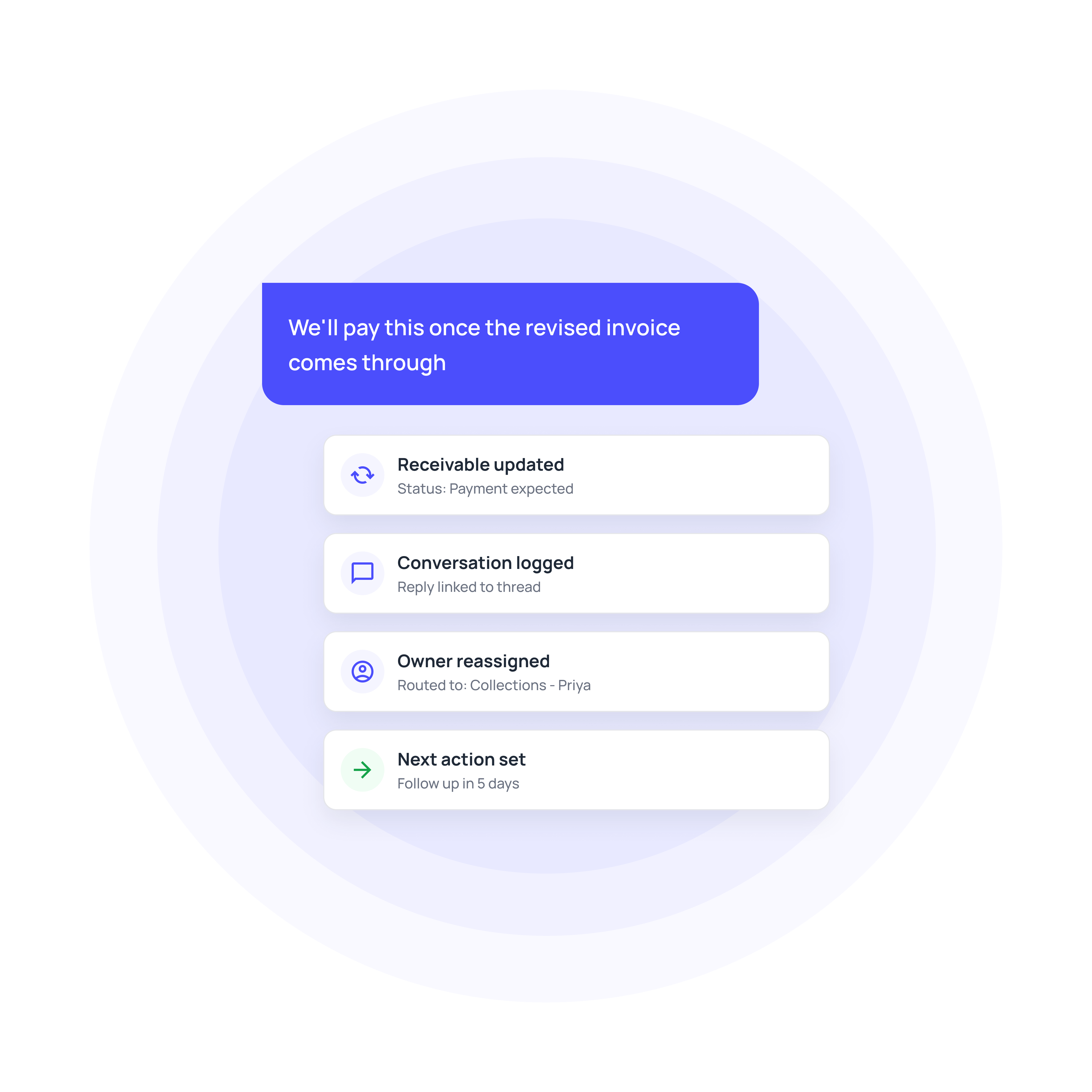
Customer replies update the same conversation, invoice and next action instead of creating another inbox to interpret.
Hold customers to their word
Promised dates and amounts are verified against confirmed receipts.
Action-level autonomy
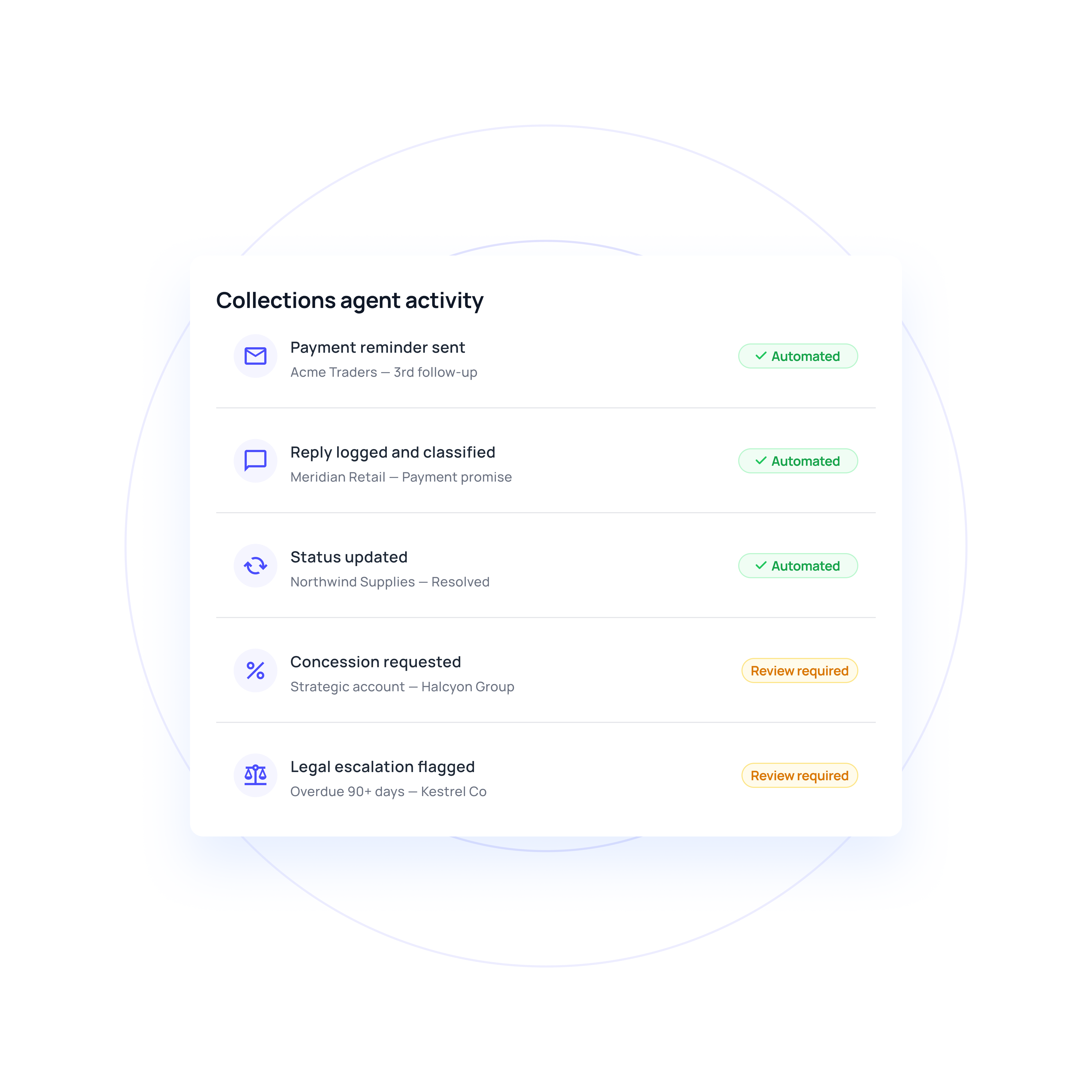
Finance decides which actions run automatically and where review, approval, or takeover is required. Higher-risk cases, negotiated terms, and sensitive communications remain subject to explicit human authority.
Pre-send checks
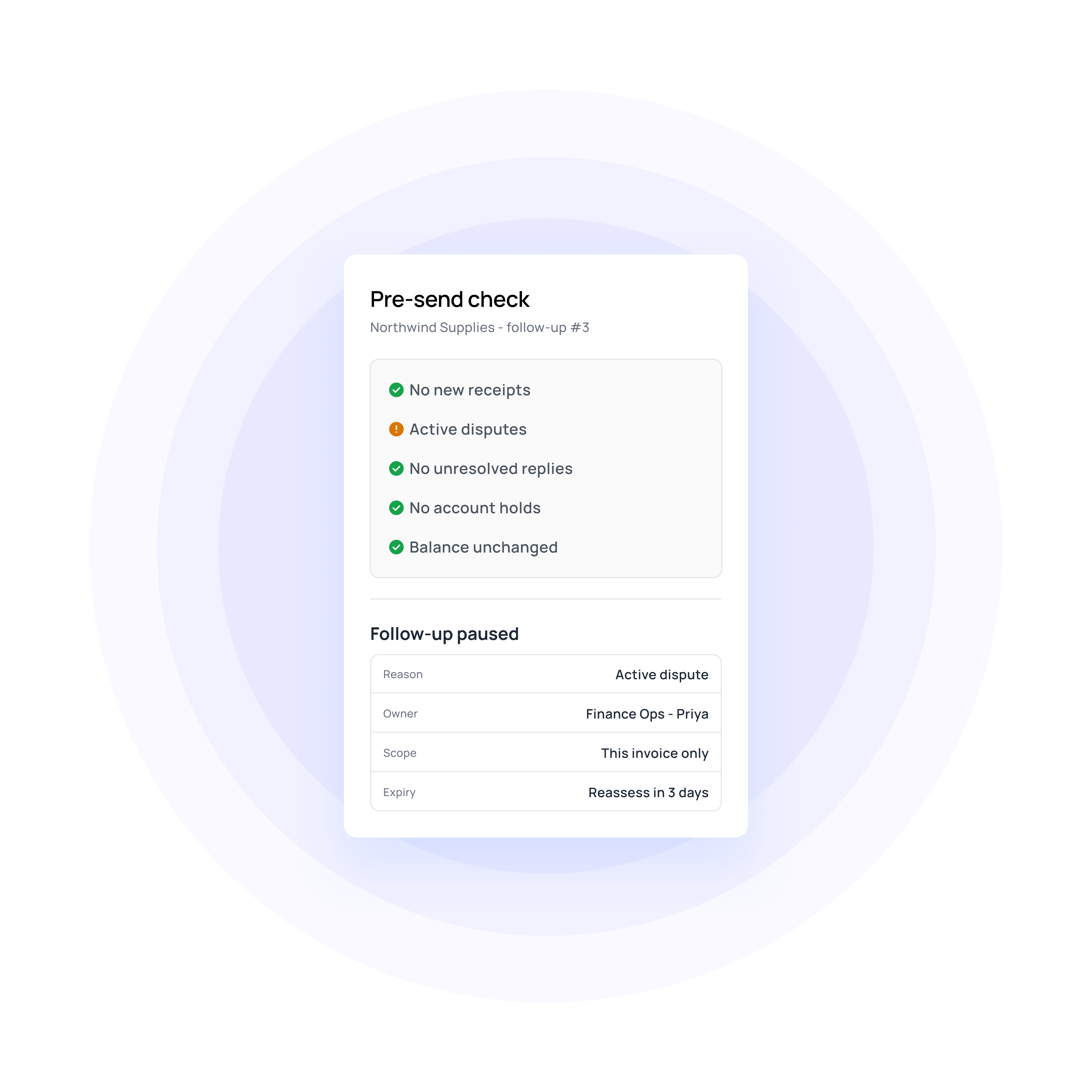
Immediately before sending, agents check receipts, disputes, open replies, holds, and balances. Each pause stores its reason, scope, expiry, and owner.
Automate collections without losing human control
Close the gaps around collection work
Approved documents, verified recipients
Volopay retrieves the approved document for a request and verifies the recipient before sending an attachment or secure link. Identity and permissions govern what can be disclosed.
AP contact correction and verification
When an address bounces or a contact leaves, Volopay uses permitted CRM and account-owner information to propose a replacement, rather than sending sensitive financial documents to a guessed address.
Escalation with full context
Each escalation carries the amount, invoice, customer message, evidence, and recommended next step, so the decision-maker doesn't start from scratch.
Regional collection visibility
Track ageing, DSO, payment promises, blocked work and collection activity separately. Forecasts can use due dates, customer behaviour and commitments while keeping assumptions visible.
Collections software for how regional businesses operate
Large customer books across the UAE and GCC region need more than an ageing list. Prioritise accounts using value, payment history, promises and active blockers, with the reason visible to collectors.
Track payment promises by date, amount and covered invoices, then compare them with confirmed receipts before changing the collection path.
Large customers may need different contacts, timing, language and escalation paths across markets. Configure playbooks by segment while keeping account-specific instructions in control.
Why go the Volopay way?
| Manual/legacy collections approach | The Volopay collections software approach |
|---|---|
Ageing lists show what is late, but not what deserves attention | Prioritised worklists combine value, age, payment history, broken promises, risk signals, relationship sensitivity, and active blockers |
Every overdue account moves through the same reminder sequence | Segmented playbooks adapt cadence, contact hierarchy, channels, timing, tone, and escalation to the customer or account |
Customer replies create another inbox for collectors to interpret | Replies change the next action, whether the customer requests a document, makes a promise, disputes an invoice, or claims payment |
Payment promises disappear into emails and notes | Promises are captured with date, amount, covered invoices, and conditions, then checked against actual receipts |
Missing POs, portal requirements, and invoice questions stall collections | Blockers become owned work with a next action, deadline, and resolution path before collections resumes |
They loved Volopay, you will too
FAQs
Volopay can factor in overdue value, ageing, payment history, broken promises, customer risk signals, relationship sensitivity and active blockers. Finance can override a priority while retaining the rationale behind the original ordering.
Volopay keeps balances, recent conversations, promises, disputes and account activity together before the next action. Collectors work from the current account state instead of rebuilding context across systems.
Yes. Routine reminders and document responses can progress within configured policy, while strategic accounts, negotiated terms and sensitive communications stay behind review or human takeover.
Volopay tracks the promised date, amount, invoices and conditions, then compares the commitment with confirmed receipts. Disputed amounts follow their own policy while eligible undisputed balances remain collectable.
Cases can move to people for situations such as missed internal SLAs, repeated customer silence, disputed policy, high-value concessions or sensitive accounts. Strategic terms, write-offs, legal threats and external debt recovery can also require review or escalation.
Finance retains authority over sensitive relationships, negotiations beyond approved limits and other exceptions requiring commercial judgement. Teams can also define which routine actions run automatically and when an agent must pause, request approval or hand the case to a person.
Bring Volopay to your business
Get started now