Improve deduction management and recovery
Turn scattered claims and supporting evidence into a structured case, with clear ownership and review where judgement is required.














Turn deduction handling into a connected workflow
No more rebuilding the story
Evidence, correspondence, deadlines and financial actions stay attached from the moment a dispute forms.
No more "who's handling this?"
Each case reaches a named owner, with accountability built in rather than assumed.
No more guessing on the hard ones
Ambiguous or material decisions reach the person authorised to make them.
Keep AR disputes and collections aligned
Disputed amounts follow their case policy while eligible undisputed balances continue through collections and cash application.
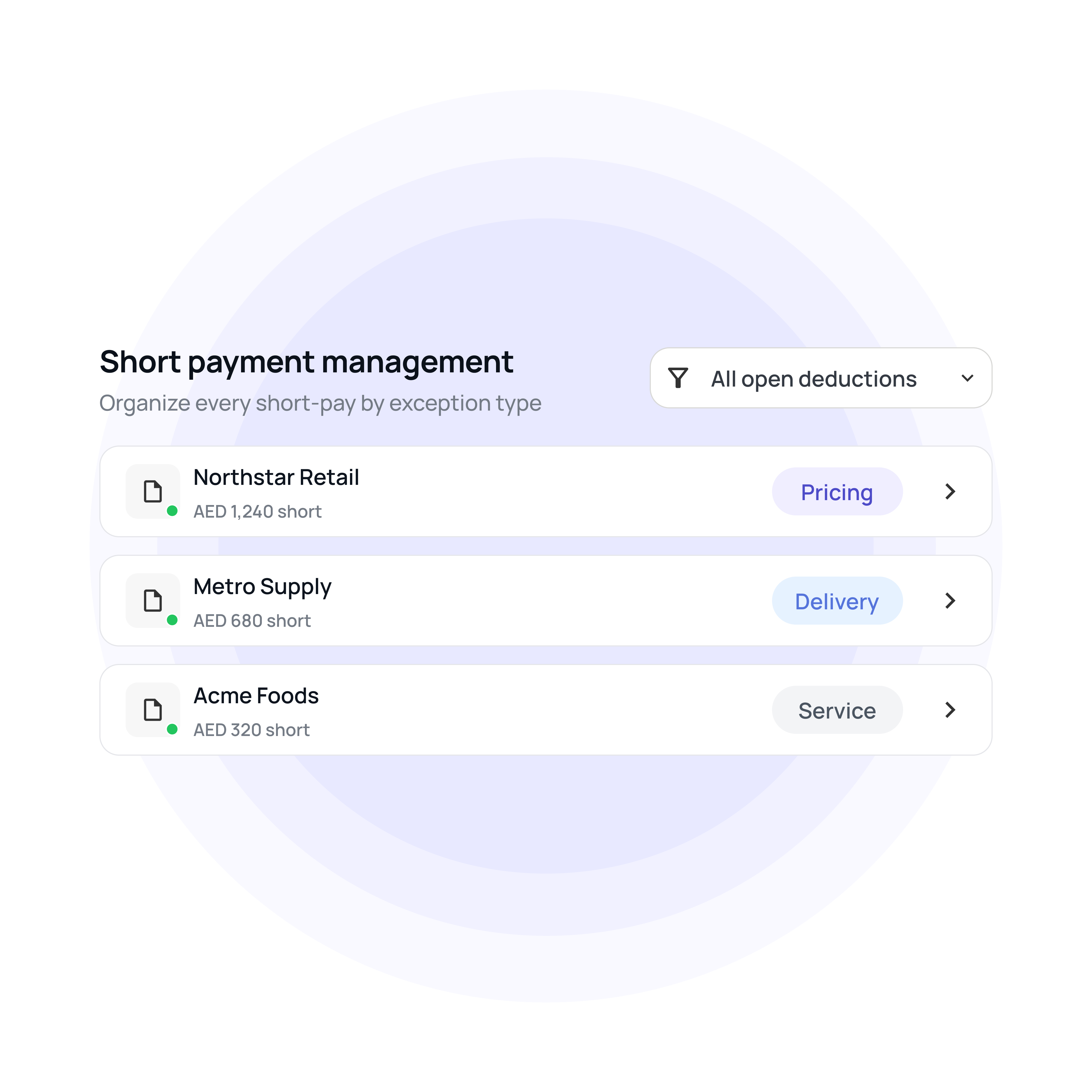
Reason-based case organisation
Separate pricing, VAT-related billing, discount, delivery, service and quantity issues, so teams work from the right evidence and resolution path.
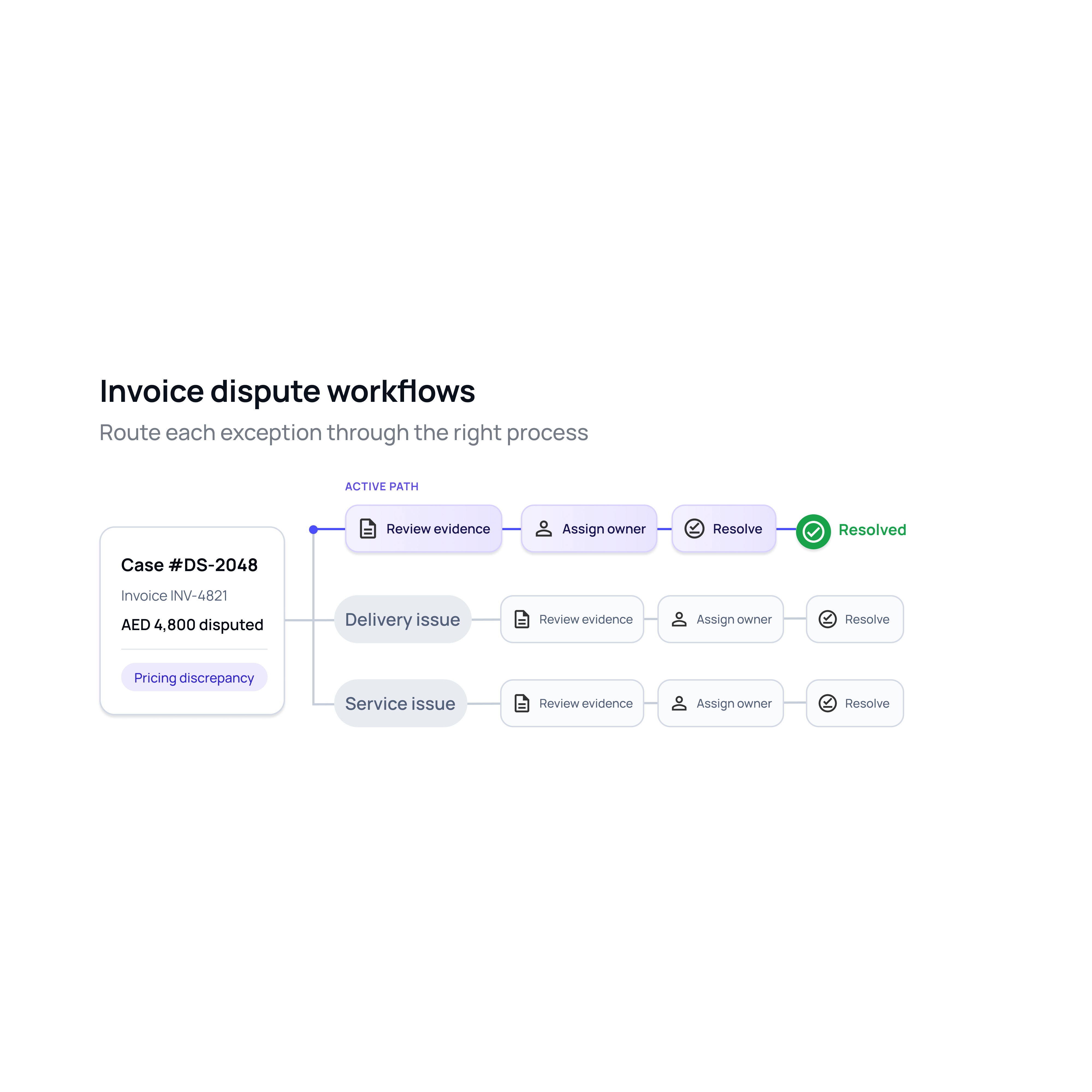
Workflows matched to dispute type
Different exceptions follow different resolution paths. Volopay applies the workflow suited to the case rather than routing every dispute through the same process.
Visibility into where cases actually stand
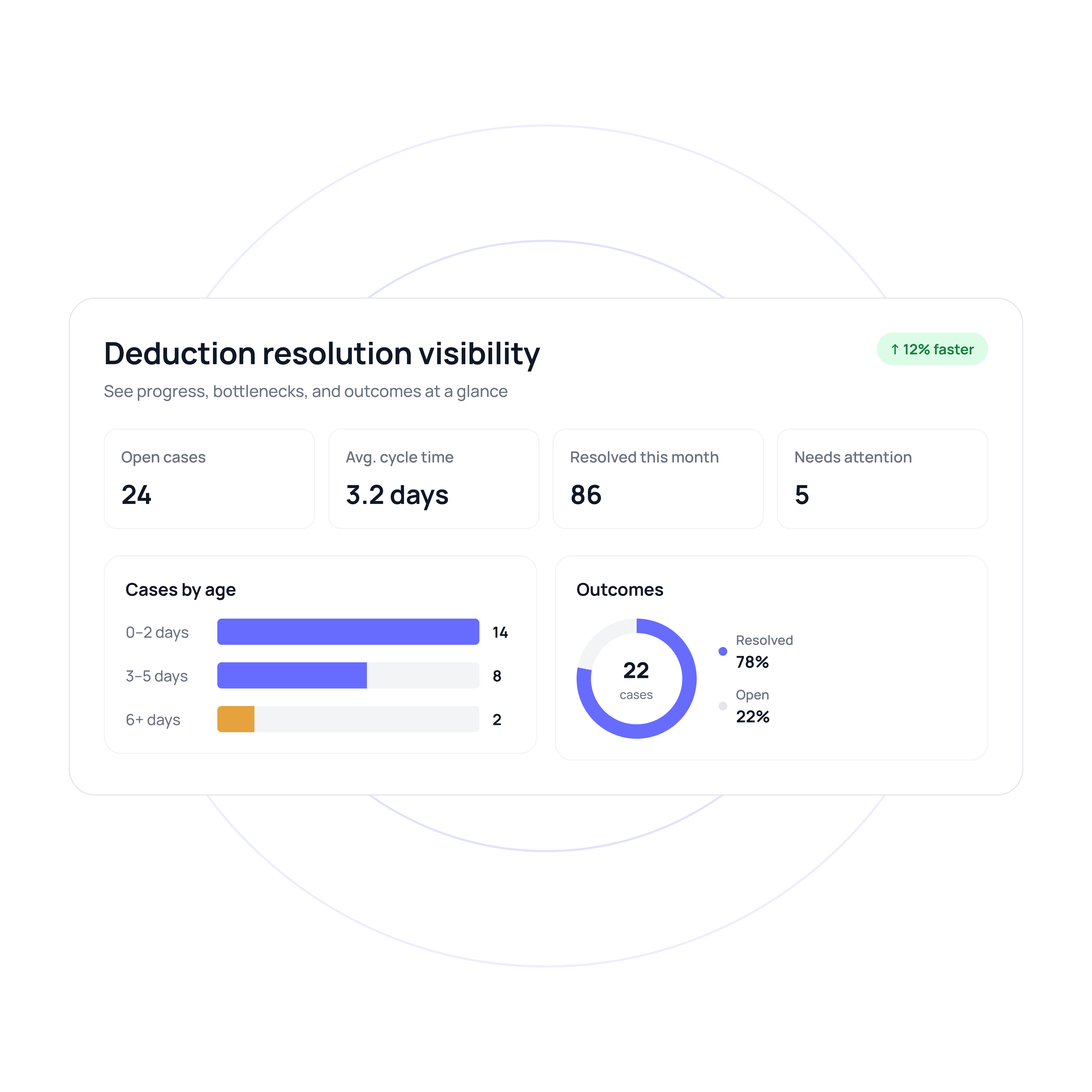
Case age, cycle time, backlog, and outcomes are tracked together, so teams can see which cases are progressing and which have stalled.
Streamline your disputes and deductions process
More ways to move deductions toward resolution
Signal detection and deduplication
A dispute signal can show up in email, a ticket, a portal, or a remittance. Volopay opens the case and captures the customer, invoice, amount, and stated reason. If one's already open, it updates that case instead.
Validation against the underlying evidence
Compare the claim with approved prices, quantities, discounts, delivery records and commercial terms. Supporting facts, conflicts, and missing evidence remain visible rather than being inferred.
Structured evidence requests
When something's missing, Volopay requests the specific document or explanation needed. It schedules and tracks the follow-up by SLA. As soon as new evidence lands, it reassesses the case.
Rule-based approval routing
Your rules decide who approves what, based on amount, entity, and role. Approvers see the full case before deciding. Overdue decisions get escalated.
Built for the realities of high-volume AR
Large customer books can generate pricing, delivery, discount and short-pay claims faster than teams can investigate them manually. Classify each case and gather the relevant evidence before deciding what deserves recovery.
A claim may depend on the invoice, contract, PO, prior credit, delivery record or service evidence. Bring the relevant records into the same case instead of rebuilding the trail across systems.
Regional disputes can involve commercial, operations and finance teams across several entities. Route each decision according to amount, entity and role, with the evidence attached.
Manual deduction work vs. the Volopay approach
Manual deduction work | The Volopay approach |
|---|---|
Disputes sit across emails and spreadsheets | Evidence, decisions, and actions stay connected to each case |
One disputed line can block the full balance | Undisputed amounts continue through collection and cash application |
Ownership changes across teams and analysts | Ownership, thresholds, and approvals follow configured rules |
A decision is made, but the financial action remains open | Commercial decisions stay linked to verified financial completion |
Managers see open cases without the full picture | Resolution, recovery, outcomes, and root causes remain visible |
They loved Volopay, you will too
FAQs
Volopay captures dispute signals from connected emails, tickets, portals and remittance, then classifies the reason and links it to the relevant customer, invoice and amount.
Yes. Volopay assembles the invoice, correspondence, and supporting documents against each case as it forms. Your team works from one place, instead of searching email, ERP, and portals to rebuild the story.
Once evidence is gathered, Volopay routes each case to the appropriate business owner, with the context attached. Ownership is clear from the first step. This keeps cases from drifting between finance, sales, and operations.
Volopay tracks the commercial decision and financial completion separately. A rejected claim may still await recovery, while an accepted claim may still await credit posting.
Material credits, concessions, write-offs, legal positions, and sensitive disputes all require human review or approval. Negotiations outside configured terms and decisions beyond defined authority also need the appropriate approver before action.
Bring Volopay to your business
Get started now