Best supplier management software in the US in 2026
In today's interconnected business environment, you face unprecedented complexity in managing your supplier ecosystem. Global supply chains, stringent regulatory requirements, and increasing compliance mandates have transformed supplier management from a transactional function into a strategic imperative that directly impacts your operational resilience and competitive positioning.
Manual processes involving spreadsheets, email chains, and disconnected systems no longer suffice when you're juggling hundreds of vendors, tracking expiring certifications, ensuring regulatory adherence, and maintaining audit readiness.
Best supplier management software has emerged as an essential solution, empowering you to automate workflows, centralize documentation, monitor compliance in real-time, and build stronger supplier relationships.
What is a supplier management software?
Supplier management software is a digital platform that helps you streamline and optimize your entire supplier lifecycle, from onboarding and evaluation to ongoing monitoring and relationship management.
This technology centralizes all supplier-related data, automates compliance checks, and provides real-time insights into vendor performance. By implementing supplier management software, you can reduce procurement risks, improve supplier relationships, and make data-driven decisions that enhance your supply chain efficiency and cost-effectiveness.
Centralized supplier information repository
Your supplier management software consolidates all vendor information into a single, accessible database. You can store contracts, certifications, contact details, pricing agreements, and historical transaction data in one location.
This centralization eliminates data silos, reduces manual paperwork, and ensures your team has instant access to accurate supplier information when making procurement decisions or conducting audits.
Automated compliance controls
The software automatically monitors and enforces compliance requirements throughout your supplier network. You receive real-time alerts when certifications expire, regulatory standards change, or suppliers fail to meet contractual obligations.
Automated workflows guide suppliers through compliance documentation, reducing your administrative burden while ensuring adherence to industry regulations, internal policies, and legal requirements without manual intervention.
Supplier performance tracking
You gain comprehensive visibility into how your suppliers perform across key metrics like delivery times, quality standards, and cost efficiency. The software generates performance scorecards, tracks KPIs, and identifies trends over time.
This data-driven approach enables you to recognize top-performing suppliers, address underperformance proactively, and make informed decisions about supplier relationships and contract renewals.
Procurement and payment integration
Your supplier management platform seamlessly connects with your procurement and financial systems, creating an end-to-end workflow. You can generate purchase orders, track order status, and process invoices within the same ecosystem.
This integration eliminates duplicate data entry, accelerates payment cycles, improves accuracy in financial reporting, and provides complete visibility from requisition through payment.
Feature comparison: Leading supplier management platforms
Best supplier management software in the US in 2026
Selecting the right supplier management software is crucial for optimizing your procurement processes and vendor relationships. The US market offers diverse solutions ranging from comprehensive enterprise platforms to specialized tools for specific industries.
This curated list examines the leading supplier management software available in 2026, helping you identify the platform that best matches your organizational needs and budget.
1. Volopay
Overview
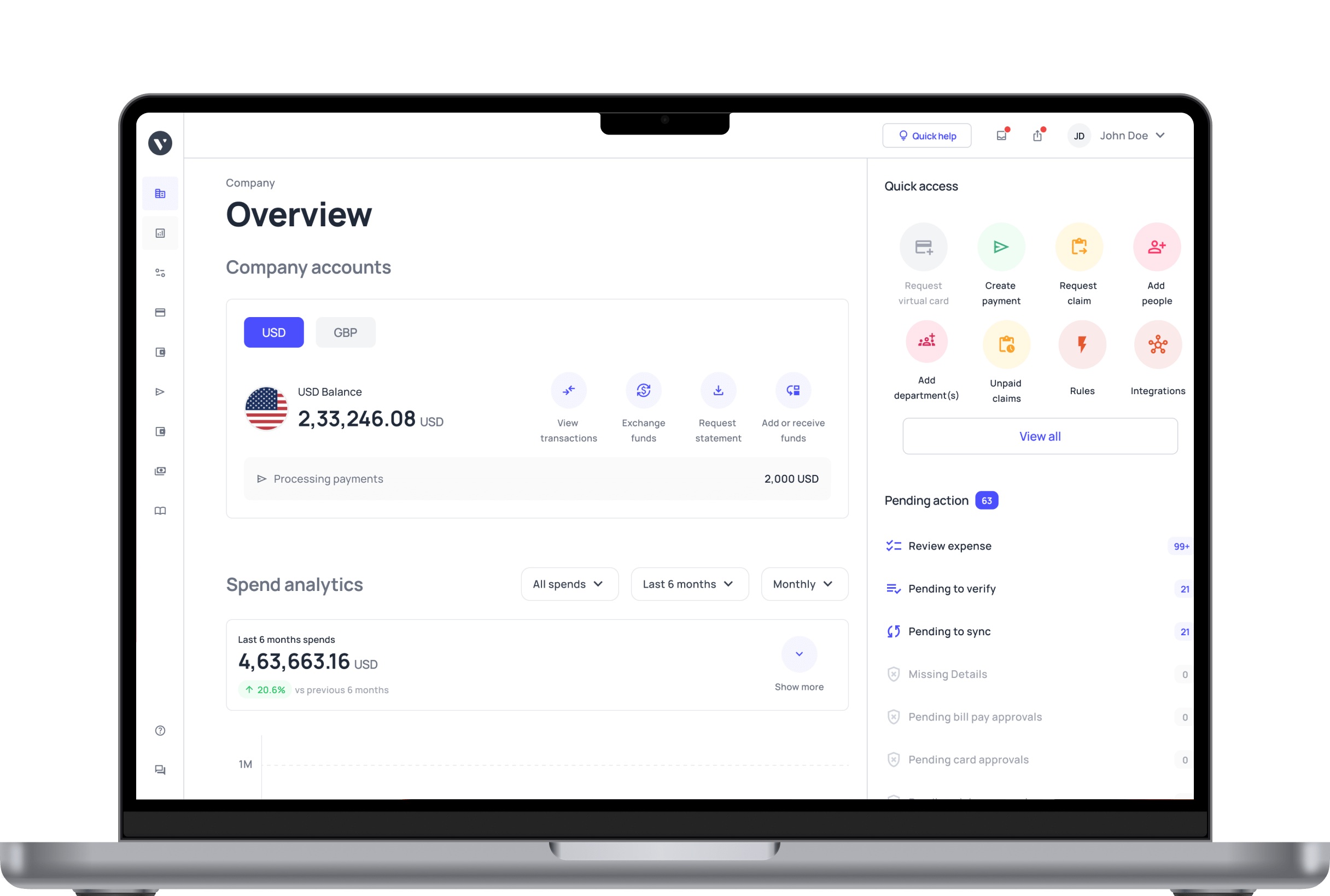
Volopay is the best supplier management software for businesses that combines vendor management with integrated payment automation and expense control. You get real-time visibility into supplier spending, automated approval workflows, and seamless payment processing.
The platform streamlines your entire procure-to-pay cycle while providing comprehensive financial controls and detailed analytics for better decision-making.
Key features
• Automated vendor onboarding with self-service portals
• Multi-level approval workflows for purchase requests
• Virtual and physical corporate cards for supplier payments
• Real-time spend tracking and budget management
• Native integrations with major accounting platforms
• Automated invoice processing and reconciliation
• Customizable reporting dashboards
Pros
Volopay offers an intuitive interface design that reduces training time significantly. You benefit from all-in-one expense and supplier management, eliminating the need for multiple tools. The platform provides competitive pricing for small to mid-sized businesses with transparent fee structures and no hidden costs.
Cons
Advanced features may require higher-tier plans, increasing costs for growing businesses. The platform is relatively newer in the market, meaning fewer third-party integrations than established competitors.
Best suited for
Small to mid-sized businesses seeking integrated expense management and supplier payment automation solutions.
2. SAP Ariba
Overview
SAP Ariba operates the world's largest business commerce network, connecting you with millions of suppliers globally. The platform delivers comprehensive procurement and supply chain collaboration tools with deep analytics capabilities.
You gain access to enterprise-grade supplier management, strategic sourcing, contract lifecycle management, and procurement operations in a unified cloud-based solution.
Key features
• Access to the Ariba Network with millions of suppliers
• Strategic sourcing and contract management tools
• Automated procurement workflows and approvals
• Supplier risk monitoring and performance scorecards
• Advanced spend analysis and reporting
• Invoice automation and payment processing
• Integration with SAP ERP systems
Pros
SAP Ariba provides unmatched supplier network access for global procurement operations. You benefit from robust enterprise features with extensive customization capabilities. The platform offers deep integration with SAP ecosystems and comprehensive compliance management tools for regulated industries.
Cons
Implementation complexity requires significant time and dedicated resources. The pricing structure is expensive, making it prohibitive for smaller organizations. Users often report a steep learning curve and the need for specialized training to maximize platform capabilities.
Best suited for
Large enterprises with complex procurement needs require an extensive global supplier network access and SAP integration.
3. Coupa
Overview
Coupa delivers a unified platform that manages your entire business spend across procurement, invoicing, expenses, and payments. You gain complete visibility into supplier relationships with AI-powered analytics and predictive insights.
The cloud-native solution scales effortlessly, supporting businesses from mid-market to Fortune 500 enterprises with comprehensive spend management and supplier collaboration capabilities.
Key features
• Community-based supplier intelligence and risk monitoring
• AI-driven spend analytics and savings recommendations
• Comprehensive sourcing and contract management
• Automated three-way invoice matching
• Supplier performance management and scorecards
• Mobile app for approvals and procurement
• Open integration architecture with pre-built connectors
Pros
Coupa offers the best-in-class user experience with intuitive navigation and minimal training requirements. You benefit from powerful AI-driven insights that identify cost-saving opportunities automatically. The platform's community intelligence provides benchmarking data and supplier performance metrics across industries. Regular updates and innovation keep you ahead with the latest procurement technologies.
Cons
Premium pricing positions Coupa in the higher cost bracket, potentially stretching budgets for mid-market companies. Implementation timelines can extend several months depending on organizational complexity. Some advanced features require additional modules, increasing total ownership costs. Smaller businesses may find the platform over-engineered for their needs.
Best suited for
Mid-market to enterprise organizations seeking comprehensive spend management with advanced analytics and AI-powered procurement optimization.
4. Procurify
Overview
Procurify is supplier relationship management software that simplifies procurement processes through intuitive spend management and approval workflows. You can control purchasing across departments while maintaining budget visibility and compliance.
The platform focuses on making procurement accessible to non-procurement professionals, enabling decentralized purchasing with centralized control and real-time budget tracking.
Key features
• Customizable approval workflows and purchasing hierarchies
• Real-time budget tracking and spend controls
• Purchase order creation and management
• Vendor catalog and price list management
• Mobile app for on-the-go approvals
• Three-way matching for invoice reconciliation
• Integration with accounting software
Pros
Procurify delivers exceptional ease of use with minimal training required for team adoption. You get transparent pricing models suitable for growing businesses. The platform offers responsive customer support and quick implementation timelines, often completed within weeks rather than months.
Cons
Limited advanced analytics compared to enterprise-grade platforms may restrict strategic insights. The supplier network capabilities are less extensive than established competitors. Some users report that reporting customization options are restricted without custom development work.
Best suited for
Growing businesses and mid-sized companies need straightforward procurement controls with budget management and approval workflows.
5. Payhawk
Overview
Payhawk is a comprehensive supplier management software for businesses that unifies expense management, corporate cards, and supplier payments in one platform.
You gain complete spending visibility while automating receipt collection, invoice processing, and expense reporting. The solution combines smart payment cards with robust financial controls, making it ideal for businesses seeking integrated spend management solutions.
Key features
• Virtual and physical corporate cards with real-time controls
• Automated expense categorization and receipt matching
• Supplier invoice management and payment automation
• Multi-entity and multi-currency support
• Custom approval workflows and spending limits
• Direct accounting software synchronization
• Comprehensive spend analytics dashboards
Pros
Payhawk excels in a user-friendly mobile experience for expense submission and approvals. You benefit from fast card issuance and flexible spending controls. The platform provides excellent exchange rates for international transactions and seamless integration with popular accounting tools.
Cons
The platform is primarily expense-focused, with supplier management as secondary functionality. Geographic availability is limited compared to global competitors. Some advanced procurement features, like strategic sourcing, are not included in the core offering.
Best suited for
Modern businesses prioritize expense automation and corporate card management alongside basic supplier payment processing capabilities.
6. Tipalti
Overview
Tipalti specializes in automating your global supplier payments and tax compliance management. You can pay suppliers in over 120 countries across multiple payment methods while ensuring regulatory compliance.
The platform handles complex tax documentation, payment reconciliation, and global payment operations, reducing your finance team's workload significantly while minimizing payment errors and compliance risks.
Key features
• Global payment processing in 196 currencies
• Automated tax compliance and form collection
• Multi-method payment options (ACH, wire, PayPal, cards)
• Supplier self-service payment portal
• Payment status tracking and reconciliation
• Fraud detection and payment security controls
• ERP and accounting system integrations
Pros
Tipalti provides exceptional global payment capabilities with comprehensive tax compliance automation. You eliminate manual payment processing, saving significant finance team hours. The platform offers strong security measures and fraud prevention, ensuring payment integrity across international transactions.
Cons
The platform focuses primarily on payment processing with limited procurement functionality. Pricing can be expensive for businesses with high payment volumes. Setup complexity increases for organizations with multiple entities requiring different payment configurations and compliance requirements.
Best suited for
Businesses with high-volume global supplier payments requiring automated tax compliance and multi-currency payment processing capabilities.
7. Precoro
Overview
Precoro offers cloud-based procurement automation that streamlines your purchase-to-pay processes with user-friendly workflows. You can manage supplier relationships, track spending, and automate approval processes without extensive technical expertise.
The platform emphasizes simplicity and quick deployment, making professional procurement tools accessible to businesses without dedicated procurement teams or complex infrastructure requirements.
Key features
• Intuitive purchase requisition and approval workflows
• Vendor management and catalog creation
• Budget tracking and cost center allocation
• Purchase order automation and tracking
• Invoice matching and payment management
• Custom reporting and analytics dashboards
• Integration with QuickBooks, Xero, and NetSuite
Pros
Precoro delivers rapid implementation, with most customers operational within days. You benefit from affordable pricing tiers suitable for small to mid-sized organizations. The platform offers responsive customer support and regular feature updates based on user feedback.
Cons
Advanced features like strategic sourcing and contract management are limited. The supplier network and collaboration tools are basic compared to enterprise platforms. Customization options may not meet complex organizational requirements without additional development work.
Best suited for
Small to mid-sized businesses seeking affordable, easy-to-implement procurement automation with essential supplier management capabilities.
8. Oracle
Overview
Oracle Procurement Cloud provides enterprise-grade supplier management within a comprehensive ERP ecosystem. You access advanced procurement capabilities, including strategic sourcing, supplier qualification, contract management, and procurement analytics.
The platform leverages AI and machine learning to optimize supplier selection, predict risks, and automate procurement decisions, ideal for complex organizational structures requiring deep system integration.
Key features
• AI-powered supplier recommendations and risk assessment
• Comprehensive supplier lifecycle management
• Strategic sourcing and contract negotiation tools
• Advanced procurement analytics and reporting
• Deep integration with Oracle ERP Cloud
• Supplier portal for collaboration and self-service
• Mobile procurement capabilities
Pros
Oracle offers unparalleled integration within Oracle ecosystems, providing seamless data flow. You gain access to cutting-edge AI and machine learning capabilities for procurement optimization. The platform supports complex, multi-entity organizational structures with advanced security and compliance features.
Cons
Implementation costs and timelines are substantial, often requiring months and specialized consultants. The system complexity demands significant training investment for users. Pricing is premium tier, making it cost-prohibitive for smaller organizations without enterprise budgets.
Best suited for
Large enterprises have already invested in Oracle ecosystems, requiring sophisticated procurement capabilities with deep ERP integration.
9. Kissflow
Overview
Kissflow provides low-code procurement workflow automation that you can customize without programming expertise. The platform enables you to build tailored supplier management processes through intuitive drag-and-drop interfaces.
You can adapt workflows quickly as business needs evolve, making it ideal for organizations with unique procurement requirements that don't fit standard software configurations.
Key features
• Visual workflow designer with no-code customization
• Vendor onboarding and qualification workflows
• Purchase requisition and approval automation
• Contract management and renewal tracking
• Customizable dashboards and reporting
• Mobile app for approvals and notifications
• Pre-built procurement process templates
Pros
Kissflow offers exceptional flexibility with easy workflow customization by business users. You can implement changes rapidly without IT involvement or coding knowledge. The platform provides affordable pricing with a transparent cost structure and quick deployment timelines.
Cons
Advanced procurement analytics are limited compared to specialized platforms. Integration options are fewer than enterprise-grade solutions. The supplier collaboration features are basic, lacking extremely complex vendor portals and communication tools available in dedicated platforms.
Best suited for
Organizations seeking customizable procurement workflows with low-code flexibility for unique business processes and approval hierarchies.
10. Zycus
Overview
Zycus offers cognitive procurement solutions powered by AI that transform your source-to-pay processes. You access comprehensive supplier management, strategic sourcing, contract lifecycle management, and spend analysis tools.
The platform leverages artificial intelligence to automate routine tasks, provide predictive insights, and optimize supplier relationships, positioning itself as a complete procurement transformation solution.
Key features
• AI-powered spend analysis and category insights
• Strategic sourcing and e-auctions
• Supplier lifecycle management and performance tracking
• Contract authoring, management, and compliance
• Procure-to-pay automation
• Supplier risk monitoring and mitigation
• Advanced analytics with predictive capabilities
Pros
Zycus delivers powerful AI-driven procurement intelligence and automation capabilities. You benefit from comprehensive end-to-end procurement coverage across all processes. The platform offers strong industry expertise with solutions tailored to manufacturing, healthcare, and retail sectors.
Cons
Implementation complexity requires significant resources and change management efforts. The user interface can feel overwhelming with extensive features and options. Pricing is positioned at the enterprise level, making it expensive for mid-market organizations with limited budgets.
Best suited for
Large enterprises are seeking AI-powered procurement transformation with comprehensive source-to-pay capabilities across complex organizational structures.
11. GEP Smart
Overview
GEP Smart is a unified source-to-pay platform that combines procurement, supply chain management, and supplier collaboration. You access end-to-end procurement functionality from sourcing and contracting to ordering and payment processing.
The cloud-native architecture ensures scalability and performance while delivering intuitive user experiences, making enterprise procurement accessible across your organization regardless of technical expertise.
Key features
• Unified source-to-pay platform
• Strategic sourcing and supplier management
• Contract lifecycle management
• Procure-to-pay automation
• Spend analytics and reporting
• Supplier collaboration portal
• Mobile procurement capabilities
Pros
GEP Smart provides comprehensive procurement coverage in a single, integrated platform. You benefit from a modern, intuitive interface design that reduces training requirements. The platform offers strong implementation support and dedicated customer success resources throughout deployment and adoption phases.
Cons
The platform requires significant investment, pricing it out of reach for smaller businesses. Customization capabilities are limited compared to more flexible solutions. Some users report that certain advanced features require additional modules, increasing total costs beyond initial estimates.
Best suited for
Mid-market to large enterprises requiring unified source-to-pay solutions with a modern user experience and comprehensive procurement functionality.
12. Medius
Overview
Medius specializes in accounts payable automation and supplier invoice management using AI technology. You can automate invoice capture, validation, approval, and payment processes while maintaining financial controls.
The platform focuses on eliminating manual invoice processing, reducing errors, and accelerating payment cycles, making it ideal for finance teams drowning in invoice paperwork and manual reconciliation tasks.
Key features
• AI-powered invoice capture and data extraction
• Automated three-way matching and validation
• Customizable approval workflows
• Fraud detection and duplicate prevention
• Supplier portal for invoice submission
• Payment automation and reconciliation
• Integration with major ERP systems
Pros
Medius delivers exceptional invoice processing accuracy through AI-powered automation. You eliminate manual data entry, significantly reducing processing costs and errors. The platform offers strong fraud detection capabilities and provides quick ROI through efficiency gains and early payment discounts.
Cons
The platform focuses primarily on AP automation with limited procurement functionality. Strategic supplier management features are basic compared to comprehensive procurement platforms. Implementation requires careful master data preparation for optimal performance and accuracy.
Best suited for
Organizations prioritizing accounts payable automation and invoice processing efficiency with basic supplier payment management requirements.
13. AdaptOne
Overview
AdaptOne provides supplier relationship management with emphasis on collaboration, compliance, and performance optimization. You can manage supplier onboarding, track certifications, monitor performance metrics, and facilitate communication through centralized portals.
The platform is designed for organizations that view suppliers as strategic partners, offering tools to strengthen relationships while maintaining compliance and quality standards.
Key features
• Comprehensive supplier onboarding and qualification
• Document and certification management
• Performance scorecarding and evaluations
• Supplier collaboration and communication portal
• Risk assessment and monitoring
• Compliance tracking and audit trails
• Integration with procurement systems
Pros
AdaptOne offers strong supplier collaboration tools that foster partnership relationships. You benefit from flexible configuration options to match specific industry requirements. The platform provides responsive customer support and works closely with clients for successful implementations.
Cons
The platform lacks advanced procurement features like strategic sourcing and contract management. Market presence is smaller compared to established enterprise vendors. Pricing and feature information require direct sales contact, limiting budgeting for initial evaluation.
Best suited for
Organizations prioritizing supplier relationship development and collaboration with strong compliance requirements in manufacturing or distribution sectors.
14. Kodiak Hub
Overview
Kodiak Hub delivers cloud-based supplier relationship and risk management focused on compliance and performance monitoring. You gain comprehensive visibility into supplier certifications, insurance requirements, and regulatory compliance.
The platform specializes in construction, manufacturing, and high-risk industries where supplier qualification and ongoing compliance monitoring are critical to operations and liability management.
Key features
• Automated supplier qualification and prequalification
• Certificate and insurance tracking with expiration alerts
• Compliance document management and verification
• Supplier performance scorecards and evaluations
• Risk assessment and monitoring tools
• Customizable questionnaires and audits
• Integration with procurement and ERP systems
Pros
Kodiak Hub excels in compliance management with automated certificate tracking and alerts. You benefit from industry-specific templates for construction, manufacturing, and regulated sectors. The platform provides strong customer support with dedicated implementation assistance and training resources.
Cons
The platform is primarily compliance-focused with limited procurement workflow capabilities. Pricing information is not publicly available, requiring sales consultation. The user interface appears dated compared to modern, visually oriented platforms currently entering the market.
Best suited for
Construction, manufacturing, and regulated industries require rigorous supplier compliance monitoring and certificate management capabilities.
How does supplier management software work?
Automated supplier onboarding
When new vendors join your system, automated onboarding workflows guide them through registration, document submission, and approval processes without manual intervention.
The software collects essential business information, tax documentation, and banking details through customizable forms, then routes submissions to appropriate stakeholders for review. This streamlines what traditionally takes weeks into days while ensuring data completeness and accuracy from the start.
Certificate collection & expiry alerts
The system automatically requests, stores, and monitors critical certifications, including insurance policies, quality standards, and regulatory compliance documents. You receive proactive alerts before certificates expire, enabling timely renewals and preventing supply chain disruptions.
The best supplier management software tracks multiple certificate types simultaneously, maintaining a complete compliance history for audit purposes and eliminating the risk of working with inadequately insured or uncertified vendors.
Real-time compliance monitoring
Continuous monitoring capabilities scan supplier activities against predefined compliance rules, regulatory requirements, and internal policies without manual oversight. The platform flags deviations immediately, triggering automated workflows for investigation and remediation.
This real-time surveillance protects your organization from compliance violations, reputational damage, and financial penalties by identifying issues before they escalate into serious problems.
Performance dashboards and analytics
Interactive dashboards consolidate supplier performance metrics, including delivery timeliness, quality scores, pricing trends, and contract adherence, into visual formats. You gain instant access to comparative analytics that identify top performers, highlight concerning patterns, and reveal optimization opportunities.
These insights enable data-driven decisions about contract renewals, volume allocation, and relationship investments based on objective performance evidence rather than subjective impressions.
ERP & accounting system sync
Seamless integration with your existing ERP and accounting platforms eliminates duplicate data entry and ensures information consistency across systems. Supplier relationship management software automatically synchronizes vendor records, purchase orders, invoices, and payment data bidirectionally, maintaining accuracy while reducing administrative overhead.
This connectivity provides finance teams with complete visibility into supplier-related expenditures and simplifies reconciliation, reporting, and budgeting processes.
Why businesses need more than basic supplier lists
1. Turning supplier data into operational insights
Raw supplier information becomes actionable intelligence when analyzed through advanced platforms that identify spending patterns, consolidation opportunities, and risk concentrations.
Best supplier management platforms transform transactional data into strategic insights about category spend, supplier diversity, geographic dependencies, and negotiation leverage.
2. Maintaining compliance, reducing audit risk
Automated compliance tracking creates defensible audit trails that document every supplier interaction, certification renewal, and policy acknowledgment throughout the relationship lifecycle.
Your organization gains confidence that all vendors meet current regulatory standards while maintaining historical records that satisfy auditor requirements.
3. Enabling smarter budgeting and forecasting
Historical supplier performance data and spending analytics provide the foundation for accurate budget planning and financial forecasting. You identify seasonal spending fluctuations, anticipate price increases based on supplier trends, and allocate resources more precisely across categories.
This forward-looking capability helps finance teams build realistic budgets grounded in actual supplier behavior rather than estimates, reducing variances and improving overall financial planning accuracy.
Optimize your supplier workflows and compliance management today
Strategic importance of advanced supplier management
Spend visibility for strategic decisions
Comprehensive spend analytics reveal hidden patterns in supplier expenditures, enabling you to identify opportunities for consolidation, negotiate volume-based discounts, and reallocate budgets toward strategic priorities.
Best supplier management software for business aggregates data across departments and categories, providing executive leadership with the visibility needed to make informed sourcing decisions that align with growth objectives.
Supplier performance enhancement
Advanced performance management tools establish clear benchmarks, automate scorecard evaluations, and facilitate continuous improvement dialogues that elevate supplier capabilities over time.
You identify underperforming vendors early and implement corrective action plans before issues impact operations, while recognizing top performers with increased business opportunities.
Better collaboration & communication
Integrated communication portals create transparent channels where you and your suppliers share forecasts, collaborate on product development, and resolve issues in real time.
Enhanced collaboration accelerates time-to-market for new products, improves demand planning accuracy, and strengthens relationships that become strategic assets during market volatility.
Challenges in supplier management and how to overcome them
Streamline compliance, onboarding, and payments with Volopay integration
Benefits of a supplier management software for businesses
1. Operational efficiency
Supplier automation software eliminates time-consuming manual tasks like data entry, document chasing, and status updates that consume valuable staff hours.
Your team redirects energy from administrative work toward strategic activities like supplier development, category management, and cost optimization initiatives.
2. Compliance and risk reduction
Automated compliance monitoring protects your organization from regulatory violations, contractual breaches, and reputational damage by maintaining continuous oversight of supplier certifications and requirements.
You receive immediate alerts when vendors fall out of compliance, enabling swift corrective action before issues escalate into costly problems.
3. Enhanced supplier relationships
Transparent communication channels and performance feedback mechanisms foster collaborative partnerships built on mutual accountability and shared success. You provide suppliers with clear expectations, timely payments, and constructive performance insights that help them better serve your needs.
These strengthened relationships yield benefits, including priority service during capacity constraints, preferential pricing, and collaborative innovation that creates competitive advantages.
4. Accelerated payment cycles
Automated invoice processing and approval workflows eliminate bottlenecks that delay supplier payments and strain vendor relationships. Your suppliers receive payments faster and more predictably, improving their cash flow while positioning you as a preferred customer.
This efficiency also enables you to capture early payment discounts, reduce late payment penalties, and maintain positive supplier relationships that translate into better service and terms.
5. Better procurement decisions
Data-driven insights into supplier performance, spending patterns, and market trends empower you to make informed sourcing decisions backed by objective evidence.
You identify the most reliable vendors, negotiate from positions of strength with comprehensive spend data, and allocate business to suppliers who consistently deliver value.
Maximizing efficiency and accuracy through supplier data automation
Streamlining supplier onboarding and verification processes
Automated onboarding guides new vendors through standardized registration workflows that collect complete information, verify credentials, and obtain necessary approvals without manual coordination.
Supplier management software for business reduces onboarding time from weeks to days while ensuring consistent data quality and compliance verification across all new suppliers.
Ensuring real-time data accuracy across systems
Bidirectional synchronization between supplier management platforms and ERP, accounting, and procurement systems eliminates data discrepancies that cause operational confusion and financial errors.
Changes made in any connected system automatically propagate across your technology ecosystem, ensuring everyone works from identical, current information.
Reducing administrative overheads through workflow automation
Intelligent workflows automatically route supplier documents for approval, trigger renewal processes before contract expirations, and escalate exceptions without human intervention. Your staff shifts from being process executors to strategic decision-makers who handle only exceptions and high-value activities.
This overhead reduction directly improves your procurement team's productivity while ensuring critical processes execute reliably regardless of workload fluctuations or staff availability.
Improving compliance tracking and audit readiness
Automated documentation capture creates comprehensive audit trails that record every supplier interaction, approval decision, and compliance verification throughout the relationship lifecycle.
You maintain perpetual audit readiness with organized, searchable records that demonstrate due diligence and regulatory adherence to internal and external auditors.
Supplier data management and quality assurance
Defining data quality standards and governance
Establishing clear data quality standards creates the foundation for reliable supplier information management. Organizations should define mandatory fields, acceptable data formats, and validation rules that all supplier records must meet.
This includes standardized naming conventions, required documentation, and classification criteria that enable consistent data entry and retrieval across the organization.
Example: Enforce consistent supplier name formats by requiring legal business names without abbreviations or special characters. A centralized governance committee reviews exceptions quarterly and maintains a master data dictionary.
Regular data audits and validation procedures
Systematic audits identify data gaps, inconsistencies, and outdated information before they impact business operations. Organizations should implement scheduled reviews that verify supplier details against external sources, check for expired certifications, and validate contact information.
These audits should follow documented procedures with clear ownership, responsibilities, and remediation timelines to ensure continuous data improvement.
Example: Monthly audits flag missing certifications, such as ISO standards or insurance documents, through automated compliance checks. The best supplier management platforms generate exception reports highlighting suppliers approaching certification expiration dates.
Automation in data collection and cleansing
Automated data validation tools reduce manual effort while improving accuracy through real-time verification. Organizations should leverage technology to validate supplier information against authoritative databases, standardize address formats, and check business registration details.
Automation eliminates human error in repetitive tasks and enables procurement teams to focus on strategic supplier relationship activities rather than administrative data maintenance.
Example: Automatic tax ID validation reduces errors by cross-referencing entries against government databases during supplier onboarding. The system immediately flags invalid formats or non-existent identification numbers, prompting corrections before record creation.
Supplier collaboration on data updates
Engaging suppliers as active participants in data maintenance ensures information accuracy at the source. Organizations should provide suppliers with self-service portals where they can update contact details, banking information, and certifications directly.
Example: Suppliers receive annual reminders to verify their profile information through automated email campaigns with direct portal access links. The system tracks completion rates and escalates non-responses to account managers.
Suppliers can update addresses, contact persons, and capabilities in real-time, ensuring procurement teams work with current information when making sourcing decisions and reducing back-and-forth communication.
Data-driven risk and performance management
Comprehensive supplier data enables proactive identification of risks and performance issues through analytics and visualization. Organizations should consolidate supplier information with performance metrics, creating unified views that support informed decision-making.
Real-time dashboards transform raw data into actionable insights, allowing procurement teams to address problems before they escalate into major disruptions.
Example: Dashboard shows top suppliers with late deliveries, enabling proactive action through visual heat maps highlighting performance trends. Supplier automation software integrates delivery data with contract terms and historical patterns, automatically triggering alerts when performance degrades.
Gain complete control over supplier workflows and documentation
Building a robust supplier governance framework
1. Supplier segmentation by risk
You must categorize suppliers based on their strategic importance, financial stability, and potential impact on your operations. This risk-based segmentation allows you to allocate appropriate oversight resources and apply differentiated management protocols.
Best supplier management software for business enables automated risk scoring using financial data, performance history, and market intelligence.
Policy example
Classify suppliers into four tiers: Strategic (high value, critical operations), Preferred (reliable, moderate spend), Transactional (low risk, commodity items), and High-Risk (financial instability, single-source). Strategic suppliers undergo quarterly business reviews and annual audits, while transactional suppliers receive basic annual assessments, optimizing your resource allocation.
2. Multi-level approval workflows
You should implement tiered approval processes that match authorization levels with transaction value and supplier risk profiles. This ensures appropriate oversight while maintaining procurement efficiency.
Your approval workflows must balance control requirements with operational speed, preventing bottlenecks while protecting your organization from unauthorized commitments or excessive financial exposure.
Policy example
Require department manager approval for purchases under $10,000, director approval for $10,000-$50,000, and executive committee review for amounts exceeding $50,000 or new strategic supplier onboarding. High-risk suppliers require additional legal and compliance sign-off regardless of transaction value, ensuring comprehensive due diligence before engagement.
3. Digital policy access
You need to provide suppliers and internal stakeholders with immediate access to current governance policies through centralized digital platforms. This transparency eliminates confusion, reduces compliance inquiries, and ensures all parties understand their obligations.
Your policy repository should feature version control, change notifications, and searchable content that enables quick reference during procurement activities.
Policy example
Maintain a supplier portal containing downloadable policy documents, including code of conduct, quality standards, environmental requirements, and data security protocols. You update this portal quarterly, automatically notifying registered suppliers of changes via email with highlighted revisions. Internal teams access the same repository, ensuring consistent policy interpretation.
4. Regulatory compliance mapping
You must align your supplier governance policies with applicable industry regulations, international standards, and jurisdictional requirements. This mapping exercise identifies compliance gaps and ensures your supplier management practices meet all legal obligations.
Your framework should address data privacy, labor standards, environmental regulations, and trade compliance specific to your operating regions.
Policy example
Map supplier requirements to regulations such as GDPR for data protection, ISO 9001 for quality management, and conflict minerals disclosure under Dodd-Frank. You require European suppliers to demonstrate GDPR compliance, manufacturing partners to maintain ISO certification, and electronics suppliers to complete annual conflict minerals surveys.
5. Training & enforcement
You should establish comprehensive training programs that educate procurement teams and suppliers on governance policies, coupled with enforcement mechanisms for non-compliance.
Regular training ensures policy awareness while consistent enforcement demonstrates your commitment to governance standards. Your program must include consequences for violations while providing remediation pathways for suppliers committed to improvement.
Policy example
Conduct quarterly training sessions for procurement staff covering policy updates, risk assessment techniques, and compliance requirements. You require new suppliers to complete an online governance orientation before activation. Non-compliance triggers corrective action plans with 30-day remediation periods; repeated violations result in supplier suspension pending resolution.
How to collect and store supplier certificates in minutes
Step 1: Centralize supplier information
Begin by consolidating all supplier data into a single, unified system. Create comprehensive profiles for each vendor that include contact details, business classifications, and relationship history.
This centralized approach eliminates scattered spreadsheets and email chains, providing your procurement team with instant access to complete supplier information and establishing a solid foundation for efficient certificate management.
Step 2: Define certificate requirements
Establish clear documentation standards based on your industry regulations, company policies, and risk management protocols. Specify which certificates are mandatory for different supplier categories, such as quality certifications, safety compliance, financial documents, and insurance coverage.
Document expiration timelines and renewal requirements to ensure every vendor relationship maintains appropriate compliance levels throughout the engagement lifecycle.
Step 3: Enable digital upload & auto-verification
Implement digital submission channels that allow suppliers to upload certificates directly through secure portals or email integrations, simplifying processing and reducing manual effort.
Configure automatic validation checks that verify file formats, scan for basic completeness, and flag documents requiring human review. This digital-first approach eliminates manual data entry errors while accelerating the intake process from days to minutes.
Step 4: Automate reminders and expiry alerts
Configure intelligent notification systems that track certificate validity periods and trigger proactive reminders before expiration dates to ensure timely compliance updates.
Set up escalation workflows that notify both suppliers and internal stakeholders at predetermined intervals, typically 90, 60, and 30 days before expiry. These automated alerts prevent compliance gaps and maintain uninterrupted supplier relationships.
Step 5: Organize and store in secure cloud repositories
Structure your document storage with logical categorization, tagging systems, and version control capabilities. Implement role-based access controls to protect sensitive information while ensuring authorized personnel can quickly retrieve required certificates.
Cloud-based storage provides scalability, disaster recovery protection, and accessibility across multiple locations and time zones, improving collaboration and operational continuity.
Step 6: Track compliance with real-time dashboards
Deploy visual monitoring tools that display compliance status across your entire supplier network. Track metrics including certification completion rates, pending renewals, and overdue documents through intuitive dashboards.
Supplier automation software consolidates this information, enabling procurement leaders to identify risks instantly and take corrective action before compliance issues escalate.
While manual execution of these steps is possible, advanced software platforms automate the entire certificate lifecycle—from initial collection through renewal management—reducing administrative burden by up to 80% and virtually eliminating compliance oversights.
Smart tools for streamlined supplier certificate management
1. Built-in certificate management modules
Dedicated certification modules within procurement platforms provide purpose-built functionality designed specifically for supplier documentation workflows. These specialized systems understand the nuances of various certificate types, regulatory requirements, and renewal cycles.
Best supplier management platforms integrate certificate tracking directly into broader vendor management processes, ensuring documentation oversight becomes seamlessly embedded within routine procurement activities. This integration eliminates the need for separate systems and creates a single source of truth for all supplier-related information.
2. Automated upload and request workflows
Intelligent request systems streamline the certificate collection process by automatically initiating outreach to suppliers based on predefined triggers and timelines. The platform generates customized requests specifying exactly which documents are needed—such as W-9 forms for tax compliance, ISO certifications for quality standards, or insurance proofs for liability coverage.
Suppliers receive clear instructions with secure upload links, while the system tracks submission status and automatically sends follow-up reminders for outstanding items, transforming what was once a manual back-and-forth process into a streamlined, self-service experience.
3. AI-powered document recognition systems
Artificial intelligence and OCR (Optical Character Recognition) technologies have revolutionized certificate verification by enabling systems to "read" and understand uploaded documents with remarkable accuracy.
Auto-extraction of key fields
Advanced platforms automatically extract critical information, including certificate numbers, issue dates, expiration dates, issuing authorities, and covered scopes from uploaded documents. This intelligent extraction eliminates manual data entry, reduces transcription errors, and populates database fields instantly upon upload.
Smart validation rules
Configurable business rules enable systems to apply logic-based checks during the upload process. Supplier relationship management software can be programmed to automatically reject certificates if expired, flag submissions if incomplete, verify the issuing authority's authenticity, or escalate documents with inconsistencies. These validation rules act as a first line of defense, ensuring only compliant, complete documentation enters your system.
4. Integrated vendor portals
Self-service supplier portals empower vendors to take ownership of their documentation responsibilities while providing transparency throughout the submission and approval process.
Supplier access & real-time status updates
Vendors log into secure portals where they view outstanding document requests, upload certificates, and track approval status in real-time. This transparency reduces inquiry volumes to procurement teams while giving suppliers clear visibility into their compliance standing and any actions required on their part.
Version history and document ownership
Portal systems maintain complete version histories, tracking every document iteration with timestamps and submitter information. When suppliers upload updated certificates, the system automatically archives previous versions while flagging the new submission for review, ensuring procurement teams always work with the most current documentation while maintaining a complete audit trail.
5. Automated compliance audit trails
Built-in tracking capabilities transform audit preparation from a stressful scramble into a streamlined, confidence-inspiring process.
Digital logs of every action
Comprehensive activity logs capture every interaction with supplier certificates—uploads, approvals, rejections, downloads, and modifications—complete with user identification and precise timestamps. This immutable record demonstrates due diligence and provides auditors with transparent evidence of your compliance processes.
Instant reporting and data export
Advanced reporting engines generate compliance summaries, exception reports, and supplier scorecards on demand. Export functionality allows teams to extract data in multiple formats for regulatory submissions, executive dashboards, or integration with enterprise resource planning systems, ensuring certificate information flows seamlessly throughout your organization.
Optimize supplier compliance and risk management processes
Key features of modern supplier management software
End-to-end supplier lifecycle management
Comprehensive platforms orchestrate every phase of the supplier relationship, from initial onboarding and qualification through ongoing performance monitoring and contract renewal or termination.
The best supplier management platforms provide centralized visibility across all vendor interactions, enabling procurement teams to manage sourcing events, evaluate capabilities, track deliverables, and maintain historical records within a single integrated environment that supports strategic decision-making throughout the entire partnership lifecycle.
Automated data validation and real-time accuracy
Intelligent validation engines continuously verify supplier information against internal business rules and external data sources, automatically flagging inconsistencies, duplicates, or outdated records.
Real-time synchronization ensures that changes to supplier details (including banking information, certifications, or contact personnel) are instantly reflected across all system modules, eliminating data silos and ensuring procurement, finance, and operations teams always work with current, accurate information.
Dynamic workflow automation and approvals
Configurable workflow engines route supplier-related tasks through predetermined approval chains based on transaction values, risk classifications, or departmental hierarchies.
The system automatically escalates stalled approvals, sends notifications to relevant stakeholders, and maintains complete audit trails of all decisions, dramatically reducing cycle times while ensuring appropriate oversight and governance at every stage of supplier interactions.
Predictive supplier risk monitoring and alerts
Advanced analytics and machine learning algorithms continuously assess supplier health by monitoring financial indicators, delivery performance, quality metrics, and external risk factors such as geopolitical events or regulatory changes.
The platform generates proactive alerts when risk thresholds are exceeded, enabling procurement teams to implement mitigation strategies before disruptions impact operations, protecting supply chain continuity and organizational reputation.
Unified integration with ERP, accounting, and procurement systems
Seamless API-based connectivity synchronizes supplier data bidirectionally between management platforms and enterprise systems, including ERP, accounting software, e-procurement tools, and contract management solutions.
This integration eliminates redundant data entry, ensures consistency across organizational systems, reduces reconciliation efforts, and enables end-to-end process automation from supplier selection through invoice payment and performance evaluation.
Collaborative dashboards and user-centric design
Intuitive interfaces present role-specific information through customizable dashboards that visualize key metrics, pending tasks, and compliance status at a glance. Modern design principles prioritize your experience with responsive layouts, mobile accessibility, and simplified navigation that reduces training requirements, accelerates user adoption, and empowers both internal teams and external suppliers to interact efficiently with the platform.
Regulatory compliance & audit trail capabilities of supplier management software
1. Encryption and data security controls
Modern platforms implement enterprise-grade encryption protocols that protect supplier data both in transit and at rest, utilizing AES-256 encryption standards and secure socket layer (SSL) technology.
Multi-factor authentication, role-based access controls, and granular permission settings ensure only authorized personnel can view or modify sensitive information such as banking details, proprietary certifications, and confidential agreements, safeguarding against unauthorized access and data breaches.
2. Automated regulatory monitoring and alerts
Intelligent monitoring systems continuously track evolving regulatory requirements across jurisdictions and industries, automatically cross-referencing your supplier base against new compliance mandates.
Supplier automation software generates targeted notifications when regulatory changes impact specific vendors or documentation requirements, enabling proactive compliance updates rather than reactive scrambling. This automated vigilance reduces regulatory risk exposure while minimizing the burden on compliance teams to manually track legislative developments.
3. Centralized compliance and document management
Unified dashboards consolidate all compliance-related documentation—including certifications, licenses, insurance policies, audit reports, and regulatory filings—into a single, searchable repository accessible during internal reviews or external audits.
Categorization, tagging, and filtering capabilities enable auditors to instantly locate required documentation, while compliance status indicators provide real-time visibility into vendor adherence across your entire supply chain, dramatically reducing audit preparation time.
4. Robust audit logging and version control
Comprehensive audit trails capture granular details of every system interaction, including document uploads, modifications, deletions, approvals, and access events, along with user identification and precise timestamps.
Version control functionality preserves complete document histories, allowing auditors to trace the evolution of supplier records over time and verify that proper protocols were followed, providing irrefutable evidence of due diligence and compliance adherence.
5. Global standards and risk reporting
Advanced platforms provide built-in frameworks aligned with international regulatory standards, including Sarbanes-Oxley (SOX) for financial controls, General Data Protection Regulation (GDPR) for privacy compliance, ISO certifications for quality management, and industry-specific regulations such as FDA requirements or conflict minerals reporting.
Automated reporting engines generate compliance summaries formatted to regulatory specifications, streamlining submission processes and demonstrating adherence to global governance standards.
How to choose the right supplier management automation software
Assess your business needs
Begin by conducting a comprehensive analysis of your supplier ecosystem, including vendor volume, industry-specific compliance requirements, procurement complexity, and pain points within existing processes.
Identify critical functionalities such as certificate management, performance tracking, risk monitoring, or contract administration that address your most pressing challenges, ensuring the selected platform delivers targeted solutions rather than unnecessary features that complicate adoption.
Check for integration capabilities
Evaluate the platform's ability to seamlessly connect with your existing technology stack, including ERP systems, accounting software, e-procurement tools, contract management solutions, and business intelligence platforms.
Verify API availability, pre-built connectors for common enterprise applications, data synchronization capabilities, and integration support services to ensure smooth implementation without disrupting established workflows or creating isolated data silos.
Evaluate user interface and user adoption
Prioritize platforms featuring intuitive design, logical navigation, and minimal learning curves that facilitate rapid user adoption across procurement teams, suppliers, and stakeholders.
Supplier relationship management software should offer mobile accessibility, customizable dashboards, guided workflows, and contextual help resources that reduce training requirements and encourage consistent system utilization, ultimately maximizing your technology investment through broad organizational engagement.
Review scalability and customization options
Assess whether the platform can accommodate your organization's growth trajectory, supporting increasing supplier volumes, expanding user bases, additional business units, and evolving compliance requirements without performance degradation.
Examine configuration flexibility, including custom fields, workflow modifications, reporting capabilities, and permission structures that allow the system to adapt to your unique processes rather than forcing process changes to fit rigid software constraints.
Analyze support, training, and vendor reputation
Investigate the software provider's customer success resources, including implementation assistance, ongoing technical support availability, training programs, user communities, and knowledge base comprehensiveness.
Research vendor stability, client retention rates, industry recognition, and customer testimonials to ensure you partner with a reliable provider committed to long-term platform development and responsive service that protects your investment.
Achieve smarter procurement and financial control with Volopay
Best practices for effective supplier management
1. Aligning software with business goals
You must begin by establishing clear alignment between your supplier management platform implementation and overarching organizational objectives. Define specific outcomes you expect to achieve—whether reducing compliance risks, accelerating onboarding cycles, improving spend visibility, or enhancing supplier collaboration.
Document these goals with measurable targets and ensure executive sponsorship, creating a strategic framework that guides configuration decisions, prioritizes features, and maintains focus throughout the deployment process.
2. Defining scope & project timeline
Develop a phased implementation roadmap that prioritizes high-impact functionalities while maintaining realistic timelines and resource allocations. Best supplier management platforms offer modular deployment options allowing organizations to implement core features initially—such as supplier onboarding and certificate management.
Before expanding to advanced capabilities like predictive analytics or complex workflow automation, ensuring teams master foundational processes before adding complexity and reducing implementation risk.
3. Change management & training
You need to invest substantially in preparing your organization for new processes and technologies through comprehensive change management initiatives.
Develop role-specific training programs combining hands-on workshops, documentation resources, and ongoing support channels that build user confidence and competence, while clearly communicating the benefits and addressing resistance to ensure widespread adoption and sustained engagement with the new platform.
4. Data migration & integration
Execute meticulous data cleansing, validation, and migration protocols that transfer historical supplier information accurately while establishing seamless connectivity with existing enterprise systems.
Conduct thorough testing in sandbox environments to identify integration issues, data mapping errors, or workflow gaps before production deployment, ensuring business continuity and preventing disruptions to critical procurement operations during the transition period.
5. Success metrics & continuous improvement
Establish baseline performance measurements before implementation and track key indicators post-deployment to quantify improvement and identify optimization opportunities.
Schedule regular system reviews with users and stakeholders to gather feedback, refine configurations, expand utilization of underused features, and adjust workflows based on evolving business needs, treating supplier management software as a dynamic tool requiring ongoing refinement rather than a static solution.
Key performance indicators for measuring supplier management success
Supplier compliance and certification accuracy
You should track the percentage of suppliers maintaining current, complete documentation across all required certifications, licenses, and regulatory filings. Monitor certificate expiration rates, renewal completion timeliness, and documentation accuracy to assess compliance health.
Some of the best supplier management software for business provides real-time compliance dashboards showing you exactly which vendors present risk exposure, enabling proactive intervention before gaps impact operations or create audit findings that threaten your organizational reputation.
Onboarding efficiency and cycle time reduction
You need to measure the average time required to fully onboard new suppliers from initial contact through approved vendor status, tracking reductions achieved through automation. Calculate time savings in documentation collection, information verification, approval routing, and system setup.
Monitor submission-to-approval conversion rates and identify bottlenecks causing delays, allowing you to continuously streamline your onboarding process and accelerate access to critical suppliers.
Supplier performance and delivery reliability
Evaluate vendor execution quality through metrics including on-time delivery rates, order accuracy percentages, quality defect rates, and responsiveness to inquiries or issues.
Systematic performance tracking enables data-driven supplier segmentation, identifies improvement opportunities through collaborative discussions, and supports strategic decisions regarding vendor retention, development, or replacement based on objective performance evidence rather than subjective impressions.
Cost savings and process optimization gains
Quantify financial benefits generated through supplier management improvements, including reduced administrative labor, negotiated pricing advantages, consolidated spending, eliminated maverick purchasing, and avoided compliance penalties.
Calculate your return on investment by comparing platform costs against measurable savings and efficiency gains. Track process metrics such as requisition-to-purchase-order cycle times, invoice processing costs, and contract compliance rates that demonstrate operational optimization.
Supplier relationship health and engagement
You should assess the quality of your supplier partnerships through engagement metrics, including portal adoption rates, communication responsiveness, collaborative innovation initiatives, and relationship satisfaction scores from mutual surveys.
Monitor supplier retention rates and reasons for relationship terminations to identify improvement opportunities. Strong relationships yield preferential pricing, priority allocation during shortages, early access to innovations, and suppliers willing to invest in capabilities specifically supporting your requirements.
Smarter supplier management through advanced tech integration
Contemporary supplier management transcends traditional software implementations by leveraging interconnected technologies that transform procurement from an administrative function to a strategic capability.
Advanced platforms integrate artificial intelligence, cloud infrastructure, predictive analytics, and API-based connectivity to create intelligent ecosystems that anticipate needs, automate decisions, and optimize their supplier networks for competitive advantage.
Unified data ecosystems for seamless operations
Advanced integration architectures eliminate data silos by creating bidirectional information flows between supplier management platforms and enterprise systems, including ERP, financial management, inventory control, quality management, and customer relationship management solutions.
This unified ecosystem ensures supplier information, transaction histories, performance metrics, and compliance statuses remain synchronized across all organizational touchpoints, enabling cross-functional teams to access consistent, real-time data that supports coordinated decision-making and eliminates reconciliation inefficiencies.
Intelligent workflow orchestration
Machine learning algorithms analyze historical patterns to optimize approval routing, automatically prioritizing urgent requests, predicting bottlenecks, and recommending process improvements based on outcome analysis.
Context-aware workflows dynamically adjust based on transaction characteristics, risk profiles, or organizational capacity, ensuring critical supplier interactions receive appropriate attention while routine processes flow efficiently without manual intervention, continuously improving operational velocity through algorithmic learning.
Advanced predictive insights and decision support
Artificial intelligence engines process vast datasets encompassing supplier performance histories, market conditions, financial indicators, geopolitical factors, and industry trends to generate forward-looking risk assessments and opportunity identification.
Predictive models forecast potential disruptions, recommend optimal supplier selections for specific requirements, suggest negotiation strategies based on market intelligence, and identify diversification opportunities, transforming reactive procurement into proactive strategic planning supported by data-driven recommendations.
Secure cloud architecture and scalable integration
Modern cloud-native architectures provide enterprise-grade security, automatic scalability, and global accessibility while supporting complex integration requirements through robust API frameworks and pre-built connectors.
Supplier automation software deployed on cloud infrastructure delivers continuous updates, disaster recovery capabilities, and elastic computing resources that accommodate seasonal demand fluctuations or organizational growth without capital infrastructure investments, ensuring consistent performance and future-proof technology foundations that adapt to evolving business needs.
How Volopay simplifies supplier management for modern businesses
You need a solution that transforms how your entire organization engages with vendors, processes payments, and maintains financial control. Volopay's vendor management system delivers comprehensive supplier management capabilities integrated seamlessly with financial operations, eliminating the friction between procurement decisions and payment execution.
The best supplier management platforms recognize that true efficiency emerges when vendor information, approval workflows, and payment processing unite within a single intelligent ecosystem designed for modern business velocity.
Unified dashboard for supplier payments and tracking
Gain complete visibility into your supplier ecosystem through Volopay's centralized dashboard that consolidates vendor information, payment histories, outstanding obligations, and transaction statuses in one intuitive interface.
You can instantly access critical supplier details, track payment schedules, monitor spending patterns, and identify opportunities for optimization without navigating multiple systems or reconciling disparate data sources.
Automated invoice capture and approval routing
You can eliminate manual data entry and expedite payment cycles through intelligent invoice processing that automatically captures bill details, validates against purchase orders, and routes approvals to appropriate stakeholders based on your configured workflows.
Volopay's accounts payable automation system recognizes invoice formats, extracts key information with remarkable accuracy, matches line items to existing commitments, and flags discrepancies for review.
Smart budgeting and expense controls
Volopay empowers you to set granular controls, preventing unauthorized spending, enforce approval requirements for transactions exceeding predefined thresholds, and receive proactive alerts when budgets approach limits.
This intelligent governance protects your organization from overspending while giving teams the autonomy to operate efficiently within established parameters. Volopay enables organizations to establish supplier-specific spending limits, department budgets, and category allocations that automatically enforce financial guardrails throughout the procurement and payment process.
Multi-currency and global payment support
The platform facilitates seamless international supplier payments through comprehensive multi-currency capabilities, competitive foreign exchange rates, and diverse payment methods, including wire transfers, virtual cards, and local payment networks.
Automated currency conversion, transparent fee structures, and global banking connectivity enable organizations to efficiently manage international vendor relationships without the complexity, delays, or excessive costs typically associated with cross-border transactions, supporting business expansion and supplier diversification strategies.
Real-time analytics for smarter procurement decisions
Volopay's reporting software capabilities enable you to identify your highest-value supplier relationships, benchmark pricing across vendors, forecast cash flow requirements, and demonstrate procurement function value to executive leadership. Supplier relationship management software that integrates financial analytics empowers you to shift from reactive transaction processing to proactive strategic sourcing that drives measurable bottom-line impact.
You can transform raw transaction data into actionable intelligence through comprehensive analytics dashboards that reveal spending patterns, supplier concentration risks, payment timing optimization opportunities, and cost-saving initiatives.
Bring Volopay to your business
Get started now
FAQs
Automated systems eliminate manual follow-ups by sending scheduled requests, providing suppliers with direct upload portals, validating submissions instantly, and triggering renewal reminders before expiration. This streamlined approach reduces collection cycles from weeks to days while preventing compliance gaps that delay vendor approvals.
The software continuously monitors certification validity, tracks regulatory requirements across jurisdictions, automatically flags expired or missing documentation, maintains complete audit trails, and generates compliance reports. Automated alerts notify both suppliers and internal teams of upcoming renewals, ensuring proactive compliance management throughout vendor relationships.
Absolutely. Startups gain enterprise-grade capabilities, including automated workflows, compliance tracking, and payment control, without requiring dedicated procurement teams. Scalable platforms grow with the business, establishing professional vendor management practices early while minimizing administrative overhead, enabling founders to focus on core business development.
Real-time dashboards provide instant visibility into spending patterns, supplier performance metrics, budget utilization, and compliance status, enabling data-driven decisions without waiting for month-end reports. Immediate insights identify cost-saving opportunities, highlight underperforming vendors, and reveal trends that inform strategic sourcing and negotiation strategies.
Yes. Volopay implements bank-grade security, including encryption for data at rest and in transit, multi-factor authentication, role-based access controls, regular security audits, and compliance with international data protection standards. Your supplier information remains protected through comprehensive security protocols and continuous monitoring.
Volopay integrates seamlessly with leading accounting platforms, including QuickBooks, Xero, NetSuite, and more, enabling automatic synchronization of supplier payments, invoices, and transaction data. These integrations eliminate manual data entry, ensure accurate financial records, and streamline reconciliation processes across your financial technology stack.
Volopay facilitates global operations through multi-currency payment capabilities, competitive foreign exchange rates, international transfers, virtual card payments, and support for diverse payment methods across regions. The platform handles currency conversions automatically while providing transparent fee structures for cross-border transactions.
Volopay offers comprehensive onboarding assistance, personalized training sessions tailored to your team's needs, extensive knowledge base documentation, video tutorials, and responsive customer support via multiple channels. Dedicated account managers guide implementation and ongoing optimization, ensuring your team maximizes platform capabilities.