Resolve deductions with better visibility
Every dispute has an owner, a deadline, and a case history that doesn't disappear between teams. Volopay handles the routine chasing. You handle the decisions that actually need a person.














Engineered for dispute-heavy AR
Complete case context
Keep the invoice, claim, conversations, evidence, and previous decisions together. Reviewers work from the same case history instead of rebuilding it across systems.
Defined case ownership
Give each case an owner, priority, deadline, and next action. Customer claim windows and internal SLAs can remain visible, so waiting states show exactly what is needed and who needs to act.
Routine case progression
Evidence gathering, classification, and permitted information requests can continue automatically. Higher-risk adjustments remain inside configured approval boundaries.
Controlled decisioning
Supported outcomes can be recommended with the relevant evidence and financial effect. Material concessions and sensitive disputes still move to the authorised approver.
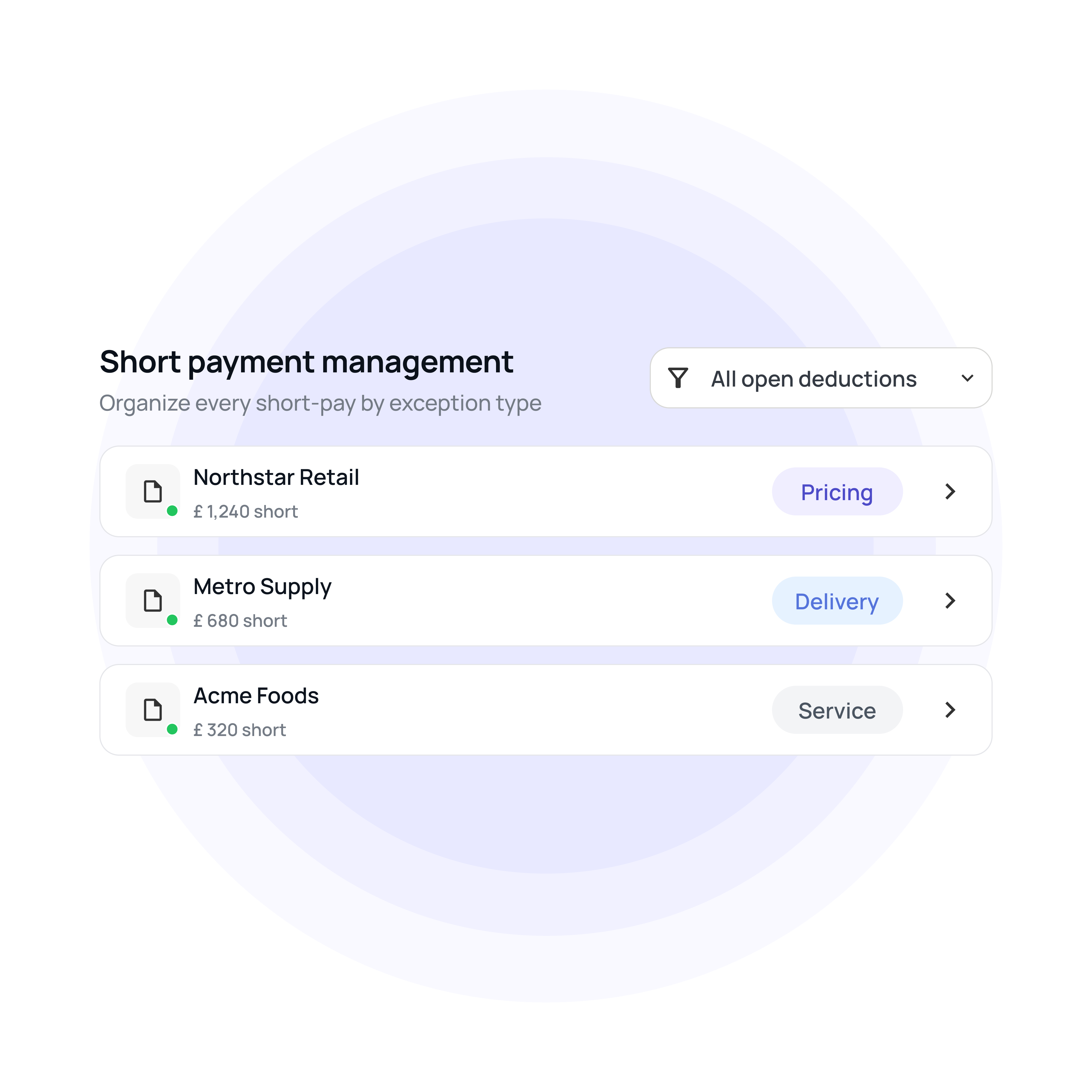
Short payment management
Not every short payment represents the same problem. Volopay keeps commercial deductions separate from fees, withholding, allocation errors, and other payment differences before the case progresses.
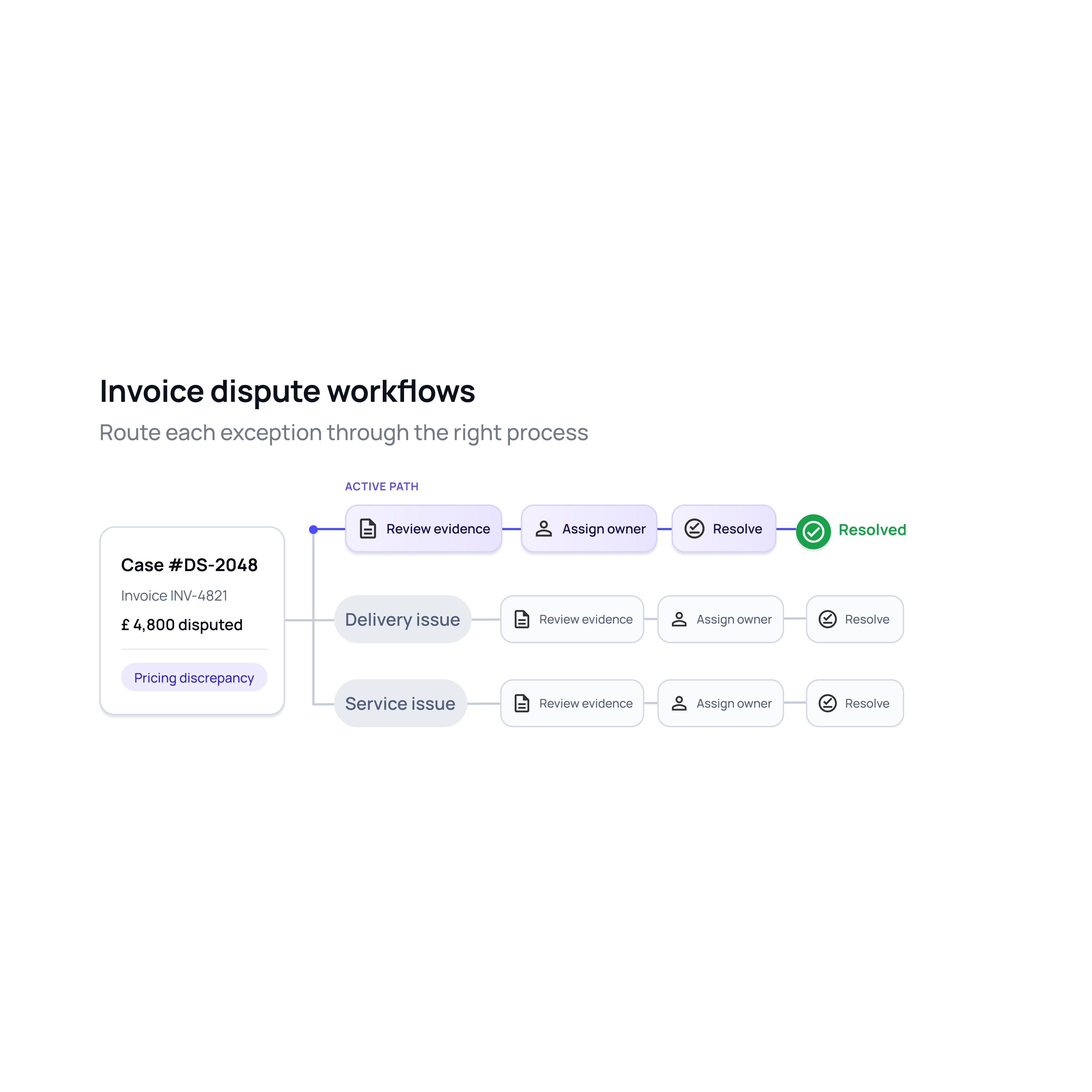
Invoice dispute workflows
Pricing, delivery, service, quantity, and billing disputes can follow different resolution paths. PO records, proof of delivery, and other supporting evidence stay connected to the affected invoice and case.
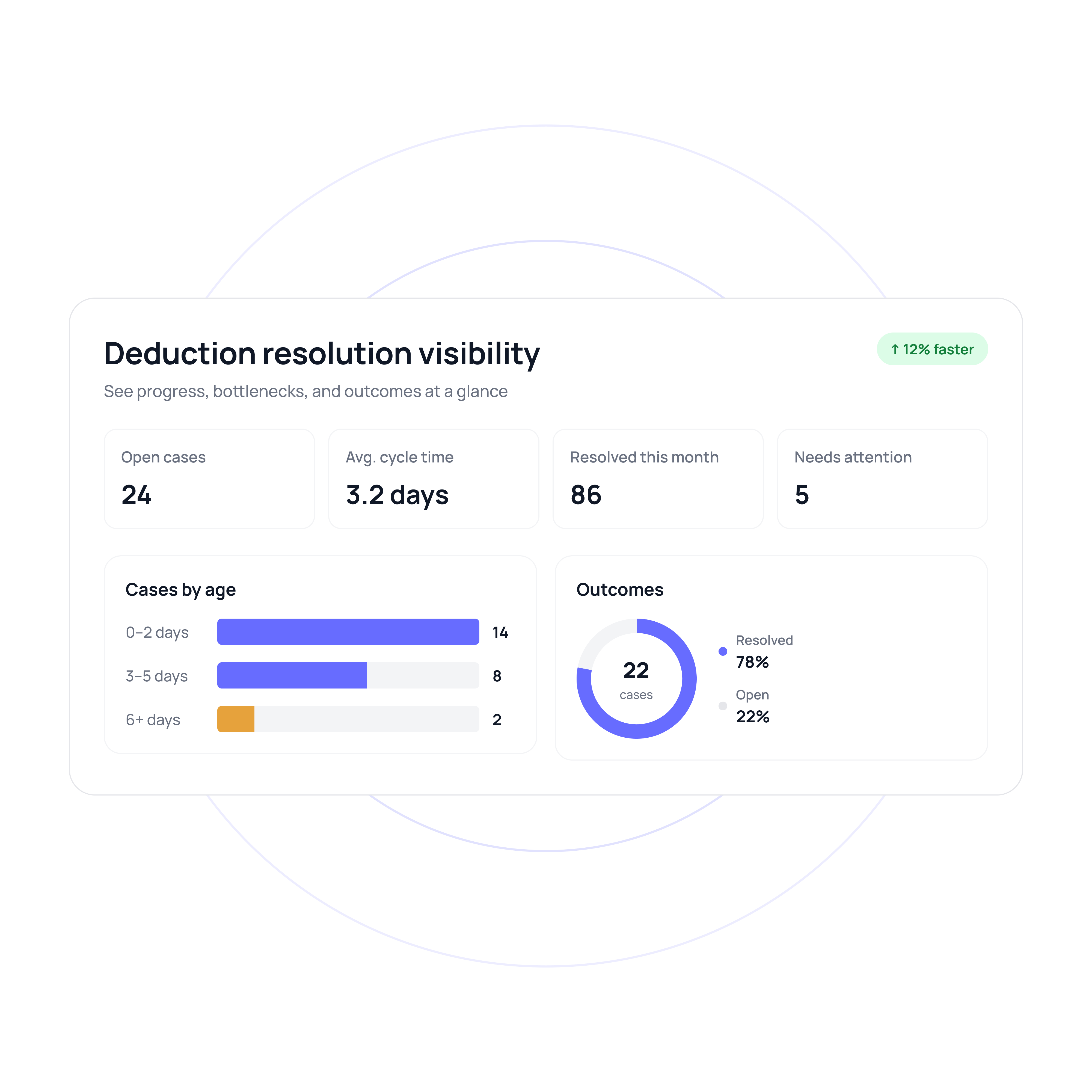
Deduction resolution visibility
Track where each case sits from investigation through financial verification. A rejected claim awaiting recovery stays distinct from one that has already been recovered.
Streamline your disputes and deductions process
Keep exceptions from stalling AR
Automatic case creation and deduplication
Detect dispute signals across connected conversations, portal records, support tickets, and remittance. Related evidence updates the existing case instead of creating another version of the same dispute.
Reason classification and claim validation
Classify the issue using your configured reason structure. Volopay then compares the claim with relevant terms and supporting evidence while keeping conflicting information visible for review.
Missing-evidence follow-up
Ask for the specific document or explanation blocking the case. Volopay follows up under the relevant SLA, then reassesses the case when new evidence arrives.
Approval routing
Decisions route to the right commercial, operational or finance owner based on amount, entity and separation-of-duties rules. Approvers see the proposed action with its evidence attached, and an overdue decision gets escalated rather than left waiting.
Built for high-friction disputes
Short payments can build quickly across large customer accounts. Volopay classifies each case, gathers the relevant evidence, and keeps priority visible while analysts focus on claims needing judgement.
A disputed invoice may depend on a PO, contract, delivery record, service evidence, or earlier credit. Volopay brings those records into the same case so reviewers do not have to rebuild the history manually.
A pricing query may sit with commercial teams, while delivery evidence belongs to operations and accounting treatment stays with finance. Volopay routes each decision to the appropriate owner with the case evidence attached.
Manual deduction work vs. the Volopay approach
Manual deduction work | The Volopay approach |
|---|---|
Disputes sit across emails and spreadsheets | Evidence, decisions, and actions stay connected to each case |
One disputed line can block the full balance | Undisputed amounts continue through collection and cash application |
Ownership changes across teams and analysts | Ownership, thresholds, and approvals follow configured rules |
A decision is made, but the financial action remains open | Commercial decisions stay linked to verified financial completion |
Managers see open cases without the full picture | Resolution, recovery, outcomes, and root causes remain visible |
They loved Volopay, you will too
FAQs
Volopay detects dispute signals from connected emails, support tickets, portal records, and remittances. It captures the customer, invoice, amount, and reason, while distinguishing customer claims from fees, withholding, allocation errors, and other payment differences.
Yes. Volopay assembles the invoice, correspondence, and supporting documents against each case as it forms. Your team works from one place instead of searching email, ERP, and portals to rebuild the story.
Once evidence is gathered, Volopay routes each case to the appropriate business owner with the context attached. Ownership is clear from the first step, so cases stop drifting between finance, sales, and operations.
Volopay tracks each case through decision, communication, and financial completion. A rejected claim can still await recovery, while an accepted claim can await credit posting. Both stages remain visible until the required action is complete and verified.
Material credits, concessions, write-offs, legal positions, and sensitive disputes require human review or approval. Negotiations outside configured terms and decisions beyond defined authority also require the appropriate approver before action.
Bring Volopay to your business
Get started now