Connect commercial terms with accurate billing
Close the gap between a signed deal and an accepted invoice. Volopay connects commercial terms, billing logic, approvals and delivery outcomes in one workflow, so nothing gets lost in the handoff.














The mechanics behind controlled billing
Contract term extraction
Volopay reads contracts, order forms, SOWs and amendments. Pricing, cadence, payment terms and renewal conditions come out with source references attached. Anything ambiguous goes to review, not a guess.
Flexible billing schedules
One-time, recurring, per-seat, usage, milestone and hybrid billing all fit. Ramps, minimum commitments, tiers, overages and instalments are configured to match how the deal was actually sold.
Invoice creation and validation
Invoice lines, rates, service periods and due dates are generated automatically. Customer details, billing entity, currency, PO, invoice numbering and configured tax fields are checked before the invoice goes out.
Delivery and acceptance tracking
Invoices go out through email, portals or supported e-invoicing connections. Sent, received and accepted stay as separate, trackable states, not one assumed outcome.
Three routes into billing
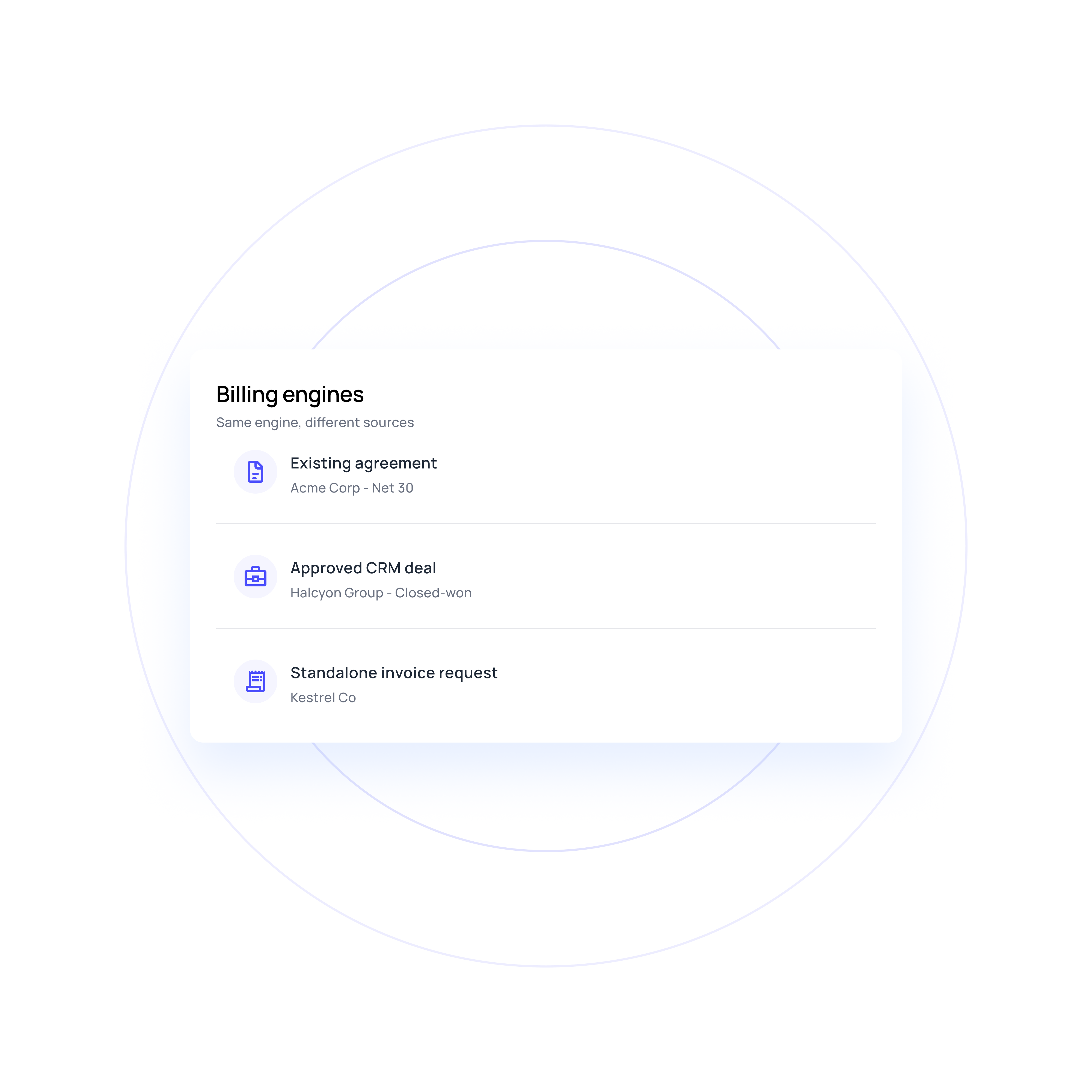
Start from an existing agreement, an approved CRM deal, or a standalone invoice request. Each path keeps its own commercial basis while feeding the same controlled billing engine.
Agent-governed execution
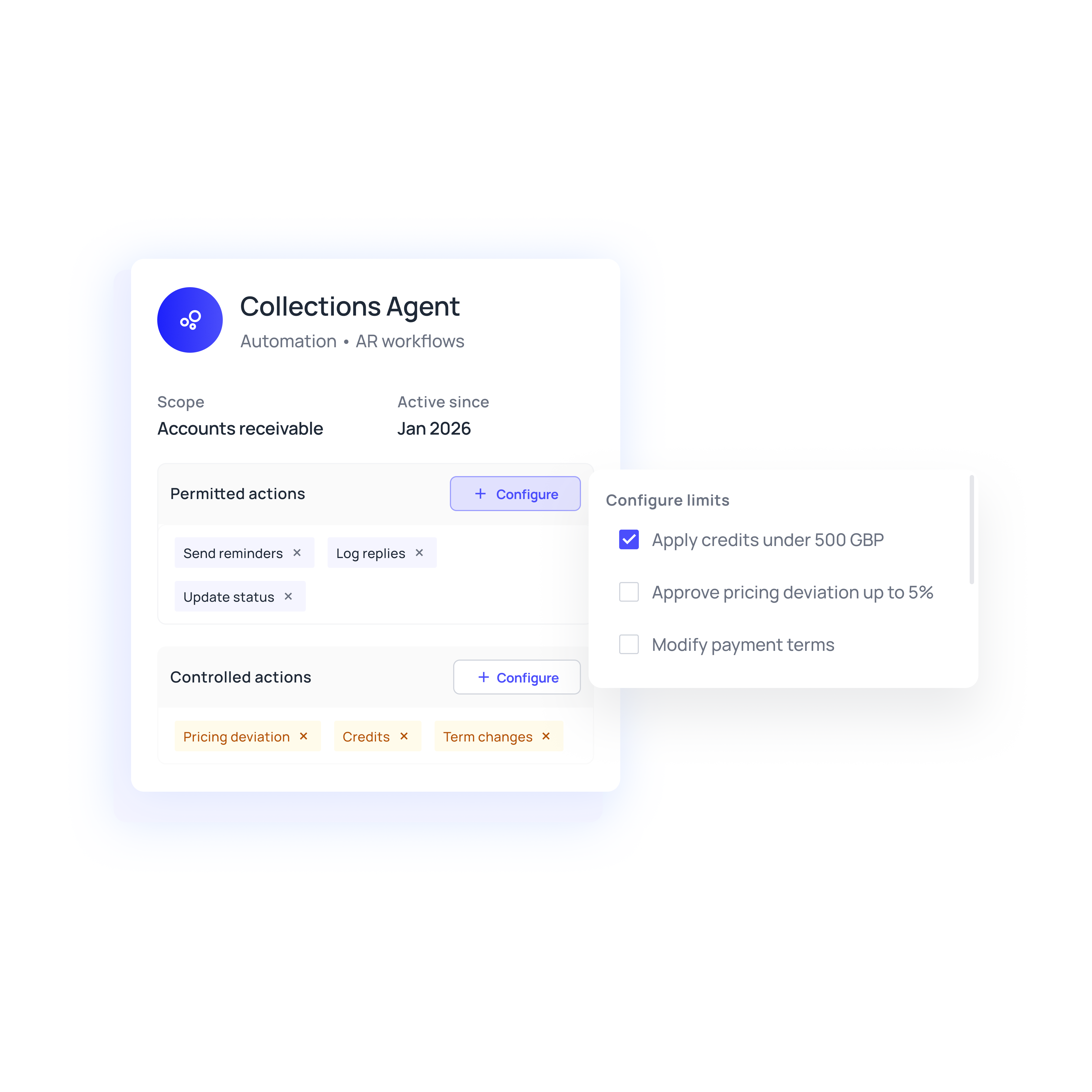
Low-risk work progresses on its own. Ambiguous terms, material changes, pricing deviations and credits follow the permissions finance has configured. The agent works within that boundary; it doesn't make commercial calls on its own initiative.
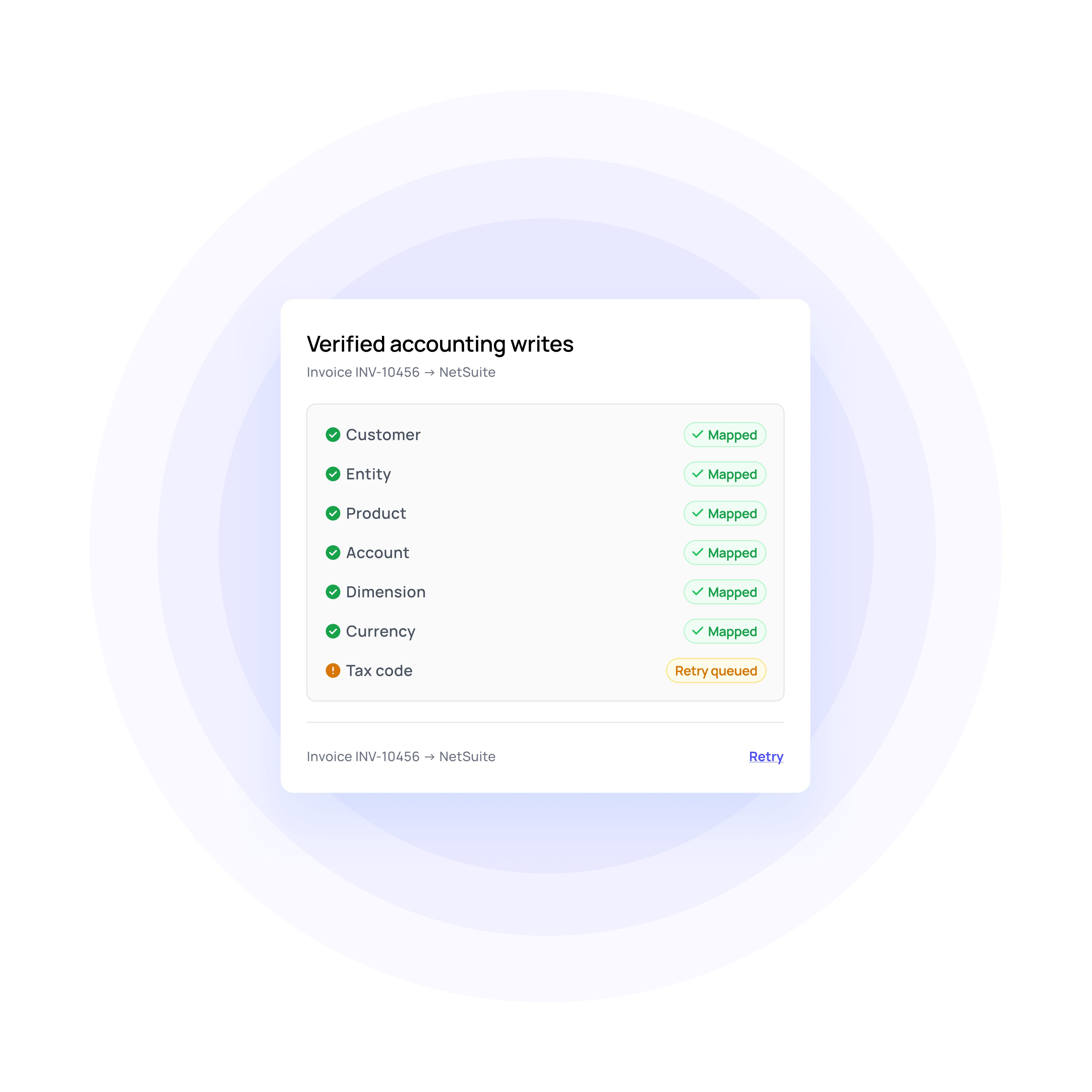
Verified accounting writes
Customers, entities, products, accounts and tax codes are mapped before anything reaches the ledger. Every write to the ERP is verified, and if one fails, it can be retried safely using a stable identifier rather than duplicated by accident.
Simplify your billing process with automation
Billing logic meets execution
Approval and signature orchestration
Approval rules flex by entity, contract value, discount or deviation. Volopay coordinates reviewers, tracks delegation and confirms e-signature status before any obligation becomes active and billable.
Invoice-to-contract checks
Compare scheduled and issued charges against active terms and billed history. Volopay surfaces skipped charges, duplicate periods, unapproved rates, and unexplained differences before they carry into later billing. Customer-specific references and PO requirements can stay tied to the same billing workflow.
Customer self-service
Give authorised customers access to invoice copies, statements, payment links, and query submission. Questions and disputes route into the appropriate AR workflow instead of sitting in one generic queue.
Billing operations reporting
Track readiness, billing completeness, cycle time, corrections, rejections, and integration failures. You can see where billing is slowing down without relying on generic automation or accuracy claims.
Built for billing operations under real load
UK businesses with recurring service agreements can have pricing ramps, renewals and amendments layered onto the original contract. Volopay extracts the active terms, compares them with billed history, and activates only the obligations still outstanding.
Approved quote and opportunity data moves straight into contract preparation, review and signature. Anything nonstandard in the wording still goes to a named person for review before it becomes part of the billing basis.
Usage-based services and project work can depend on records arriving from different teams before an invoice becomes billable. Volopay checks the required usage or completion evidence and holds only the affected charge when something is missing or duplicated.
Why go the Volopay way?
Manual/legacy billing | The Volopay billing automation approach |
|---|---|
Finance manually interprets commercial terms before billing starts | Contract data is extracted into structured obligations, with source references attached |
Complex pricing schedules live in spreadsheets | Recurring, usage, milestone and hybrid models sit inside the billing workflow itself |
An invoice marked “sent” is assumed to have reached the customer | Delivery, receipt, acceptance and rejection all stay as distinct, visible states |
Amendments create manual recalculation and version confusion | Approved changes recalculate future charges while the original document stays intact |
ERP posting is assumed successful once data is sent | Every write is verified, with the resulting ERP record captured as proof |
They loved Volopay, you will too
FAQs
Volopay checks the prerequisites tied to each charge, including approved terms, customer details, POs, usage data, milestone evidence, and required approvals. When something is missing, the invoice stays blocked until the relevant evidence arrives and readiness is reassessed.
Volopay applies customer-specific templates, references, documentation, and delivery requirements within the billing workflow. Invoices can move through email, customer portals, authorized AP portals, or supported e-invoicing connections, with acceptance and rejection states tracked separately.
Volopay can generate invoice lines, rates, service periods, due dates, and configured tax results, then validate required billing details before issuance. Eligible invoices can move through configured delivery channels, while submission, rejection, and acceptance outcomes remain separately recorded.
A missing requirement becomes an owned billing task rather than a generic blocked status. Volopay identifies what is missing, who can provide it, and when to follow up, then reevaluates the full readiness check before issuing the invoice.
Volopay routes ambiguous contract terms, material billing changes, policy deviations, and actions outside configured authority for review. Missing or conflicting commercial information also goes to a named owner, with billing resuming only after the required decision is approved and recorded.
Finance retains authority over pricing deviations, material changes, credits, invoice permissions, and accounting mappings according to configured roles. Legal negotiation and nonstandard contract terms also require authorized people rather than being independently decided by a billing agent.
Bring Volopay to your business
Get started now