Automated collections. Smarter recovery.
Stop rebuilding account context from scratch every time an invoice goes overdue. Volopay checks balances, holds, past messages, and contact ownership before it decides what happens next.














Collections, built on more than an aged debt list
Prioritised worklists
Overdue value, ageing, payment history and broken promises all shape priority. So do risk signals and relationship sensitivity. Finance can override any ranking without losing the reasoning behind it.
Segmented playbooks
Set cadence, contact hierarchy and UK business hours by segment. Add time zone, language, tone and escalation rules for customers elsewhere. A customer-specific hold or payment instruction always overrides the generic sequence.
Two-way outreach
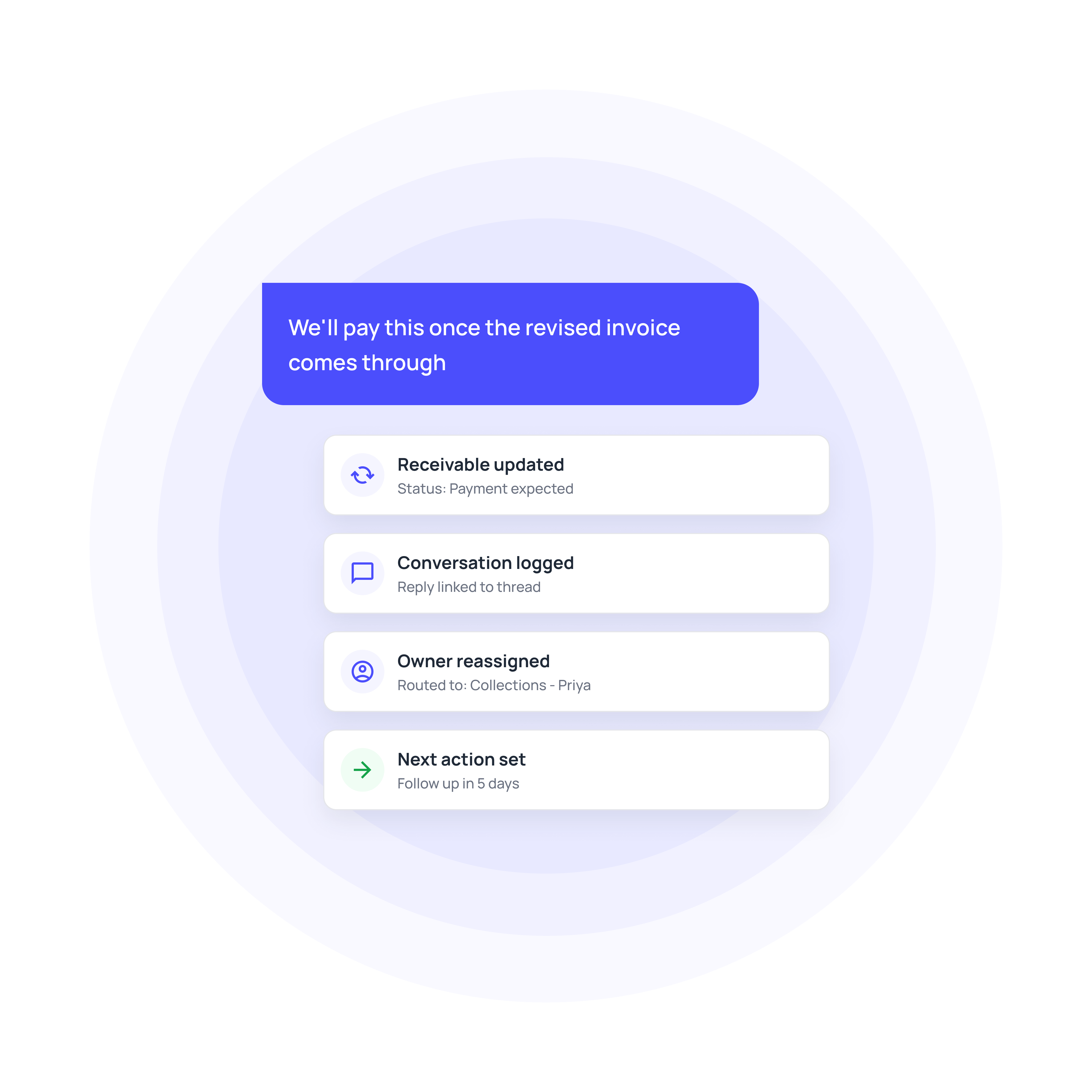
Conversations continue across approved channels. History and invoice references stay intact. A reply becomes a workflow input, not another message sitting in someone's inbox.
Promise-to-pay tracking
Every commitment is logged with its date, amount and covered invoices. It's then checked against what actually lands, not what was promised.
Bounded agent autonomy
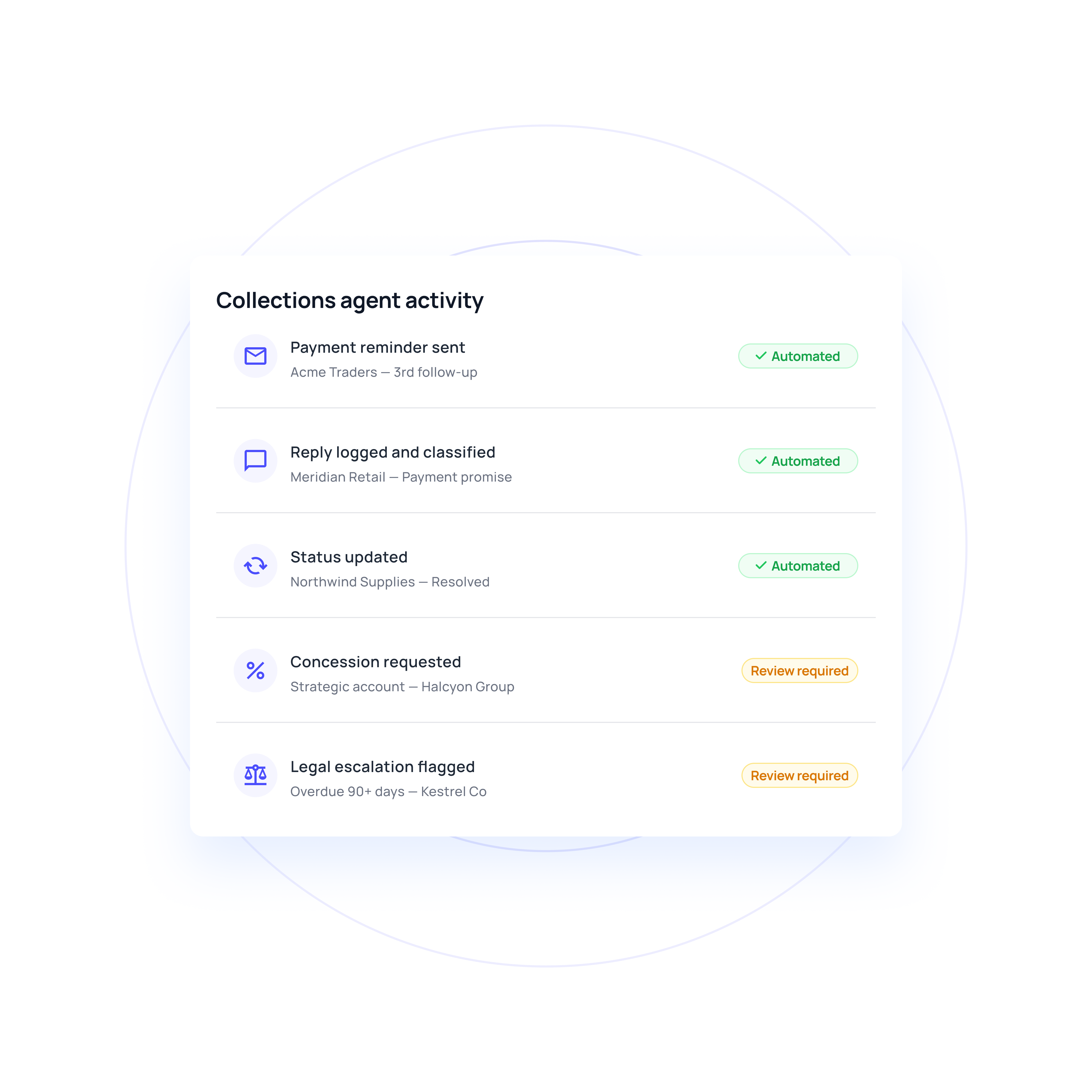
You decide which actions can run automatically. You also define where review or human takeover becomes mandatory. Strategic accounts, negotiated terms, and sensitive wording stay inside explicit authority boundaries. The same applies to write-offs and legal escalation.
Stop-and-resume logic
Before another follow-up runs, Volopay checks for new receipts and active disputes. It also checks unresolved replies, account holds and changed balances. Paused work keeps its reason, owner and expiry. The agent reassesses current conditions before continuing.
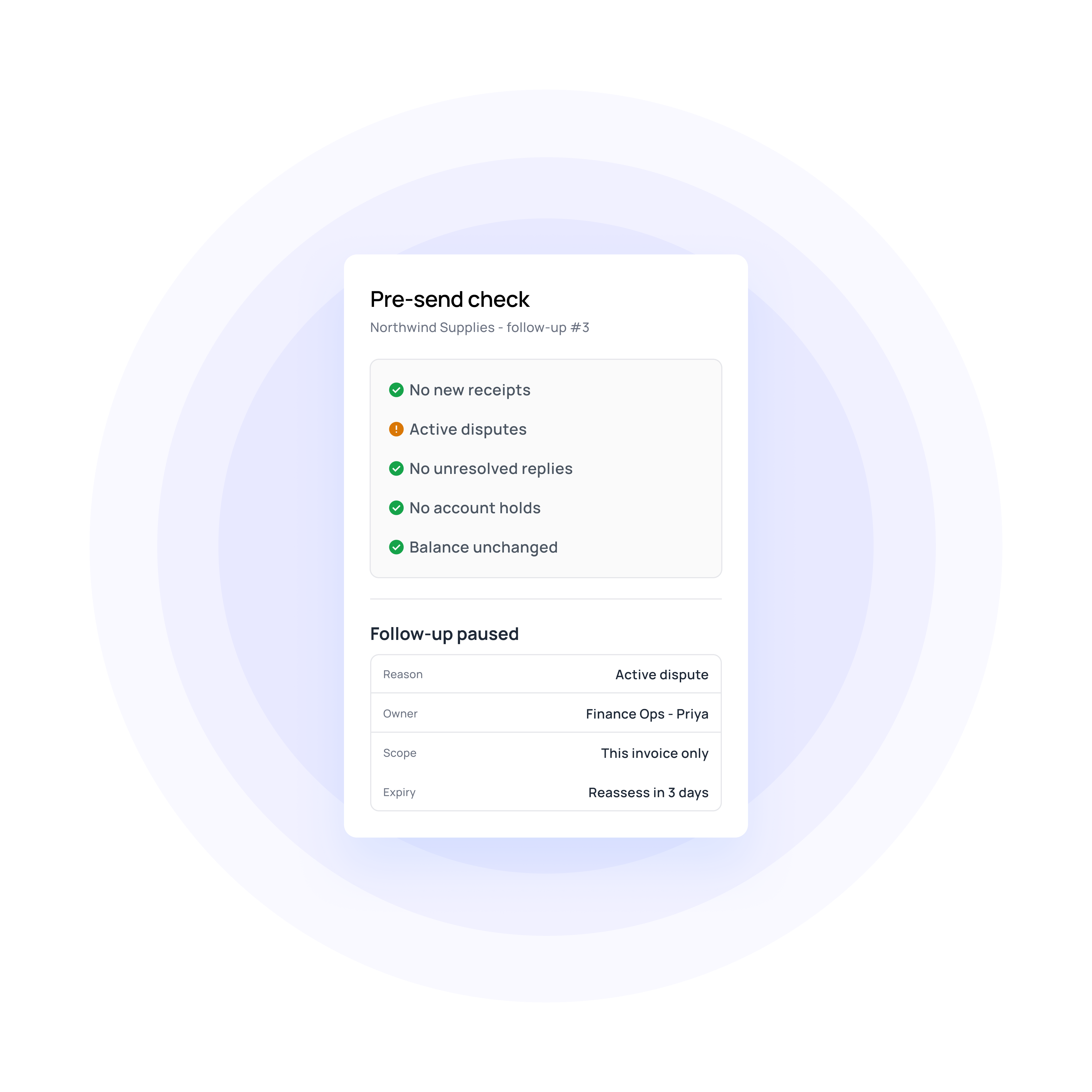
Automate collections without losing human control
Operational depth beyond dunning
AP portal state tracking
Customers may require invoices, PO details, or supporting documents to pass through their own procurement or AP portals before payment can progress. Volopay tracks whether a submission is received, rejected, awaiting approval, or scheduled for payment, without treating any of those states as confirmed cash.
Contact repair
Detect bounced emails, out-of-office replies and role changes before they stall a receivable. Volopay uses permitted CRM and account-owner information to help confirm the correct replacement AP contact.
Credit control reporting
Track ageing, Average Days to Pay and DSO separately. You can also review promise performance, blocked work and financial outcomes. Finance can drill into the receivable and the reason behind each number.
Versioned playbook improvement
Use approved edits and resolved blockers to improve collection playbooks over time. Finance reviews proposed changes before activation. Each policy version can be tested against earlier conversations and sensitive cases.
Built for accounts that don't fit a template
Large debtor ledgers can span customers with different payment terms, procurement requirements, and account contacts. Volopay prioritises accounts using value, payment history and active blockers, while broken promises and relationship sensitivity provide additional context.
A client may have several invoices outstanding, pay only part of the balance, or promise to settle selected invoices on an agreed date. Volopay keeps each commitment tied to its amount, date and covered invoices, then checks it against confirmed receipts.
Several overdue invoices may belong to the same customer conversation. Volopay applies account-level playbooks and holds. It can also suppress conflicting outreach while another issue or active discussion takes precedence.
Why go the Volopay way?
| Manual/legacy collections approach | The Volopay collections software approach |
|---|---|
Aging lists show what is late, but not what deserves attention | Prioritized worklists combine value, age, payment history, broken promises, risk signals, relationship sensitivity, and active blockers |
Every overdue account moves through the same reminder sequence | Segmented playbooks adapt cadence, contact hierarchy, channels, timing, tone, and escalation to the customer or account. |
Customer replies create another inbox for collectors to interpret | Replies change the next action, whether the customer requests a document, makes a promise, disputes an invoice, or claims payment. |
Payment promises disappear into emails and notes | Promises are captured with date, amount, covered invoices, and conditions, then checked against actual receipts. |
Missing POs, portal requirements, and invoice questions stall collections | Blockers become owned work with a next action, deadline, and resolution path before collections resumes. |
They loved Volopay, you will too
FAQs
Volopay considers overdue value, aging, payment history, broken promises, customer risk signals, relationship sensitivity, and active blockers. It also explains why an account was prioritized, while allowing finance to override the priority without losing that rationale.
Volopay connects recent conversations, promises, disputes, and receivable information within the collections workflow. Collectors can work from the relevant account context without repeatedly searching across ERP, email, CRM, and customer portals before taking action.
Yes. Volopay can progress permitted follow-ups within customer-defined rules and authority. It also interprets responses to help move the receivable forward. Strategic accounts, negotiated payment plans, and other sensitive situations remain with the appropriate person.
Volopay captures the promised date, amount, invoices, and conditions, then checks the commitment against actual receipts. Disputed amounts can follow their own case policy while undisputed balances remain collectible instead of freezing the entire account.
Volopay can escalate missed internal SLAs, repeated customer silence, disputed policy, high-value concessions, strategic accounts, negotiated terms, sensitive wording, write-offs, legal threats, and external debt recovery. Routine permitted actions can continue automatically.
People retain sensitive customer relationships, negotiation beyond approved limits, strategic-account decisions, discounts, write-offs, legal threats, and other exceptions requiring judgment. Volopay handles permitted routine work while preserving explicit human takeover and approval boundaries.
Bring Volopay to your business
Get started now